

Key Takeaways
A speed-related hum or roar can point to a worn wheel bearing, but tires and other components can make similar sounds. The noise is a clue, not a diagnosis.
- A bearing-related hum often grows louder as road speed increases.
- Changes while cornering can help a technician narrow down the source, but they do not identify a specific wheel by themselves.
- Tire wear, suspension issues, and other rotating components can produce similar sounds.
- Grinding, wheel looseness, or an ABS warning alongside the noise calls for prompt attention.
- A proper inspection should confirm the source before parts are replaced.
What Audi wheel bearing noise sounds like
A wheel bearing helps a wheel rotate, and wear can make it audible from inside the cabin. The sound is often more noticeable as the vehicle picks up speed, though the exact tone varies. Because tires and other components can also produce a steady road noise, listen for changes rather than relying on one sound alone.
Humming, buzzing, or roaring that rises with speed
A worn bearing may make a humming, buzzing, or low roaring sound that becomes more noticeable as the vehicle moves faster. It may seem to come from one side, but cabin acoustics can make its location difficult to judge. A gradual change with road speed is useful information to share during an inspection.
Grinding or rumbling from a damaged bearing
A rougher bearing may produce a rumble or grinding sound instead of a smooth hum. The noise can become more persistent as wear progresses, but sound alone cannot establish how damaged the bearing is. If it is loud or accompanied by looseness, arrange an inspection promptly rather than trying to confirm the fault through repeated driving.
How road surface and tire noise can sound similar
Tire noise can also rise with speed and may change noticeably between smooth and coarse pavement. Uneven tire wear can add a pulsing or droning quality that resembles a bearing fault. The pattern is helpful, but it is not conclusive: a technician may need to inspect the tires and nearby components as well as the bearing.
| What you notice | A possible clue | Why it is not conclusive |
|---|---|---|
| Hum grows with speed | Bearing or tire noise | Both can change as road speed rises |
| Sound changes on different pavement | Tire tread noise | Other road and vehicle sounds may change too |
| Rough rumble continues across surfaces | Bearing or another rotating component | Inspection is needed to locate the source |
| Noise changes while turning | Load-sensitive component | It does not identify a particular wheel by itself |
These are starting points for describing the sound, not a remote diagnosis. Comparing the noise across conditions can help a shop decide what to inspect first.
Why the noise may change while cornering
A turn shifts the vehicle’s load from side to side, and a worn component may sound different under that changing load. The change can be useful when describing the symptom, but it does not reliably pinpoint the affected bearing. Avoid sharp turns or repeated tests if the noise is severe; a technician can assess the vehicle safely.
Common causes of Audi wheel bearing noise
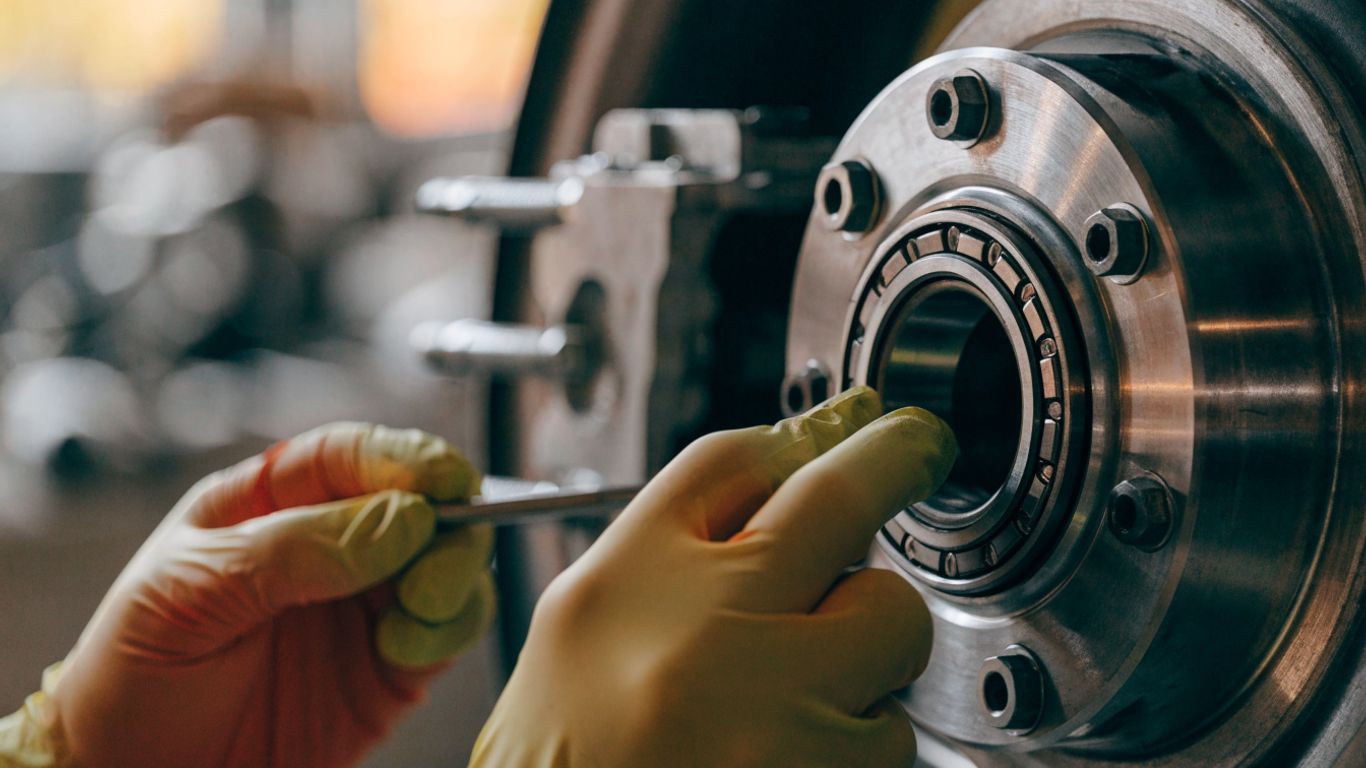
Wheel bearings experience load as the vehicle travels, and their condition can be affected by age, road impacts, and exposure to contamination. A new noise does not always reveal which of these factors is responsible. The bearing and surrounding parts need to be checked before settling on a cause.
Wear from age, mileage, and repeated stress
Bearings can wear gradually through regular use and repeated loading. The pace varies with driving conditions and the individual part, so mileage alone cannot say when a bearing will become noisy. A change in sound is a reason to investigate, not a reason to assume that every vehicle needs replacement at a particular distance.
Impact damage from potholes or curbs
A hard impact from a pothole or curb can place stress on a wheel-end assembly. If a new hum or rumble begins after an impact, mention when it happened and whether the vehicle also developed vibration or a change in handling. The impact may affect other nearby components too, so the bearing should not be treated as the only possible source.
Water, dirt, or corrosion getting into the bearing
A bearing’s protective seals help keep contamination away from its working surfaces. Damage or deterioration can allow water or dirt to contribute to wear and corrosion. A technician can inspect the assembly and surrounding area for signs of damage rather than inferring contamination from the noise alone.
Incorrect installation or an improperly tightened axle nut
A bearing can be affected by an earlier repair if the part was installed incorrectly or the axle nut was not tightened to the appropriate specification. If the noise appeared after wheel-end work, tell the repairer what was done and when. Correct fitment matters, but the current condition still needs to be checked before deciding what repair is required.
Symptoms that may accompany the noise
Noise may be the first clue, but other changes can help describe what is happening. None of these signs by itself confirms a failed bearing, since tires, brakes, and suspension parts can produce overlapping symptoms. Taken together, they can help a technician decide what to examine.
Vibration through the steering wheel or seat
A vibration through the steering wheel or seat may appear alongside a wheel-end noise. Note whether it happens at a particular speed, while braking, or over rough pavement. Those details help distinguish a steady road-speed vibration from one tied to another driving condition.
Wheel play or looseness
Noticeable looseness at a wheel warrants prompt attention, but the absence of detectable play does not rule out bearing wear. Checking for play safely requires the right lifting equipment and technique. Do not put yourself under an unsupported vehicle or rely on a quick hand check as proof that the bearing is sound.
Uneven tire wear and changes in handling
Uneven tread wear can point toward tire, alignment, or suspension concerns and may also contribute to a droning sound. A change in steering feel or handling deserves attention, especially if it accompanies a new noise. These symptoms are reasons to inspect the vehicle, not enough evidence to order a bearing on their own.
ABS or stability-control warning lights
An ABS or stability-control warning may appear with a wheel-end problem, but warning lights can have other causes. Do not assume that the bearing is responsible or ignore the warning because the car still moves normally. Have the fault codes and the wheel-end components checked together.
How to diagnose the source
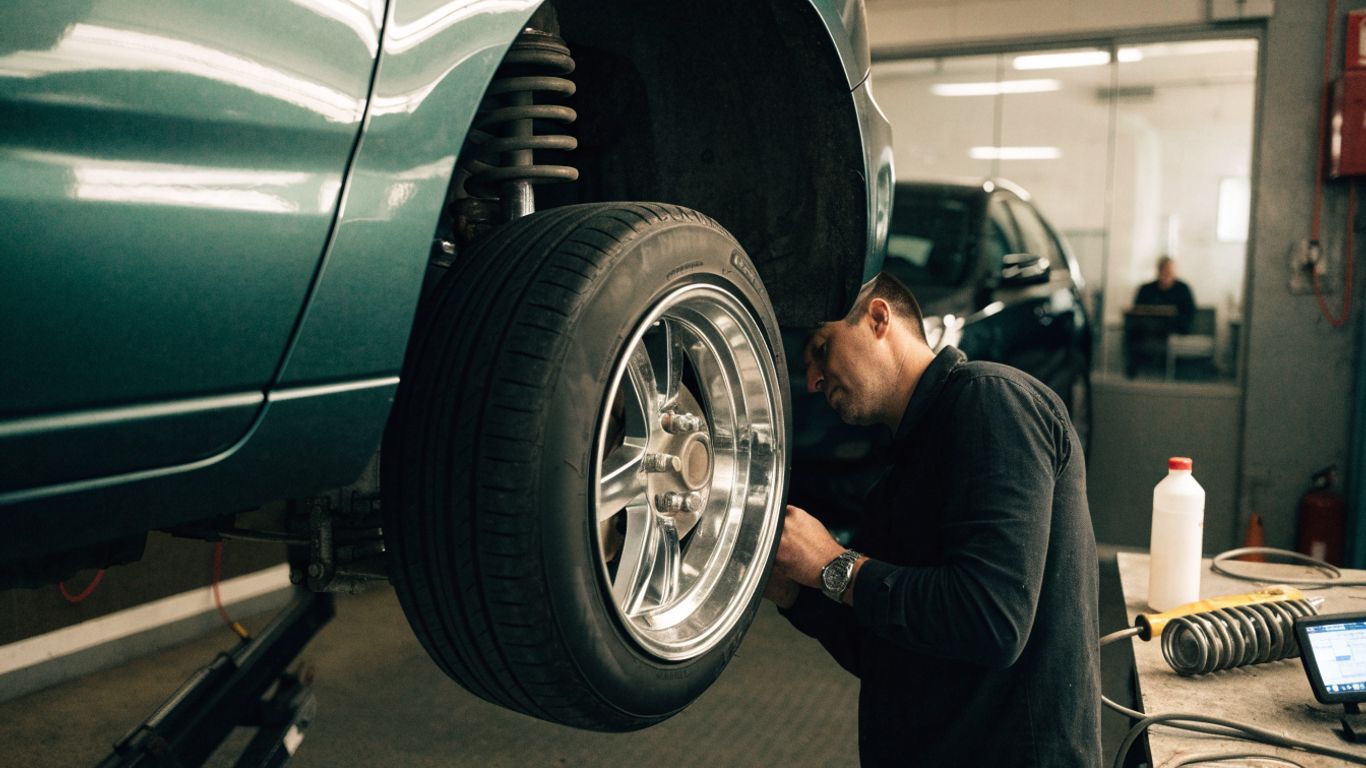
A useful diagnosis begins with the conditions that bring on the noise and then checks likely alternatives. A road test can help reproduce a symptom, but it should be done cautiously and only if the vehicle feels safe to drive. Inspection may include tires, suspension parts, and the wheel bearing itself.
Note when the sound starts and how it changes
Try to remember when the noise began and whether it has become louder, more frequent, or changed in tone. Record the speed and road conditions when it is easiest to hear, without deliberately driving in an unsafe way. A brief, clear description can help the technician reproduce the concern.
A few observations are especially useful to bring to the appointment:
- Whether the sound changes as road speed rises.
- Whether it differs on smooth and coarse pavement.
- Whether it appears while turning, braking, or accelerating.
- Whether a warning light, vibration, or handling change began at the same time.
These notes do not replace an inspection, but they give the technician a practical starting point. Keep the description neutral; a suspected bearing is one possibility, not a confirmed diagnosis.
Compare noise while driving straight and turning
A noise that changes during a gentle turn may suggest that changing load affects the source. It is still difficult to identify a particular wheel by listening from the cabin, and road noise can mislead. A technician can combine a controlled road test with an inspection rather than relying on the turn response alone.
Inspect the tires and nearby suspension components
Tread condition, uneven wear, and visible damage can help explain a hum or vibration. Nearby suspension and brake components also deserve attention when the sound is coming from a wheel area. A technician can check these alongside the bearing so a similar-sounding fault is not mistaken for a bearing problem.
Have a technician check wheel play and bearing condition
A technician can inspect the wheel-end assembly and check for looseness, roughness, or other signs of wear using appropriate equipment. No single check should be treated as decisive in every case: a bearing can be noisy without obvious wheel play. Keep the diagnosis tied to the inspection findings, not only to the sound.
A vehicle diagnosis should stay grounded in vehicle-specific evidence; broad searches can also surface unrelated material such as Innovative Plastics, injury-report strategies, home value estimates, Parque Arví trail advice, and roof hail inspection. For this concern, those subjects do not establish the source of a wheel noise. More relevant reading discusses worn bearing signs, common bearing symptoms, similar noise diagnosis, and bearing noise progression, but an inspection remains the way to assess a specific vehicle.
How serious the noise is and when to stop driving
A faint, steady noise with no other symptoms still deserves attention, because sound alone cannot show how much wear is present. A louder grind, wheel looseness, or a change in how the vehicle responds raises the urgency. If the vehicle feels unstable or the noise becomes severe, stop in a safe place and arrange professional help.
Signs that call for prompt inspection
Arrange an inspection soon if a new hum or rumble persists, grows louder, or is joined by vibration or a handling change. A noise that began after an impact or repair is also worth mentioning promptly. Early assessment can establish whether the bearing is involved and whether another component needs attention.
When excessive play or grinding makes driving unsafe
Severe grinding, obvious wheel looseness, or a strong change in handling can indicate a condition that is not safe to keep testing on the road. If you notice these signs, pull over somewhere safe and seek advice about recovery rather than continuing the trip. A remote description cannot determine whether a particular vehicle is safe to drive.
Risks of waiting, including damage to nearby components
Continuing to drive with a deteriorating wheel-end component can allow the fault to worsen and may affect nearby parts. The extent of risk depends on the vehicle’s condition, which cannot be judged from sound alone. An inspection can help prevent guesswork about how long it is safe to wait.
What to do if an ABS warning appears with the noise
If an ABS warning appears alongside the noise, arrange a prompt check of both the warning and the wheel-end area. Drive only if the vehicle feels safe and the warning information in the owner’s manual permits it; otherwise, stop safely and seek assistance. Do not assume that normal braking feel means the warning can be ignored.
Audi wheel bearing repair and replacement
Repair should follow a confirmed diagnosis, not a guess based on a familiar-sounding hum. The work required depends on which component is faulty and how the bearing is assembled on that vehicle. A repairer can explain the parts and labor involved after inspection.
Why the noisy bearing must be identified before repair
Noise can travel through the body and make its apparent location misleading. A technician should determine which wheel-end assembly is affected and rule out plausible alternatives before replacing parts. This avoids treating a tire or suspension noise as a bearing fault, or overlooking a second issue.
What affects parts and labor costs
The estimate depends on the parts required, the vehicle’s assembly, and the labor involved in accessing and replacing them. Ask whether the estimate is for a bearing alone or a larger assembly, and whether inspection findings support that choice. Confirm what is included before authorizing the repair.
When replacing a hub assembly is necessary
Some designs or repair situations call for replacing a hub assembly rather than a bearing as a separate component. The appropriate approach depends on the vehicle and the condition of the parts; it should not be assumed from the noise. The repairer can explain why a complete assembly is needed, if that is the recommendation.
How correct installation and a road test help confirm the repair
Correct installation follows the applicable service procedure and tightening specifications for the vehicle. After the work, a road test can help confirm whether the original noise is gone under the conditions that previously brought it on. If the sound remains, further diagnosis may be needed rather than assuming the repair has settled every concern.
Conclusion
A speed-related hum or rumble may come from a wheel bearing, but tires and other nearby components can sound similar. Pay attention to changes in speed, turning, vibration, and warning lights, then have the source confirmed before authorizing a repair. If grinding, looseness, or unstable handling appears, stop driving when it is safe to do so and seek professional help.
Frequently Asked Questions
What does Audi wheel bearing noise usually sound like?
It may sound like a hum, buzz, roar, rumble, or grinding noise that changes with road speed. Those sounds can also come from tires or other components, so they are not a diagnosis by themselves.
Does a wheel bearing make noise only when turning?
Not necessarily. A worn bearing may be audible while driving straight, and the sound may change during a turn as the vehicle’s load shifts. That change does not identify the exact wheel on its own.
Can a bad wheel bearing make noise without wheel play?
Yes. A bearing can make noise without obvious looseness, so a quick check for play cannot rule it out. A technician should assess the bearing and nearby parts.
Can tires sound like a failing wheel bearing?
Yes. Uneven tread wear and some tire patterns can create a hum or drone that rises with speed. Comparing surfaces and inspecting the tires can help distinguish possibilities, but a full check may still be needed.
Is it safe to drive with a wheel bearing noise?
That depends on the severity and the vehicle’s condition. A persistent noise deserves inspection, while severe grinding, noticeable looseness, or unstable handling calls for stopping safely and seeking help.
What should I do if an ABS light comes on with the noise?
Arrange a prompt inspection of the warning and the wheel-end components. Follow the owner’s manual and seek assistance if the vehicle feels unsafe; do not assume the bearing is the cause without diagnosis.
Does a noisy wheel bearing always mean the hub must be replaced?
No. The required repair depends on the vehicle’s design and what the inspection finds. A technician can explain whether a separate bearing or a hub assembly is appropriate.