

Key Takeaways
An ABS warning light can point to several different faults, so diagnosis matters before parts are replaced. A careful inspection can help clarify whether the issue lies in the module, its wiring, or a wheel speed sensor.
- An illuminated ABS warning light signals that the system needs attention, but does not by itself confirm module failure.
- Fault codes help narrow the cause; they should be checked alongside wiring, connectors, fuses, and sensor data.
- Brake feel and other warning lights matter when deciding whether it is safe to continue driving.
- Repairing the existing module, fitting a replacement, or replacing the pump are different options with different costs and requirements.
- Confirm compatibility and ask whether coding, programming, and brake-system bleeding are included before approving a repair.
Symptoms of Audi ABS module failure
Audi ABS module failure can affect the anti-lock braking system, but similar dashboard warnings may have other causes. A warning light is a reason to investigate, not proof that a particular component has failed. Pay attention to changes in braking and traction control as well as the warning itself. Recording when the issue appears can help a technician reproduce an intermittent fault.
ABS and brake warning lights
An ABS warning light that stays on or returns after starting the car means the system has detected a fault. Depending on the vehicle and the fault, a brake warning light or traction-control warning may appear as well. The combination of lights can help guide diagnosis, but it does not identify the failed part on its own. A general ABS module diagnosis guide can provide further background on warning lights and fault codes.
Changes in braking or traction control
If the ABS is unavailable, anti-lock assistance may not operate when braking hard, particularly on a slippery surface. The regular hydraulic brakes may still work, but the car may not respond as it normally would in an emergency stop. You might also notice traction or stability-control features are disabled or behave differently. These are reasons to arrange an inspection rather than test the system by braking sharply on the road.
Intermittent faults and diagnostic trouble codes
Some faults appear only occasionally, perhaps after rain, a cold start, or a longer drive. A warning that disappears does not necessarily mean the problem has cleared; the control unit may have stored a diagnostic trouble code (DTC). Note the conditions around each event and share them with the repairer. A stored code is a clue, not a verdict: testing is needed to confirm which component is responsible.
Common causes of ABS module problems
An ABS fault can originate in the electronic control unit, the hydraulic pump, a sensor, or the electrical connections linking those components. A similar warning can therefore arise from very different underlying problems. The vehicle’s age, service history, and exposure to moisture or road debris may all matter. Inspection should establish the cause before a module is condemned.
Electrical faults and damaged wiring
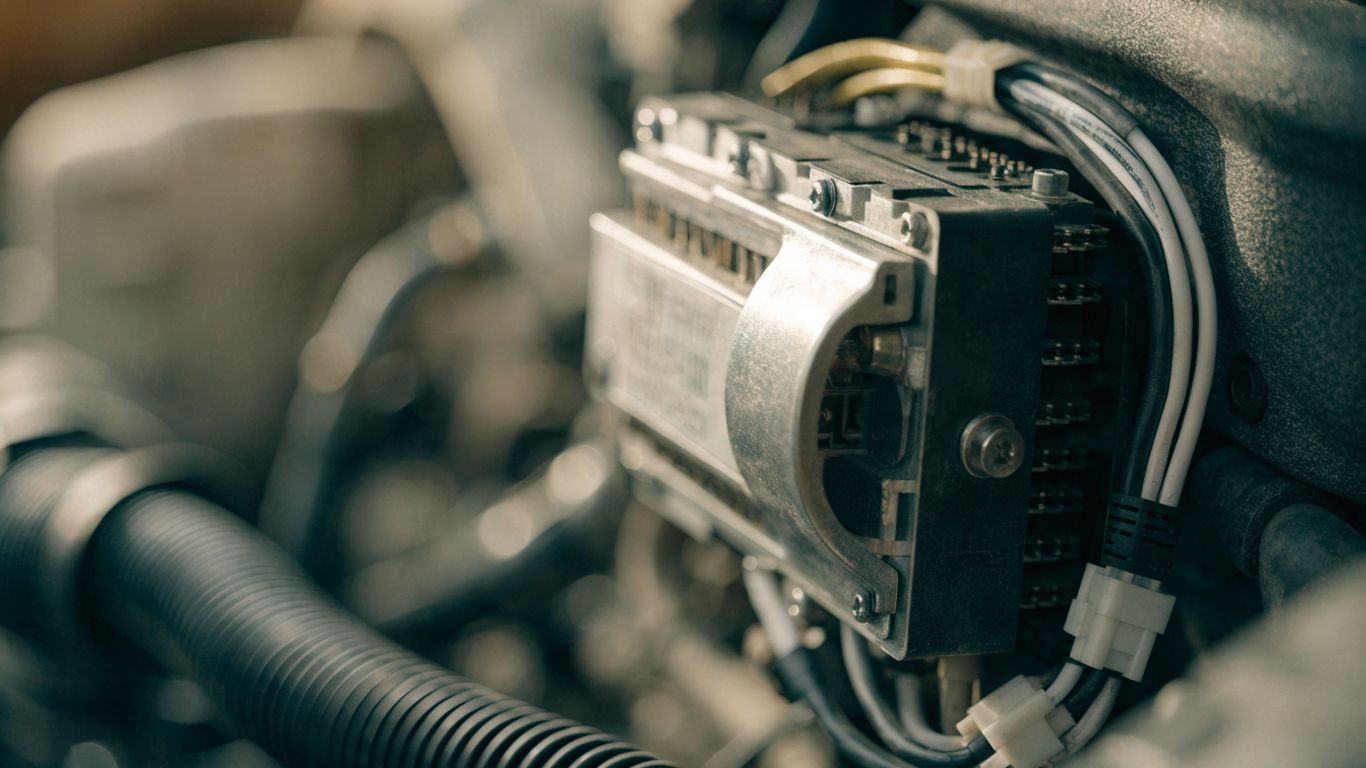
A weak power supply, a blown fuse, a poor ground, or damaged wiring can interrupt communication with the ABS control unit. Corrosion or a loose connection at a plug may create a fault that comes and goes with vibration or temperature changes. These problems can resemble an internal module failure on a dashboard or scan tool. Checking the circuit before replacing parts can prevent an unnecessary repair.
Internal module or pump failure
The control electronics and hydraulic pump have separate roles, and a fault in either may affect ABS operation. Internal electronic failure may prevent the module from communicating or controlling the system as intended, while a pump-related issue can affect hydraulic operation. A technician should use the vehicle’s codes and test results to establish which part is implicated. A repair decision based solely on the presence of an ABS warning light is premature.
Corrosion, moisture, and heat damage
Moisture entering a connector or collecting around a component can contribute to corrosion and unreliable electrical contact. Heat and vibration can also stress wiring and electronic components over time. The location and condition of the module, connectors, and harness should be checked for signs of damage. Cleaning a connection may help in some cases, but damaged seals or wiring may require a more lasting repair.
How to diagnose the problem
A sound diagnosis combines a scan of the ABS control unit with physical and electrical checks. The code description can narrow the investigation, but it does not always tell the technician which part to replace. The vehicle’s exact model, year, and equipment can affect testing and repair requirements. Ask for the findings and the reasoning behind the proposed fix before authorizing work.
Scan the ABS control unit for fault codes
A scan tool that can communicate with the ABS control unit can retrieve relevant DTCs and, on some vehicles, live system data. The technician should record the codes before clearing them, then follow a diagnostic procedure to check the suspected circuit or component. Codes related to a wheel sensor, pump, or communication fault point in different directions. A fault-code and module repair overview can help explain why symptoms and codes need to be considered together.
One useful way to organize the first scan is to separate the code’s subject from the evidence needed to confirm it. The table below shows how that distinction can keep diagnosis focused.
| Finding on the scan | What it may suggest | Useful next check |
|---|---|---|
| Wheel-speed signal fault | Sensor, wiring, or tone-ring issue | Compare live readings and inspect the circuit |
| Pump or motor fault | Pump, power supply, or control issue | Check supply voltage and follow pump tests |
| Communication fault | Power, ground, connector, or module issue | Verify network connection and module power |
| Internal control-unit fault | Possible module problem | Confirm with vehicle-specific testing |
A code is most useful when it is paired with test results, not treated as a parts order. Ask the repairer to explain what was checked and what evidence supports the diagnosis.
Check fuses, connectors, and power supply
Before replacing an expensive assembly, a technician should inspect the relevant fuses, grounds, connectors, and wiring and verify power at the module. The exact test points and specifications depend on the vehicle, so this work should follow the correct service information. A practical inspection usually covers these basics:
- Confirm the correct ABS-related fuses and their condition.
- Inspect connectors for looseness, corrosion, moisture, or damaged pins.
- Check the wiring harness for chafing, breaks, or previous repairs.
- Verify module power and ground using the specified test procedure.
These checks can reveal a simple electrical problem or strengthen the case for a module-level fault. Ask for the inspection results rather than relying on a warning light alone.
Distinguish module failure from wheel speed sensor faults
A failed wheel speed sensor or damaged sensor wiring can trigger ABS warnings that may be mistaken for a module problem. Live data can help show whether each wheel is reporting a plausible speed as the vehicle moves, while a circuit check can help locate an electrical interruption. The results should be considered alongside the stored codes and a physical inspection. For an Audi-specific warning-light overview, see this ABS warning light explanation.
Repair and replacement options
Once the cause is confirmed, the repair may involve a connection or wiring repair, work on the existing control module, or replacement of the module or pump assembly. The best option depends on the failed part, the exact vehicle configuration, and whether a suitable replacement is available. Ask what is included in the estimate, including any follow-up programming or hydraulic work. A supplier can help source a compatible part, but correct identification remains essential.

Repairing the existing module
Repairing the existing unit may be appropriate when testing identifies a repairable fault and the module is otherwise suitable to return to service. A specialist should explain what will be repaired and what testing is performed afterward. Availability and feasibility vary by module type, so confirm compatibility before sending a unit away or removing it. Australia’s trusted Car Parts Supplier connects customers with used, genuine, and aftermarket parts through its network; the right path still depends on the diagnosis.
Replacing the module or ABS pump
Replacement may be needed if the unit is not repairable, or if testing identifies a fault in the pump or another assembly component. Match a replacement to the vehicle’s exact year, model, part number, and equipment; similar-looking units are not necessarily interchangeable. Australia’s trusted Car Parts Supplier helps customers find parts across Melbourne, Sydney, Brisbane, and nationwide, with fitment details worth confirming before purchase. The supplier describes its aim as making it faster and more affordable to find the right part.
Coding, programming, and system bleeding
Some replacements require coding or programming so the component is configured for the vehicle. If hydraulic components have been opened or replaced, the brake system may also need to be bled using the appropriate procedure. Requirements vary, so confirm them for the specific vehicle and repair before comparing estimates. The final checks should include confirming that warnings have cleared and that the system operates as expected.
Safety and driving considerations
An ABS warning deserves prompt attention because it can mean that anti-lock assistance is unavailable. The exact risk depends on the fault and on whether other brake warnings or symptoms are present. Avoid assuming that the car is safe simply because it still moves or the warning went away. When in doubt, seek professional advice before driving further.
What ABS failure means for braking
ABS is designed to help prevent wheel lock during hard braking, allowing the driver to retain more steering control in situations where a wheel might otherwise lock. If the system is faulty, conventional braking may remain, but anti-lock assistance may not be available. Other systems that rely on wheel-speed information may also be affected, depending on the vehicle and fault. Leave more distance and avoid sudden manoeuvres until the system has been checked.
When to stop driving and arrange a tow
A warning light alone does not always mean the vehicle must be towed, but serious changes in braking should be treated as urgent. Stop somewhere safe and arrange assistance if the pedal feels unusually soft or hard, braking is inconsistent, the car pulls sharply, or a red brake warning appears with a change in brake performance. Do not continue driving to test whether the symptom repeats. If the vehicle’s manual advises stopping for the warning shown, follow that instruction.
Why warning lights should not be ignored
A warning that disappears can still point to an intermittent electrical or sensor issue, and the system may be unavailable when it is needed. Getting the fault checked early may also help distinguish a modest wiring repair from a larger component replacement. Make a note of which lights appeared and what the car was doing at the time. That context can make the diagnosis more direct.
Repair costs and choosing a specialist
The price of an ABS repair depends on which component has failed and how much testing and follow-up work is required. A module repair, a replacement unit, and a pump assembly are not equivalent jobs, so compare estimates on the same basis. Parts availability and vehicle-specific programming can also affect the total. Australia’s trusted Car Parts Supplier provides access to used, genuine, and aftermarket parts, while the repairer’s diagnosis determines what is appropriate for the vehicle.
Factors that affect the total cost
Costs can include diagnostic time, repair or replacement parts, labour to remove and install components, coding or programming, and brake-system bleeding if needed. The part number and vehicle specification may limit which units are compatible. A quote that omits testing or post-repair checks may not show the full expected cost. Ask whether the estimate covers the complete repair and what could change it.
For a useful comparison, ask each repairer to separate the diagnosis, parts, labour, and follow-up procedures. When sourcing a part, clear product details matter too; separate guides cover customs product descriptions, bedside essentials, AI autoblog publishing, acrylic board choices, and a CoolTone treatment, each for its own buying or planning context. These topics are unrelated to ABS repair, but the general habit of checking exactly what an item or service includes also helps when reviewing a quote.
Questions to ask before approving a repair
A clear estimate should explain the diagnosis, the proposed repair, and what the price includes. Ask the specialist to identify the codes found and the tests used to confirm the cause. It is also reasonable to ask about parts compatibility, warranty terms, and what happens if the repair does not resolve the fault. Specific answers make it easier to compare options without guessing.
How to compare repair, replacement, and rebuilt units
Compare the complete cost and scope, not only the quoted price of a part. A repair may retain the original unit, while a replacement or rebuilt unit may involve different availability, warranty, and installation requirements. Ask whether coding, programming, bleeding, and final testing are included, and confirm that the quoted unit matches the vehicle. Choose the option supported by the diagnosis and a clear explanation of what is covered.
Conclusion
Audi ABS module failure is one possible explanation for an ABS warning, but sensors, wiring, power supply, and the pump can produce similar signs. A scan followed by targeted electrical and component checks is the best way to identify the cause. Once the fault is confirmed, compare repair and replacement options carefully, and treat any change in braking as a safety issue rather than something to put off.
Frequently Asked Questions
Can I drive with the ABS warning light on?
The regular brakes may continue to work, but anti-lock assistance may be unavailable. Avoid unnecessary driving, allow extra distance, and arrange an inspection; stop and seek assistance if braking feels abnormal or a red brake warning appears.
Does an ABS warning light always mean the module has failed?
No. A wheel speed sensor, wiring, fuse, power supply, pump, or another fault can trigger a warning. Diagnosis is needed to identify the cause.
Can a wheel speed sensor cause an ABS fault code?
Yes. A faulty sensor or damaged wiring can interrupt the wheel-speed signal and generate an ABS code. The code should be confirmed with live data and circuit checks.
What information should I give a repairer about an intermittent ABS fault?
Note which warning lights appeared, when they came on, whether they disappeared, and any related changes in braking or traction control. Details such as weather or whether the car had just started can also help.
Does a replacement ABS module need programming?
Some replacement units require coding or programming for the vehicle. Requirements vary by model and component, so confirm the procedure before approving the work.
Will the brake system need bleeding after an ABS repair?
It may need bleeding if hydraulic components have been opened or replaced. The correct procedure depends on the vehicle and the work performed.
How can I compare ABS repair estimates fairly?
Ask each repairer to list diagnosis, parts, labour, programming, bleeding, warranty, and final testing separately. Confirm the part matches the vehicle and compare the full scope rather than the part price alone.