

Key Takeaways
Turbocharger trouble can look like an engine, ignition, or intake problem, so symptoms should be checked rather than guessed at. Early testing usually costs less than continuing to drive with a damaged turbo.
- A turbocharger uses exhaust energy to push more air into the engine.
- Power loss, smoke, oil use, and unusual noises deserve attention.
- Boost leaks and control faults can mimic a failed turbocharger.
- A proper diagnosis combines fault codes, pressure tests, and physical inspection.
- Correct oil, clean intake components, and sensible driving habits reduce risk.
What an Audi turbocharger does and why it fails
An Audi turbocharger problems diagnosis starts with understanding the system. The turbocharger is a fast-spinning air pump driven by exhaust gases, and it works with the intake, lubrication, and boost-control systems. When one part falls out of balance, the result may be a loss of performance rather than an obvious mechanical failure. That is why replacing the turbo immediately is not always the right first step.
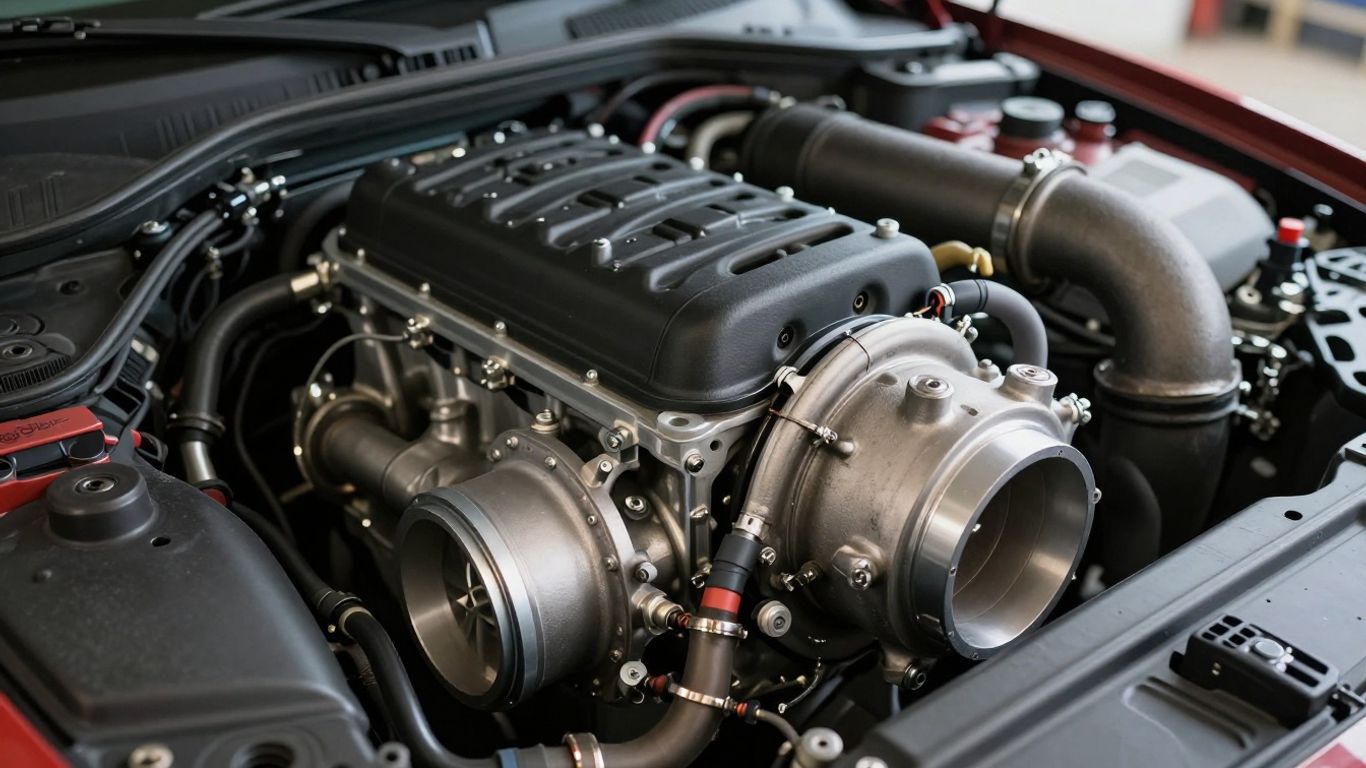
How the turbocharger builds engine power
Exhaust gases turn a turbine wheel, which is connected by a shaft to a compressor wheel. The compressor draws in air and sends it toward the engine, allowing the engine to burn more fuel and produce more power when conditions call for it. An intercooler may cool the compressed air before it enters the engine, improving its density. The basic principle is simple, but the operating speeds and temperatures are severe.
The role of oil, air, exhaust, and boost control
Engine oil lubricates and helps cool the turbocharger’s center bearing. The air filter and intake plumbing must supply clean, unrestricted air, while the exhaust side must move gases efficiently. Wastegates, diverter valves, actuators, and pressure sensors help regulate boost instead of allowing it to rise without control. A leak or restricted passage in any of these areas can create symptoms that feel very similar to turbo wear.
Common Audi engines affected by turbocharger issues
Turbocharger concerns can arise across several engine families and model years, but the exact weak points depend on the engine code, turbocharger design, mileage, and maintenance history. Some vehicles use pressure-operated, vacuum-operated, or electric boost actuators. The applicable service information and vehicle identification number matter more than a broad assumption about every model.
Public information also describes a class-action settlement involving certain Volkswagen and Audi vehicles, turbochargers, and eligibility requirements. That information is separate from a mechanical diagnosis, and owners should check the official notice and their vehicle details rather than assume coverage.
Turbocharger wear versus related engine problems
A worn turbocharger is only one possible explanation for weak acceleration. A split charge hose, faulty sensor, ignition misfire, restricted exhaust, or fuel-delivery fault can produce overlapping symptoms. A measured diagnosis matters because a new turbocharger will not correct a problem elsewhere in the engine-management system.
The most common Audi turbocharger problems
The most common Audi turbocharger problems develop gradually, although a sudden failure can happen after a bearing, hose, or control component gives way. Drivers often notice a change in how the car responds before any warning light appears. Smoke and noise add useful clues, but neither one identifies the failed part by itself. The pattern, timing, and test results need to be considered together.
Loss of power and slow acceleration
A vehicle with insufficient boost may feel flat when pulling away, climbing a hill, or accelerating at highway speed. There may be more turbo lag than usual, or the engine may stop building power at a particular point in the rev range. A disconnected hose, stuck wastegate, diverter-valve fault, or air-metering issue can all create this sensation. Sudden power loss is a reason to reduce load and arrange an inspection.
Excessive smoke from the exhaust
Blue or blue-gray smoke can indicate that oil is entering the combustion process, while black smoke may point to an air-fuel imbalance. White smoke has several possible causes, including condensation or a coolant-related issue. Smoke that is persistent, heavy, or accompanied by rising oil consumption should not be dismissed as normal turbo behavior. Continuing to drive may worsen damage if oil is passing through a failing turbocharger.
Whining, rattling, or siren-like noises
A new high-pitched whine, metallic rattle, scraping sound, or siren-like rise and fall with engine speed deserves a careful inspection. Noise may come from compressor contact, shaft or bearing wear, a loose heat shield, an exhaust leak, or a wastegate mechanism. The location and operating condition of the sound are valuable clues. Recording when it happens can help a technician reproduce it safely.
Oil consumption and oil leaks
Some oil use is normal in an internal-combustion engine, but a sudden increase is not. Oil may leak from a supply or return line, a gasket, nearby plumbing, or a damaged turbocharger seal. The technician should inspect the entire area for fresh oil and also check whether the intake tract contains more oil residue than expected. A low oil level can then create a second problem by starving the turbocharger of lubrication.
Warning signs that point to turbocharger failure
Warning signs become more useful when they are matched to operating conditions. A vehicle that loses power only under heavy acceleration may have a boost-control or leak issue, while smoke and unusual shaft noise raise greater concern about internal damage. The dashboard can provide another clue, but a warning light is not a turbocharger verdict. Treat it as a request for testing.
Check engine light and reduced-power mode
The engine computer may illuminate the check engine light when requested and actual boost do not agree. It can also limit engine output to protect the engine or emissions system. Reduced-power mode may disappear after the vehicle is switched off and restarted, but that does not mean the fault has gone away. Stored and pending codes, freeze-frame data, and live readings can reveal when the problem occurred.
Underboost and overboost symptoms
Underboost often feels like hesitation, sluggish acceleration, or a lack of expected torque. Overboost may feel abrupt, inconsistent, or followed by a protective power reduction. Both conditions can result from a control fault, a sensor problem, a leak, or a mechanical issue in the turbocharger. A turbocharger diagnosis resource can help technicians organize checks around wastegate movement, control circuits, and charge-system pressure testing.
Rough running, misfires, and poor fuel economy
Rough running and misfires do not automatically mean the turbocharger has failed. Unmetered air after the mass-airflow sensor, damaged hoses, spark problems, injector faults, or incorrect boost readings may disturb combustion. Fuel economy can decline when the engine is working harder to make ordinary power, but it is a supporting symptom rather than proof. Resolve any misfire promptly because continued misfiring can damage other emissions components.
When unusual noises require immediate attention
A faint whistle that has always been present may be harmless, but a rapidly worsening whine or grinding sound is more serious. Stop hard acceleration if the noise is accompanied by smoke, severe power loss, an oil warning, or an engine that begins running away on its own. Do not place hands near moving components while the engine is running. Towing is safer than testing a suspected mechanical failure on the road.
What causes Audi turbocharger problems
Turbochargers generally fail because heat, contamination, pressure, and mechanical stress accumulate over time. Sometimes the turbo is the original source of the trouble; sometimes it is the victim of an upstream engine or maintenance problem. Finding that distinction is essential, especially before fitting a replacement. Otherwise, the same condition can damage the replacement unit.
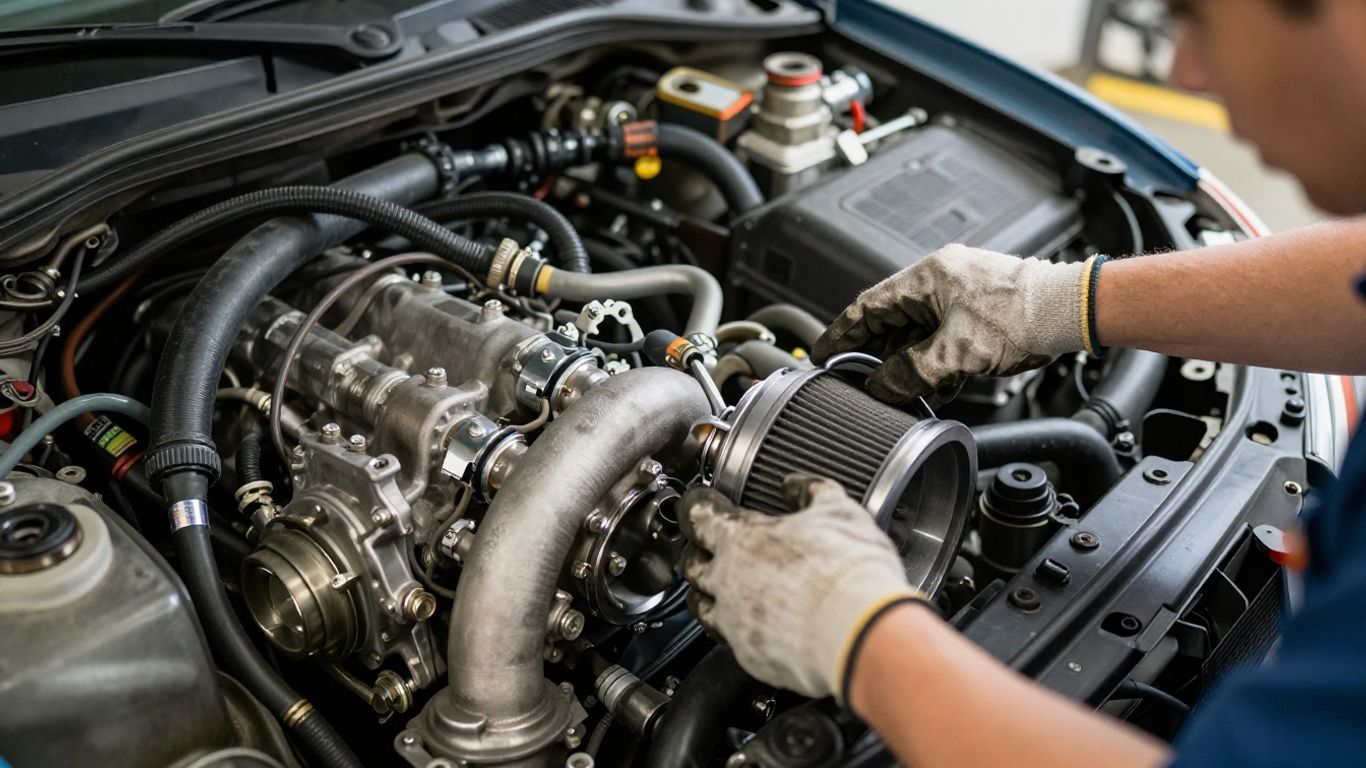
Restricted or contaminated engine oil
A turbocharger depends on a clean, correctly specified oil supply. Sludge, debris, a blocked feed passage, low oil level, or delayed servicing can restrict lubrication and raise bearing temperatures. Contaminated oil may also carry particles through the center housing. The repair plan should therefore investigate oil condition and supply, not just the visible turbocharger damage.
Blocked air filters and intake leaks
A heavily restricted air filter makes it harder for the compressor to receive air. Leaks in the intake or charge-air system can let measured and delivered airflow disagree, causing poor boost control and reduced performance. Loose clamps, cracked hoses, damaged seals, and intercooler connections are common inspection points. These faults are often less expensive to correct than turbocharger replacement, but they still need to be found accurately.
Failed wastegates, diverter valves, and boost sensors
The wastegate controls how much exhaust energy reaches the turbine, while a diverter valve manages pressure when throttle conditions change. Sensors provide the computer with information used to regulate the system. Mechanical wear, vacuum problems, electrical faults, or incorrect readings can all produce underboost or overboost codes. Testing the component in its operating circuit is more reliable than condemning it from a code alone.
Carbon buildup, overheating, and high engine loads
Deposits can interfere with airflow and moving mechanisms, depending on their location. Repeated high loads, inadequate cooling, and excessive heat can accelerate deterioration of oil and seals. Short trips, neglected maintenance, and demanding driving do not guarantee turbocharger failure, but they can increase stress on the system. The surrounding engine should be checked whenever a turbocharger is removed.
For context beyond vehicle repair, unrelated research may include Volkswagen, Travel FX, duvet comforter, EBOO therapy, or CIPD certifications; none of those subjects changes the mechanical advice here.
How to diagnose an Audi turbocharger problem
Diagnosis should move from simple external checks to more involved testing. A technician first confirms the complaint, reviews service history, and checks for obvious leaks or damaged wiring. Next come electronic data, pressure measurements, and physical inspection. This sequence helps avoid replacing an expensive assembly for a fault caused by a hose or control valve.
Reviewing fault codes with a diagnostic scanner
A scanner can identify underboost, overboost, actuator, pressure-sensor, and air-metering faults. The code is a starting point, not a conclusion. Freeze-frame information can show engine speed, load, and temperature when the fault was recorded, while live data can compare requested boost with actual boost. Clearing codes before recording them removes useful evidence.
Checking boost pressure and intake system leaks
A pressure or smoke test can reveal leaks that are difficult to see at rest. The technician may compare commanded and measured boost during a controlled road test or on suitable shop equipment. Intake pipes, intercooler joints, vacuum lines, and actuator connections should be checked methodically. The test results help distinguish a system that cannot make boost from one that makes too much.
Inspecting turbo shaft play and compressor damage
With the intake removed as appropriate, a technician can inspect the compressor wheel, housing, and shaft movement. Light oil film may not prove failure, but contact marks, chipped blades, excessive play, or damaged housings are more concerning. The exhaust side and oil lines also deserve attention. Physical inspection must follow safe procedures because the turbocharger can retain heat and sharp edges.
Separating turbocharger failure from ignition or fuel faults
Misfire data, spark-plug condition, injector operation, fuel pressure, and compression can point away from the turbocharger. A boost problem may be secondary to a weak ignition system, and a misfire can make acceleration feel like underboost. A useful diagnostic process tests the engine as a complete system rather than focusing on the most recognizable component. That approach protects both time and the repair budget.
A short video can make the airflow path easier to visualize before a workshop visit.
Repair and replacement options for Audi turbochargers
The right repair depends on what failed and why. Some vehicles need only a hose, sensor, valve, actuator, or oil-line service, while internal turbocharger damage may require rebuilding or replacement. A written estimate should identify the tested fault and list related work. It should also explain whether the underlying cause has been corrected.
When cleaning or replacing a related component may work
Cleaning may help when deposits restrict a mechanism and the affected parts remain serviceable. Replacing a cracked hose, faulty diverter valve, boost sensor, or damaged actuator can restore normal operation without replacing the complete turbocharger. That decision should follow testing, not a visual guess. If the compressor wheel or bearing system is damaged, cleaning alone will not restore safe operation.
Rebuilding the turbocharger versus installing a new unit
A rebuild may be suitable when the housing and major components can be inspected, machined, balanced, and returned to specification by a qualified specialist. A new or remanufactured unit may offer a simpler path when damage is extensive or parts are unavailable. Fitment, calibration, warranty terms, and the rebuilder’s quality controls all matter. The cheapest unit is not necessarily the least expensive repair over time.
Parts, labor, and other repair cost factors
Cost varies with vehicle access, turbocharger design, parts choice, and the amount of related work required. Labor may include removing surrounding components, cleaning the intake, replacing gaskets and lines, and carrying out post-repair tests. Model-specific programming or actuator calibration can also affect the estimate. Ask whether the quote includes diagnosis, fluids, filters, and verification rather than comparing turbo prices alone.
Why oil and filter service matters after replacement
A replacement turbocharger needs a clean oil supply and a properly prepared installation. The technician should inspect feed and return passages, use the specified oil, renew required seals, and address contamination left by the original failure. Air and oil filters may also need attention according to the repair findings. Afterward, boost behavior, leaks, and oil level should be checked before the vehicle returns to normal heavy use.
How to prevent future Audi turbocharger problems
Prevention is mostly consistent maintenance rather than a special driving trick. The turbocharger shares the engine’s oil, air, cooling, and control systems, so neglect in one area can eventually affect another. Keep records of services and investigate small changes before they become dramatic symptoms. A repair shop can also advise on model-specific service requirements.
Following the correct oil specification and service interval
Use the oil grade and specification listed for the engine, and follow the service schedule appropriate to the vehicle’s conditions. Correct level matters too: both low oil and overfilling can create problems. If the vehicle sees frequent short trips, severe heat, towing, or high-load driving, ask whether the maintenance schedule needs adjustment. Good oil service is one of the simplest ways to protect the turbocharger’s bearing system.
Keeping the air intake and cooling systems maintained
Replace a restricted air filter and inspect intake plumbing during routine service. Check for loose clamps, split hoses, and oil mist around charge-air connections. The cooling system should maintain the engine’s operating temperature, with leaks and overheating addressed promptly. Clean airflow and stable temperatures reduce unnecessary stress on the turbocharger.
Using proper warm-up and cooldown habits
Avoid demanding full boost immediately after a cold start, when oil has not yet circulated fully. After sustained heavy loading, a gentle period of driving allows temperatures to settle before shutdown. Modern vehicles manage many operating conditions themselves, but considerate habits still reduce abrupt thermal changes. These practices cannot repair worn parts, yet they may help preserve a healthy system.
Choosing qualified Audi repair support and quality parts
Choose a technician who can read manufacturer-level data, test boost-control components, and verify repairs rather than simply swapping parts. Quality replacement components should match the vehicle and engine configuration, with clear warranty terms. Keep invoices and diagnostic results in case a recurring fault needs to be traced. Careful installation is as important as the component itself.
Conclusion
Audi turbocharger problems are easier to manage when symptoms are treated as clues rather than conclusions. Power loss, smoke, noise, oil use, and warning lights should lead to a structured inspection of the turbocharger and the systems around it. Accurate testing can identify a smaller repair when one is possible, while early action can limit damage when replacement is necessary.
Frequently Asked Questions
What is the most common sign of a failing turbocharger?
A noticeable loss of power or slower acceleration is common, but it can also result from an intake leak, control fault, ignition problem, or fuel issue. Testing is needed to identify the cause.
Can a turbocharger fail without a warning light?
Yes. Mechanical wear, oil leakage, or a developing bearing problem may begin with noise or smoke before the computer detects a boost fault. A warning light is helpful but not required for a problem to exist.
Is blue smoke always caused by the turbocharger?
No. Blue smoke indicates oil burning, which may come from the turbocharger, piston rings, valve seals, or another engine problem. The intake, exhaust, and engine should be inspected together.
Can a boost leak feel like turbocharger failure?
Yes. A split hose, loose clamp, damaged intercooler connection, or faulty seal can prevent the engine from receiving the expected boost. Pressure or smoke testing can help locate the leak.
How long does a turbocharger replacement take?
The time depends on the vehicle’s layout, access to the turbocharger, and the related work required. Cleaning, oil-line service, gasket replacement, calibration, and post-repair testing can extend the job.
Should I keep driving if the turbocharger is making noise?
Avoid hard acceleration and arrange an inspection promptly. Stop driving and consider towing if the noise is accompanied by heavy smoke, severe power loss, an oil warning, or signs of uncontrolled engine speed.
How can turbocharger problems be prevented?
Use the correct oil and service interval, keep filters and intake plumbing in good condition, address overheating quickly, and allow sensible warm-up and cooldown periods. Investigate new symptoms early.