

Key Takeaways
A timing chain tensioner problem can begin with a brief startup rattle and progress to serious engine damage. Prompt diagnosis, correct oil service, and careful parts selection can reduce the risk of a much larger repair.
- A tensioner keeps the timing chain tight and correctly aligned.
- Cold-start rattling is an early warning sign worth investigating.
- Fault codes, live timing data, and physical inspection work best together.
- A complete timing repair may be safer than replacing one part alone.
- Driving should stop when symptoms suggest the chain may have skipped.
Understanding Audi timing chain tensioner failure
The timing system keeps the crankshaft and camshafts synchronized so the valves open at the intended moments. The tensioner is a small component, but its condition affects the stability of the entire chain drive. Audi timing chain tensioner failure is therefore more than an irritating noise; it can become a valve-timing problem. The exact risk depends on the engine, mileage, maintenance history, and extent of wear.
What the timing chain tensioner does
A timing chain tensioner applies force to the chain, usually through a movable piston and guide surface. It takes up normal slack as the chain moves and helps prevent the chain from whipping against its guides. Unlike a simple fixed bracket, it must accommodate changes in chain load while the engine is running.
When the tensioner no longer holds its position, the chain may become loose during startup, deceleration, or changes in engine speed. That looseness can create noise first, followed by inaccurate valve timing if the condition worsens.
How the tensioner maintains chain pressure
Many tensioners use engine oil pressure together with an internal spring or locking mechanism. After the engine has been sitting, oil pressure may take a moment to build. A healthy assembly still limits chain movement during that brief interval; a worn one may allow noticeable slack.
The chain, guides, tensioner, and sprockets work as a set. A fault in one part can place extra load on the others, so a quiet engine after warm-up does not automatically rule out a developing problem.
Audi engines commonly affected
There is no single mileage or model year that proves a tensioner is about to fail. Different engines use different chain layouts and parts, and production updates may change the inspection or repair procedure. Owners should verify the engine code, build information, and applicable service records rather than relying on a broad model label.
Some early 2.0T applications are frequently discussed in connection with outdated tensioner designs. A vehicle-specific inspection remains essential, since similar symptoms can come from guides, oil-pressure issues, or other rotating components.
Why tensioner problems can damage the engine
If chain slack becomes excessive, the chain can move out of its intended position or skip a sprocket tooth. The camshaft timing then shifts while the pistons continue moving with the crankshaft. In an interference engine, that mismatch can allow valves and pistons to contact one another.
That is why early mechanical inspection matters even when the rattle lasts only a second. A short noise may be the first visible symptom of a problem that has not yet caused a fault code.
Signs of a failing Audi timing chain tensioner
Symptoms often appear in stages, although not every vehicle follows the same pattern. A sound that occurs only after the car sits overnight deserves a different response from a persistent rattle at warm idle, but both merit attention. The timing chain warning signs covered in diagnostic references can help owners describe what they hear and feel. Do not diagnose the tensioner from one symptom alone.
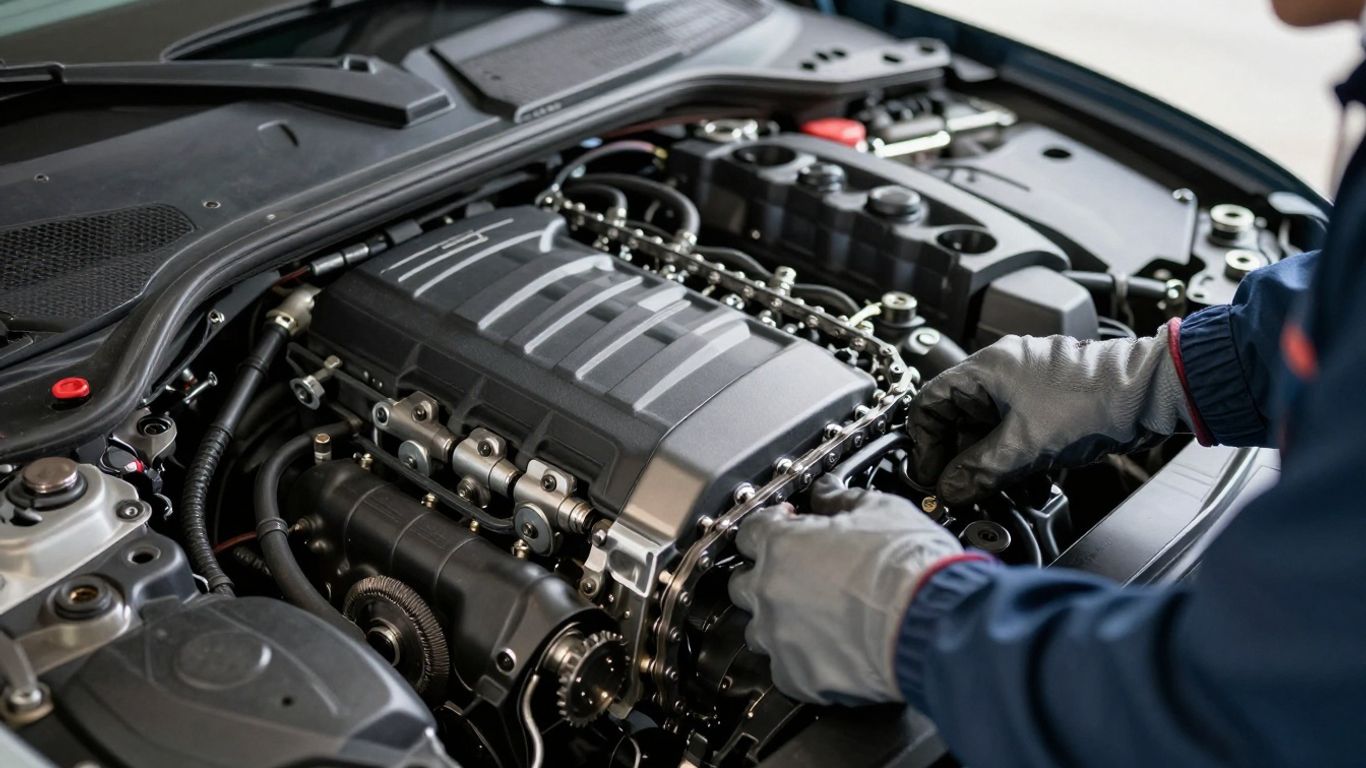
Rattling during cold starts
A brief metallic rattle immediately after a cold start is one of the most recognizable warnings. It may fade as oil pressure rises, which can make it tempting to dismiss. Repeated occurrences, especially after the vehicle has sat for several hours, should be recorded and reported to a technician.
The location and character of the sound matter. A microphone or a short phone recording taken safely from outside the vehicle can help, but it should not replace an in-person inspection.
Check engine light and timing-related fault codes
A control module may detect that the camshaft and crankshaft are no longer aligned as expected. Timing-related codes can support the diagnosis, but they do not identify a failed tensioner by themselves. Wiring, sensors, chain stretch, and other mechanical faults can produce similar readings.
The cold-start rattle guide describes how scan data and inspection can be combined on certain 2.0T applications. Treat such information as a starting point, then confirm the result for the exact engine in the vehicle.
Rough running, misfires, or reduced performance
Incorrect valve timing can cause a shaky idle, hesitation, hard starting, or misfire symptoms. Some drivers notice reduced acceleration before a warning light appears. These signs also overlap with ignition, fuel, intake, and sensor problems, so replacing a tensioner without testing can waste time and money.
A technician should compare the symptom with fault-code freeze-frame data and live timing values. The more consistently the running problem occurs alongside chain noise, the more urgently the timing system deserves inspection.
No-start conditions and sudden engine failure
A failed tensioner can allow enough chain movement for the engine to lose synchronization. In that situation, the starter may crank normally while the engine does not fire, or an engine that was running may stop and refuse to restart. Continued cranking is not a useful diagnostic strategy when mechanical timing may have shifted.
Tow the vehicle if the noise suddenly becomes severe, the engine stalls, or a no-start condition follows a rattle. The 2.0T tensioner replacement information discusses no-start symptoms and updated parts for a defined group of applications, but vehicle identification still comes first.
Common causes of tensioner failure
A tensioner can fail because of age, oil-related stress, a weak internal component, or the additional load created by a stretched chain. These causes can overlap, which is why a repair estimate based only on the visible tensioner may be incomplete. Maintenance history is useful evidence, but it cannot prove the condition of hidden parts. The goal is to find what caused the loss of control, not merely silence the noise.
Hydraulic pressure loss and worn internal parts
Oil pressure helps many tensioners extend and hold their working position. A leaking check valve, worn piston, tired spring, or damaged sealing surface may let the tensioner retract when the engine is off. The result can be slack during the next startup.
Low oil pressure elsewhere in the engine can create a similar symptom. Testing should therefore consider the lubrication system instead of assuming the tensioner itself is the only source of pressure loss.
Weak or outdated tensioner designs
Some engine applications received revised tensioners or related timing components during production. That does not mean every older vehicle will fail, nor does an updated part remove the need to inspect the chain and guides. The correct revision should be confirmed by engine code and parts information.
A repair facility should document which version is being installed and whether associated components show wear. Mixing old and revised parts without understanding their compatibility can leave the underlying risk unresolved.
Low, dirty, or incorrect engine oil
Oil that is low, heavily contaminated, or not approved for the engine can affect hydraulic operation and accelerate wear. Long service intervals may allow deposits to interfere with small oil passages. A correct oil level is only one part of the picture; oil quality and specification matter as well.
Owners should keep receipts and note the grade used at each service. If a symptom began after an oil change, verify the fill level and specification before drawing conclusions, while still treating a chain rattle as a mechanical warning.
Excessive timing chain stretch
Chains lengthen gradually as pins, rollers, and related surfaces wear. Stretch changes the relationship between the crankshaft and camshafts, forcing the tensioner to extend farther to maintain control. At some point, the available travel may no longer be enough.
A stretched chain can also damage guides and sprockets. Replacing only the tensioner may provide a temporary improvement while leaving a worn chain under abnormal load, so the full timing assembly should be assessed.
How to diagnose the problem
Diagnosis begins with a careful account of when the noise occurs, how long it lasts, and what the engine does afterward. A qualified technician may combine a scan-tool review, oil-pressure checks, listening tests, and mechanical inspection. The timing tensioner symptoms guide is useful for organizing observations before an appointment. No single test is definitive in every engine.
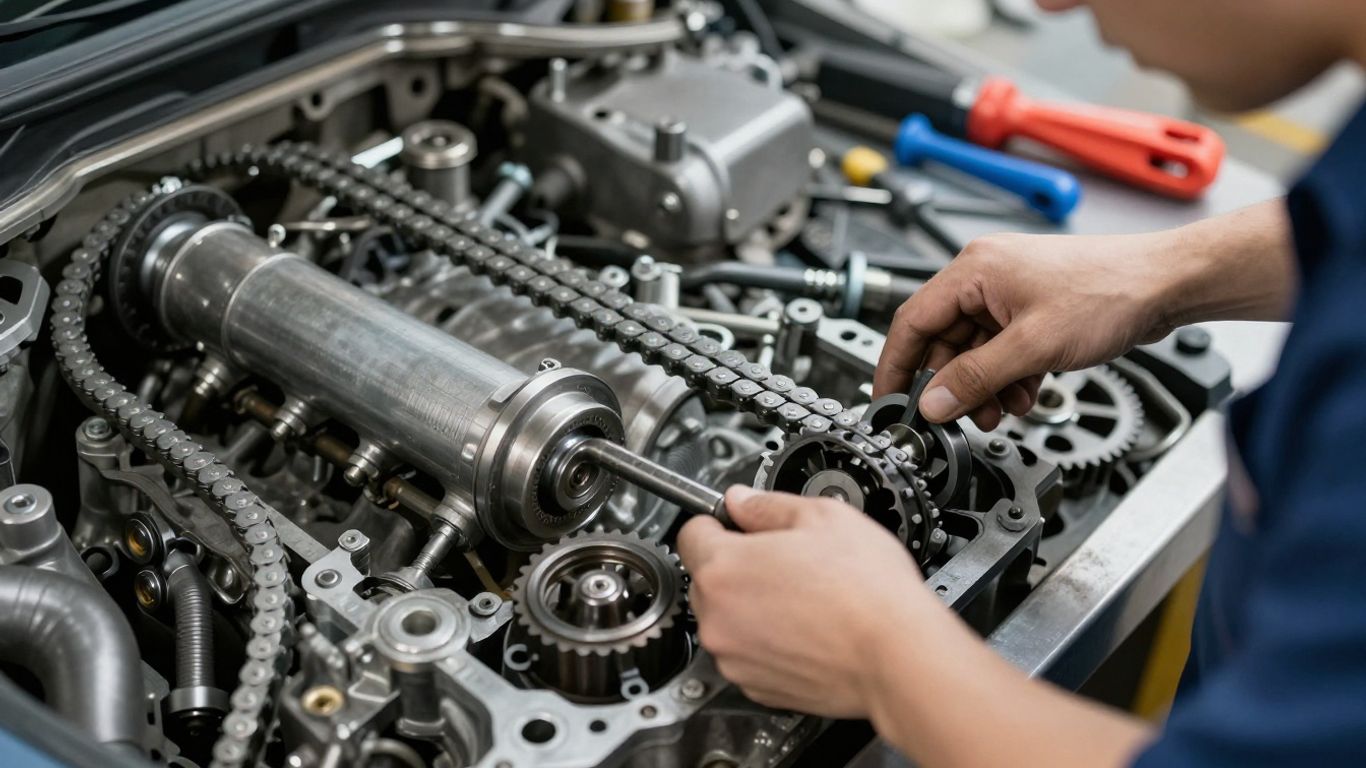
Reviewing symptoms and service history
Write down whether the rattle occurs only when cold, after the car has been parked nose-up or nose-down, or during warm idle and deceleration. Note warning lights, misfires, hard starts, recent oil work, and any previous timing repairs. This timeline can reveal whether the problem is stable or progressing.
Service records may also show whether a chain kit, guides, or an updated tensioner has already been installed. If records are incomplete, the technician may need to verify the parts physically rather than treating an old invoice as proof.
Checking fault codes and camshaft timing data
A scan tool can reveal stored and pending codes, misfire counters, and measured camshaft positions. Comparing commanded and actual timing helps establish whether the control system is struggling to maintain synchronization. Codes should be interpreted alongside startup behavior and mechanical findings.
A clean scan does not guarantee a healthy tensioner. A brief loss of chain control may occur before the module records a fault, particularly when the engine still runs within an acceptable range.
Inspecting the tensioner and timing chain
Depending on the engine layout, inspection may involve removing covers, checking tensioner extension, examining guide surfaces, and measuring chain position. The technician should look for broken guide material, abnormal wear marks, damaged sprocket teeth, and evidence of oil starvation.
The repair decision becomes clearer when the condition of each related part is documented. Replacing components as a matched system is often more dependable than changing the easiest-to-reach part without checking the rest.
Distinguishing tensioner failure from other engine noises
A rattle can come from an accessory drive, a loose heat shield, an exhaust component, a variable-valve-timing actuator, or internal engine wear. Sound location, engine temperature, and changes with rpm help narrow the possibilities. A stethoscope can assist a professional, but improvised probing around moving belts is unsafe.
The diagnostic process should reproduce the complaint without creating unnecessary risk. If the noise is accompanied by a warning light, rough running, or loss of oil pressure, the timing system should be treated as a priority rather than as just another possible rattle.
Audi timing chain tensioner repair options
The appropriate repair depends on what inspection finds, not simply on the presence of a startup noise. A tensioner alone may be reasonable when the chain and guides are within specification, while broader wear calls for a complete timing repair. Ask for a written explanation of the parts being replaced and the evidence supporting that choice. The updated tensioner service is one example of why revision and application details matter.
Replacing the tensioner alone
Replacing only the tensioner can limit cost and labor when the chain, guides, and sprockets remain sound. This approach is most defensible after those components have been inspected and the replacement part is confirmed as correct for the engine.
It is less attractive when the chain has stretched or a guide has shed material. A new tensioner cannot restore a worn chain or repair damage elsewhere in the timing drive.
Installing a complete timing chain kit
A complete kit may include the chain, tensioner, guides, and related fasteners or sprockets. Installing the components together can make sense when wear is widespread or access requires substantial disassembly. The kit contents should be listed clearly on the estimate.
The phrase “complete kit” is not universal, so confirm exactly what the shop includes. Seals, fluids, and one-time-use bolts may be separate line items, and labor can vary with engine configuration.
Repairing damaged guides, sprockets, or valves
A skipped chain can damage guides and sprocket teeth, while a significant timing error can bend valves or affect the cylinder head. In that case, the repair may extend beyond the chain drive. Compression testing, leak-down testing, or cylinder-head inspection may help establish the extent of damage.
The final choice should balance the vehicle’s condition, repair warranty, and total estimate. A low initial quote is not necessarily economical if it leaves damaged components in service.
Comparing dealership and independent shop repairs
A dealership may have direct access to factory procedures, vehicle records, and application-specific parts information. An experienced independent shop may offer a competitive labor rate and strong familiarity with timing-system repairs. The important comparison is the diagnostic method, parts quality, warranty, and clarity of the written estimate.
Ask whether the quote includes post-repair timing verification, oil and filter service where appropriate, and inspection of related components. Those details make two apparently similar estimates easier to compare.
Repair costs and prevention strategies
Timing repairs range from a focused component replacement to extensive engine work. Labor access, parts included, regional rates, and collateral damage can change the total substantially. Before authorizing work, request the diagnosis, proposed parts list, and warranty in writing. Prevention cannot eliminate every failure, but it can improve the odds of finding wear before the chain skips.
Factors that affect total repair cost
The largest variables are engine layout, access time, parts scope, and whether valve or cylinder-head damage has occurred. A vehicle needing only a tensioner is a different financial decision from one requiring chains, guides, sprockets, seals, and head repairs.
Use these questions when reviewing an estimate:
- Which timing components are worn or damaged?
- Is the chain being measured or replaced, and why?
- Does the price include updated parts, fluids, and one-time-use hardware?
- What testing confirms the engine is correctly timed afterward?
A clear answer to each question helps separate necessary work from guesswork. It also gives the owner a record for future maintenance.
When driving the vehicle is unsafe
Avoid driving if the rattle is severe or persistent, the engine has stalled, the check engine light is flashing, or the vehicle is misfiring badly. A chain that jumps can turn a running car into a no-start vehicle without much warning. Towing is usually cheaper than adding internal engine damage.
If the sound is brief and the engine otherwise runs normally, arrange an inspection promptly rather than treating the car as cleared. Symptoms that worsen from week to week should move the appointment forward.
Choosing the correct oil and service intervals
Use the oil specification and viscosity listed for the exact engine and climate, along with a suitable filter. Check the level on the manufacturer’s recommended schedule and address leaks quickly. Shorter service intervals may be sensible in severe-use conditions, but the maintenance plan should be based on the vehicle’s documentation and operating pattern.
Oil service supports the tensioner’s hydraulic function, yet it cannot reverse chain stretch or repair worn internal parts. Good maintenance lowers avoidable stress; it does not replace diagnosis when a rattle appears.
Inspecting updated parts during routine maintenance
When a timing repair is performed, ask whether the installed tensioner and guides are the latest approved revisions for that engine. Keep the part numbers and invoice with the vehicle records. During later services, mention any returning startup noise even if it disappears quickly.
Routine maintenance is an opportunity to catch oil leaks, low levels, and unusual sounds early. It is not a reason to replace expensive timing parts without evidence, but it is a sensible time to verify that prior repairs used the correct components.
Conclusion
A timing chain tensioner deserves attention as soon as cold-start rattling, timing codes, rough running, or hard starting appears. Confirm the diagnosis with scan data and physical inspection, then choose a repair that addresses the condition of the entire timing system rather than one isolated part.
Frequently Asked Questions
Can a timing chain tensioner fail without warning?
Yes. Some failures begin with a brief rattle or no obvious dashboard warning, while others produce fault codes or rough running first. Regular listening and prompt inspection improve the chance of catching the problem early.
Is a brief cold-start rattle always a tensioner failure?
No. Other timing, oil-pressure, accessory, exhaust, or valvetrain problems can sound similar. Repeated timing-related noise should be diagnosed rather than identified by sound alone.
Can low engine oil cause timing-chain noise?
Low oil can interfere with hydraulic tensioner operation and may contribute to noise or wear. Check the level safely, but do not assume adding oil fixes a component that has already been damaged.
Is it safe to drive with a timing-chain rattle?
It may not be safe, especially when the noise is persistent, worsening, or accompanied by misfires, a warning light, stalling, or hard starting. Towing is the safer choice when chain synchronization may be at risk.
Should the whole timing chain kit be replaced?
That depends on inspection results, chain stretch, guide condition, sprocket wear, and access labor. A complete kit is often considered when several parts are worn or the engine must already be opened substantially.
How long does a timing-chain repair take?
Labor time varies by engine design and access. A focused repair may take less time than a complete kit installation or work involving damaged valves and the cylinder head. The shop should provide an engine-specific estimate.
How can timing-chain problems be prevented?
Use the correct oil, maintain a sensible service schedule, monitor oil level, respond to leaks, and investigate new startup noises quickly. During repairs, verify that the parts match the engine and include any applicable revisions.