

Key Takeaways
An Audi timing belt replacement is scheduled maintenance, not a repair to postpone until the belt makes noise. The correct interval, parts package, and inspection plan depend on the engine and the car’s service history.
- Confirm the mileage and age interval for the exact engine.
- Replace related tensioners, pulleys, and usually the water pump together.
- Treat starting trouble, misfires, leaks, and belt damage as warning signs.
- Compare estimates by parts, labor, warranty, and included inspections.
- Keep detailed records after the work is completed.
Understanding the Audi timing belt system
The timing system coordinates the engine’s internal movement, so a small component carries a very large responsibility. Some Audi engines use a belt, while others use a chain, and the distinction affects both service planning and cost. Before approving work, identify the engine code or confirm the schedule with a qualified technician.
What the timing belt does in an Audi engine
A timing belt synchronizes the crankshaft and camshaft so the valves open and close at the intended moment. If that relationship changes, combustion becomes uneven or stops altogether. Because the belt works under constant tension and heat, its condition cannot be judged by mileage alone.
Timing belt vs. timing chain
A timing chain is a different design, generally using metal links and guides rather than a reinforced rubber belt. That does not make a chain system maintenance-free; guides, tensioners, lubrication, and chain stretch can still matter. The owner’s manual or a repair database is the safest way to determine which system is fitted.
Audi engines commonly equipped with timing belts
Timing-belt applications vary by model year, engine family, and market, so a broad rule for all Audis can be misleading. Older four-cylinder and some V6 applications may use belts, while other engines use chains. Ask the shop to document the exact engine application rather than relying only on the model badge.
What happens when the belt loses its timing
If the belt jumps a tooth, the engine may run poorly or fail to start. If it breaks, pistons and valves can collide in an interference engine, potentially turning routine maintenance into extensive cylinder-head work. Preventive replacement protects against that high-cost failure, although it cannot guarantee that every related component will remain trouble-free.
When to replace an Audi timing belt
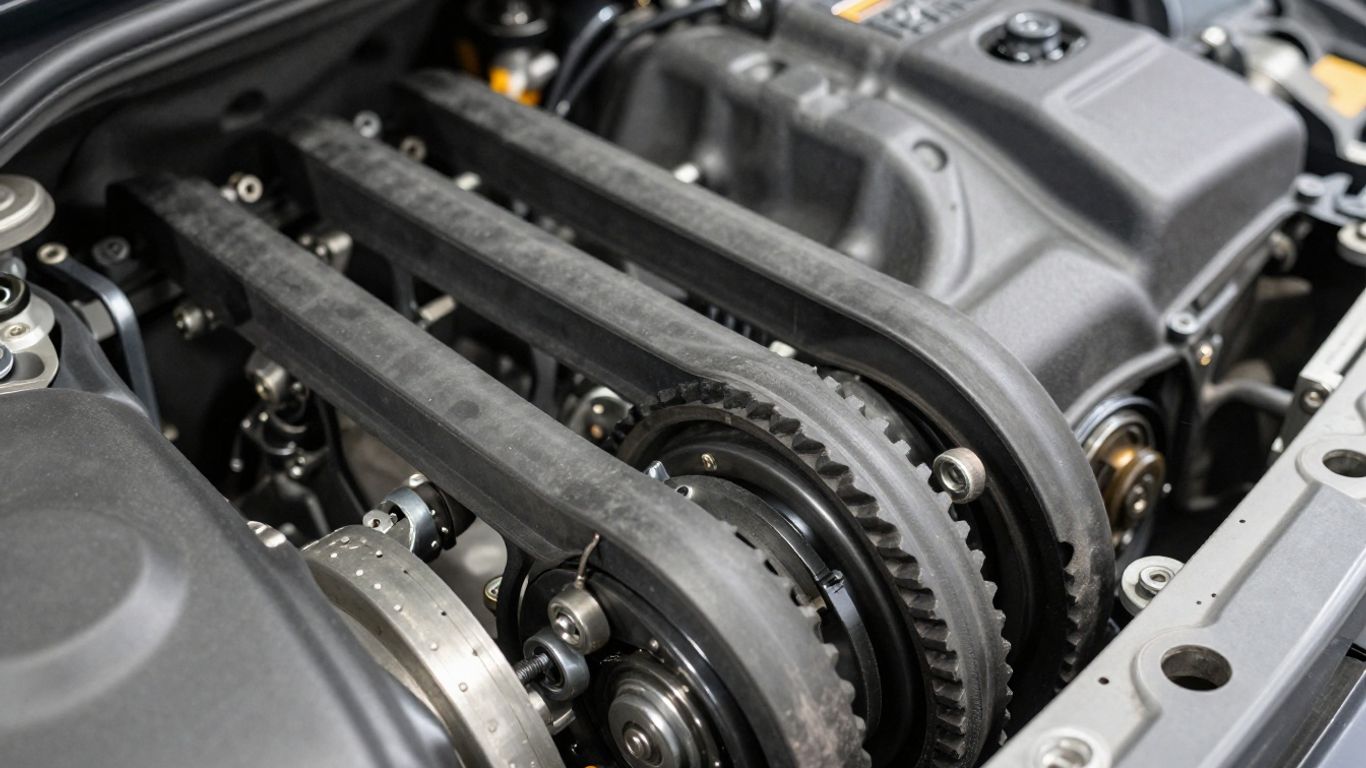
The replacement schedule is normally based on both distance traveled and elapsed time. The right Audi timing belt replacement interval is not necessarily the same as the interval for a similar-looking model or a different engine. Use the vehicle’s maintenance documentation, then have the service history checked for previous work.
Typical mileage and time-based intervals
Many manufacturers publish a mileage limit, a time limit, or both, but the exact figures differ across engines and model years. If the car reaches either limit, schedule an inspection or replacement according to the manufacturer’s guidance. A missing record should be treated cautiously rather than as proof that the belt was recently changed.
Why driving conditions can shorten the interval
Frequent short trips, heavy traffic, high temperatures, dusty roads, and long periods of idling can place more stress on an engine and its rubber components. Oil contamination and coolant exposure are also reasons to investigate sooner. These conditions do not replace the factory schedule, but they can justify a more careful inspection.
How to verify the schedule for your Audi model
Start with the owner’s manual and service records, then confirm the recommendation using the vehicle identification number and engine code. A reputable shop should be able to explain where its interval comes from. When comparing information online, separate a general maintenance article from documentation specific to the vehicle.
Why age matters even with low mileage
Rubber can harden, dry out, and lose flexibility while a vehicle is parked. That is why a low-mileage car may still need belt service once it reaches the time limit. A visual inspection is useful, but it cannot reliably reveal every internal weakness in an aging belt.
Warning signs of a worn timing belt
A timing belt can fail without providing a clear warning, so symptoms should never be used to delay scheduled service. Still, unusual behavior can point to a belt, tensioner, pulley, or nearby seal problem. If the engine suddenly runs badly, stop driving when safe and arrange a professional diagnosis.
Ticking, squealing, or unusual engine noises
Ticking may come from a range of engine problems, while squealing can involve a belt, tensioner, pulley, or accessory drive. Noise that changes with engine speed deserves attention, especially near the timing cover. Avoid guessing from sound alone because several unrelated faults can produce similar symptoms.
Difficulty starting or engine misfires
Hard starting, rough running, and misfires can occur when valve timing is no longer correct. They can also result from ignition, fuel, or sensor faults, so diagnostic testing is needed before parts are replaced. A vehicle that suddenly loses power should not be driven farther than necessary.
Oil or coolant leaks near the belt area
Oil and coolant can damage belt material and may indicate a failing seal, water pump, or hose. A leak near the timing cover is therefore more than a cosmetic concern. Have the source identified and corrected before installing a new belt, or the replacement may be exposed to the same problem.
Visible cracking, fraying, or missing teeth
If the belt is accessible, a technician may look for cracking, fraying, glazing, contamination, or damaged teeth. Do not remove covers or reach into the engine bay while components are moving. Even a belt that looks acceptable may be beyond its service interval.
What is included in an Audi timing belt replacement
A proper service is usually broader than removing one belt and fitting another. The technician should inspect the parts that control belt tension, guide its path, and circulate coolant where applicable. The written estimate should state exactly what is included, because packages vary between engines and shops.
Replacing the belt tensioner and idler pulleys
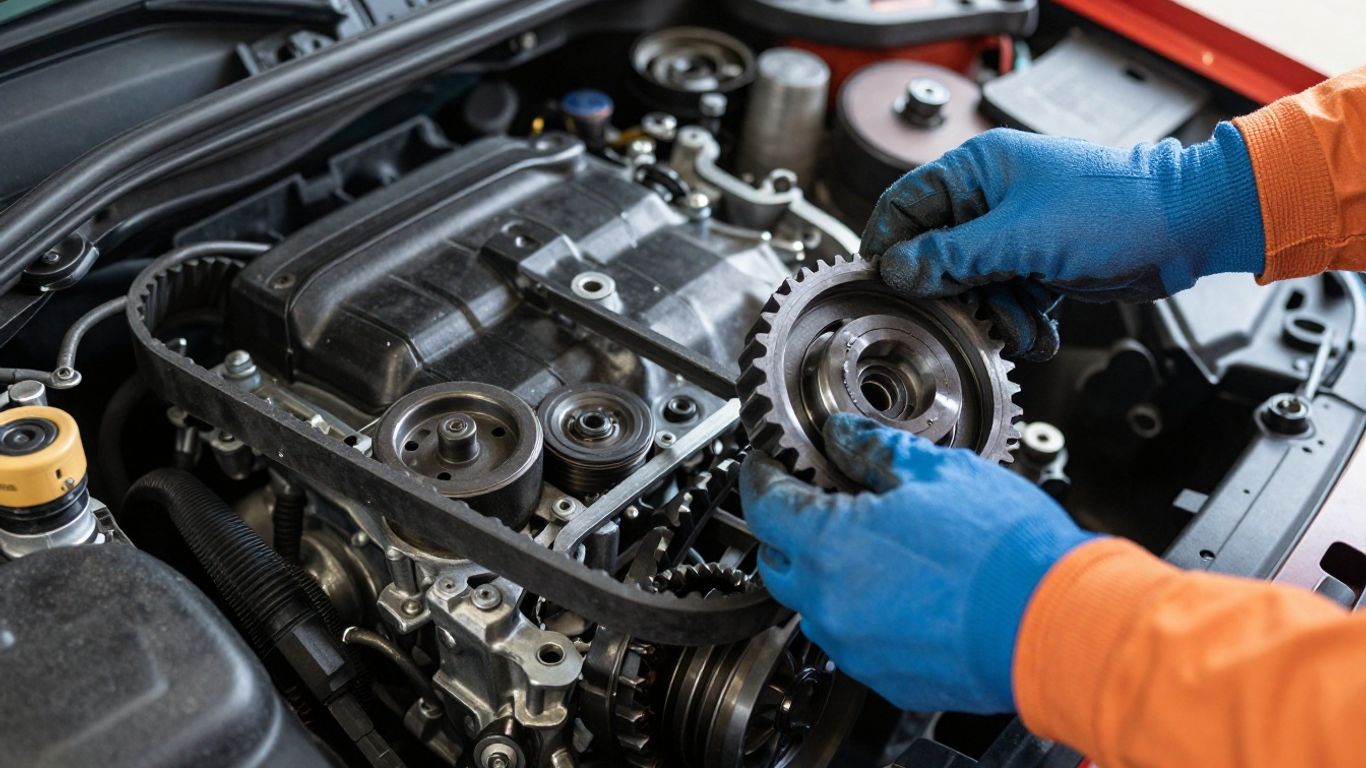
Tensioners and idler pulleys contain bearings and moving surfaces that wear with time. Reusing them with a new belt can leave an old failure point inside a newly serviced system. Replacing the complete wear set is often more sensible than paying labor again if a pulley begins to seize later.
Installing a new water pump
On many belt-driven engines, the water pump is located in the same service area and may be driven by the timing belt. Replacing it during the same operation can avoid duplicated labor, but the exact arrangement must be confirmed for the engine. The estimate should identify the pump brand, gasket or seal requirements, and any coolant replacement.
Inspecting seals, hoses, and accessory belts
The technician should look for leaks around camshaft and crankshaft seals, assess nearby hoses, and inspect the separate accessory belt system. A worn accessory belt is not the same component as the timing belt, but it can still affect reliability. Any recommended add-on should be tied to a visible condition or documented service need.
Confirming correct timing after installation
After installation, the crankshaft and camshaft timing marks must be aligned and the tension set according to the engine procedure. The engine should then be rotated or checked as required before final assembly. A final scan, leak check, and running inspection help confirm that the job was completed correctly.
Audi timing belt replacement cost factors
The price of an Audi timing belt replacement depends on the engine layout, access, parts package, and local labor rate. A low quote may exclude the water pump or tensioner, while a higher quote may include seals, coolant, and a longer warranty. Compare estimates line by line rather than comparing only the bottom number.
Parts and labor price differences
Parts prices vary by manufacturer, kit contents, and warranty terms. Labor can vary even more because some engines require substantial removal of surrounding components to reach the timing system. A useful estimate names the belt kit, pump if applicable, fluids, shop supplies, taxes, and expected labor hours.
How the Audi engine design affects complexity
Compact engine bays, limited access, multiple timing marks, and special locking procedures can increase labor time. Different engines may also use different belt paths and tensioning methods. The model name alone is not enough to predict complexity.
Dealership vs. independent European specialist pricing
Dealerships and independent specialists may use different labor rates, overhead structures, parts policies, and warranty terms. The least expensive estimate is not automatically the best value, and the most expensive is not automatically the most thorough. Ask both types of shop for the same written scope so the comparison is fair.
Additional repairs that may increase the estimate
The final cost can rise if the inspection finds a leaking seal, damaged pulley, failed water pump, worn accessory belt, or contaminated components. These items should be explained before work expands. For unrelated vehicle needs, keep the decision separate; a local service directory is not a substitute for a documented engine diagnosis.
Choosing the right repair shop
Timing-belt work rewards careful preparation and repeatable procedures. Look for a facility that can explain the engine-specific process, provide a written estimate, and stand behind its parts and labor. The shop does not need to promise the cheapest job; it should make the scope clear.
Audi-specific tools and technical knowledge
Some timing systems require locking tools, precise tension settings, and procedures specific to the engine family. Ask whether the technician has completed this type of service and how timing will be verified afterward. General mechanical experience is helpful, but familiarity with the particular engine reduces avoidable uncertainty.
Questions to ask before approving the work
A short conversation can reveal whether an estimate is complete. Ask these practical questions before scheduling:
- Which belt kit and water pump are included?
- Will tensioners, idler pulleys, seals, and coolant be inspected?
- How will correct timing be checked after installation?
- What parts and labor warranty is provided?
The answers should appear in writing, not only in a verbal promise. If you are also researching unrelated operational topics, an AI decision-making resource may be useful in that separate context, but it has no bearing on engine diagnosis.
Reviewing parts quality and warranty coverage
A quote should identify whether parts are original-equipment, equivalent aftermarket, or another category. Ask how the warranty handles both parts and labor, and whether coverage depends on following a particular maintenance schedule. Save the estimate and final invoice with the vehicle records.
Why documented service history matters
A dated invoice can prevent duplicate work and help the next technician understand what was replaced. Records should include mileage, parts, coolant or other fluids, and any recommendations left for later. If the history is incomplete, budget for verification rather than assuming the belt is new.
How to prepare for the repair and protect the engine afterward
Preparation is mostly about collecting accurate information and making sure the shop understands the vehicle’s history. After the job, a few simple checks can catch leaks or unusual behavior early. Good records also make the next maintenance decision much easier.
What to check before scheduling service
Gather the VIN, current mileage, engine details, previous invoices, and any recent symptoms. Tell the shop about oil or coolant loss, starting trouble, noises, and warning lights. You can also organize general reading with an audiobook conversion guide, but keep unrelated research separate from the repair decision.
How long the replacement typically takes
The appointment may take several hours or a full day, depending on access, parts availability, and whether additional repairs are found. Ask when the vehicle will be ready and whether the estimate includes time for a post-service inspection. A rushed handover is less reassuring than a clear completion process.
Break-in and inspection steps after installation
A new timing belt does not usually require a special driving break-in period, but the engine should be monitored after service. Check for warning lights, leaks, abnormal noises, rough running, or temperature changes, and report concerns promptly. The shop should complete its own start-up and leak checks before returning the vehicle.
Keeping records for future Audi maintenance
Write down the date, mileage, engine identification, parts replaced, and warranty terms. Keep digital copies of the invoice and any inspection photographs. A clear record protects resale value and helps establish the next belt interval instead of leaving the decision to guesswork; even a cookie policy page is unrelated to the vehicle file and should not be confused with service documentation.
Conclusion
An Audi timing belt replacement is easiest to manage when it is planned around the exact engine, complete parts package, and verified service history. Schedule it by time or mileage, respond promptly to warning signs, and choose a shop that explains its procedure and warranty in writing.
Frequently Asked Questions
How often should a timing belt be replaced?
The interval varies by engine and model year and may be based on mileage, time, or both. Check the owner’s manual and confirm the schedule using the vehicle identification number.
Can a timing belt be inspected instead of replaced?
Inspection can reveal obvious damage or contamination, but it cannot reliably establish the remaining life of an aging belt. If the scheduled interval has been reached, replacement is generally the safer maintenance decision.
Is a timing chain maintenance-free?
No. Chains, guides, tensioners, and lubrication still require attention when symptoms or service information indicate a problem. The maintenance plan depends on the engine design.
What are the clearest signs of timing belt trouble?
Difficulty starting, misfires, unusual noises, leaks near the timing cover, and visible belt damage are common warning signs. None is exclusive to timing belts, so diagnosis is necessary.
Should the water pump be replaced with the belt?
Often it is considered when the pump is driven by the timing belt or shares the same labor-intensive access area. Confirm the engine layout and have the recommendation explained in the estimate.
How long does timing belt service take?
Many jobs take several hours or a full day, but access, parts availability, and additional repairs can change the timeframe. Ask the repair shop for an expected completion window.
What should I keep after the repair?
Keep the final invoice, mileage, date, parts information, warranty terms, and any inspection notes. These records help establish the next service interval and support future maintenance decisions.