

Key Takeaways
An Audi misfire can come from ignition, fuel, air, timing, or internal engine problems. Careful testing matters more than replacing parts at random.
- Notice whether the engine misfires at idle, under load, or in both conditions.
- Treat a flashing check engine light as a reason to stop driving promptly.
- Use fault codes, freeze-frame data, and component-swapping tests to narrow the fault.
- Confirm fuel, air, compression, and timing before choosing an Audi engine misfire fix.
- Repair the underlying cause and follow sensible maintenance intervals to reduce recurrence.
Identify the symptoms of an Audi engine misfire
A misfire occurs when one or more cylinders fail to burn the air-fuel mixture consistently. The sensation may be mild at first, then become more obvious as the engine warms up or the vehicle is asked to accelerate. Because several faults can feel similar, the pattern of the symptom is useful evidence. A careful description also helps a technician begin with the right tests.
Common signs while driving
Drivers may feel a stumble, hesitation, or brief loss of power when pressing the accelerator. The engine can shake at idle, surge while cruising, or produce an uneven exhaust note. A fuel smell may occur when combustion is incomplete, although its absence does not rule out a misfire. This Audi misfire symptom guide offers another overview of the common driving sensations and likely systems involved.
A misfire that appears only during hard acceleration often points toward a component that struggles under higher cylinder pressure, such as an ignition coil. A fault that is constant at idle may instead involve an air leak, injector, or mechanical condition. Record when the symptom occurs rather than assuming the loudest or most recent event is the cause.
Warning lights and diagnostic messages
The check engine light may remain on steadily or flash while the engine is actively misfiring. A scan can reveal a random misfire code, a cylinder-specific code, or another fault that helps explain the event. Some vehicles may also display a message asking the driver to reduce engine load or seek service.
Do not clear the codes before recording them, along with the mileage and driving conditions. Erasing the data can remove useful freeze-frame information and make an intermittent fault harder to reproduce. A steady light still deserves timely attention, especially if the engine runs poorly.
How misfires differ at idle and under load
At idle, a small imbalance is easy to feel because the engine has little rotational momentum to smooth it out. A vacuum leak, weak spark, or uneven injector may therefore show up as shaking while parked. Under load, the demand for fuel and spark rises, so a marginal ignition component may fail only during acceleration or climbing.
Try to describe whether the problem changes with engine speed, temperature, throttle position, or fuel level. That pattern does not prove a diagnosis, but it helps separate an ignition complaint from a broader air, fuel, or compression problem.
When a flashing check engine light requires immediate action
A flashing check engine light usually signals an active misfire that can send unburned fuel into the exhaust. Continued driving may overheat emissions components and can allow a small fault to become a larger repair. Stop driving when the light flashes and the engine is shaking, losing power, or producing unusual noise.
Pull over safely, avoid repeated acceleration, and arrange qualified assistance if the condition does not quickly disappear. This safe response guide also stresses recognizing the symptoms, obtaining a diagnostic scan, and avoiding unnecessary continued driving.
Understand what causes an Audi engine misfire
A cylinder needs the correct mixture, a reliable spark, and enough compression at the right moment. A failure in any part of that chain can feel like the same rough running problem from the driver’s seat. The cause may be a routine service item, an electrical fault, contamination, or an internal engine issue. Start with the simplest testable possibilities, but do not stop there if the evidence points deeper.
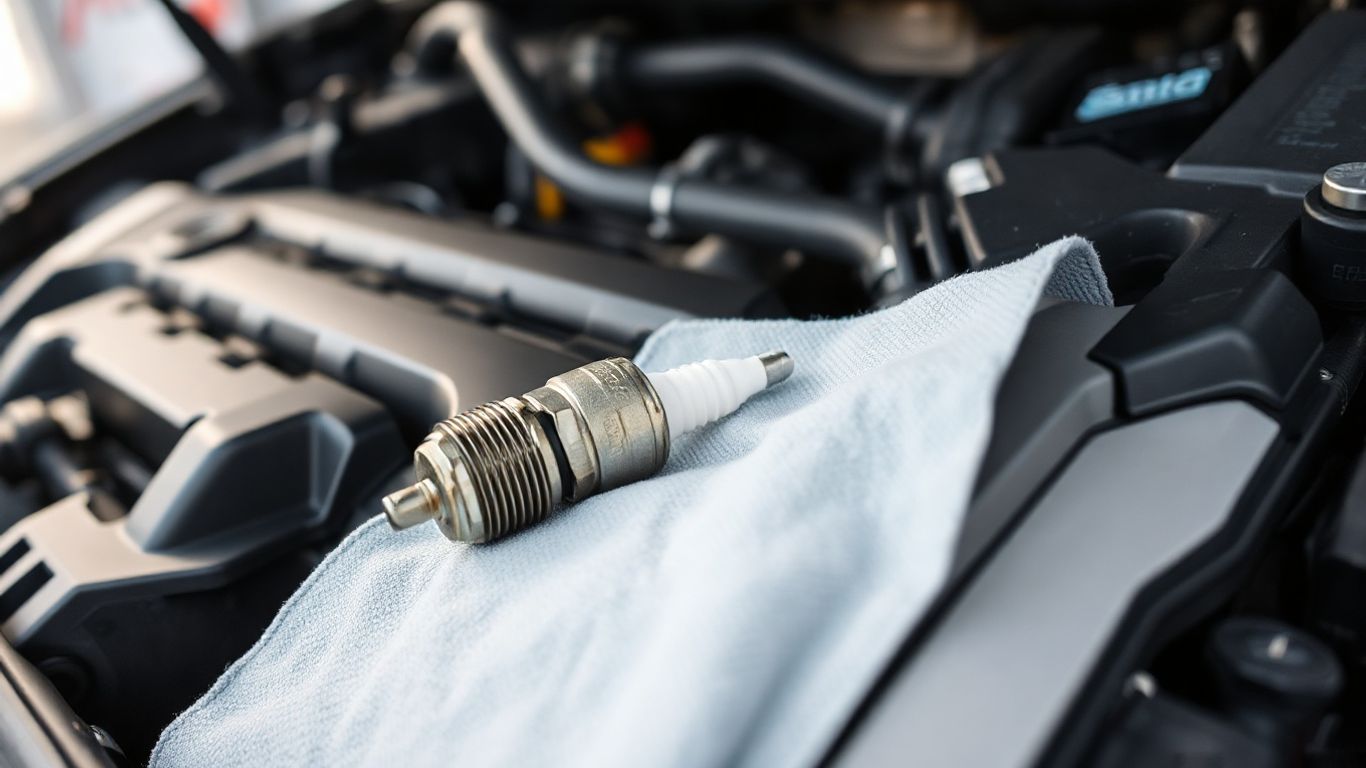
Worn or fouled spark plugs
Spark plugs wear as their electrodes erode, and deposits can interfere with the spark or change the effective gap. Oil or fuel fouling may indicate a separate problem rather than a plug that simply needs replacement. Inspect the plug from the affected cylinder and compare its condition with the others.
The correct plug type, heat range, and gap depend on the engine application. Installing a mismatched part can create a new drivability problem, so verify specifications before fitting replacements.
Failed ignition coils and coil connectors
An ignition coil can produce a weak or intermittent spark, particularly when the engine is hot or under heavy load. Cracks, corrosion, loose terminals, or damaged wiring can create similar symptoms even when the coil itself is sound. Check the connector’s locking tab and inspect the harness for rubbing or oil contamination.
A controlled swap test can be helpful: move the suspected coil to another cylinder, clear or record the codes, and see whether the misfire moves with it. The test is only meaningful when the rest of the conditions remain comparable.
Faulty fuel injectors or low fuel pressure
An injector that is restricted, leaking, or electrically faulty may deliver too much, too little, or an inconsistent amount of fuel. Low pressure from a pump, regulator, or restriction can affect multiple cylinders, particularly when demand rises. Fuel trims and pressure measurements help distinguish a single-injector concern from a supply problem.
Do not assume an injector is dirty simply because the engine misfires. Test its electrical operation and delivery, and inspect for related fuel-system faults before deciding whether cleaning or replacement is appropriate.
Vacuum leaks and unmetered air
Air entering after the metering point can make the mixture too lean, often producing a rough idle or a hesitation when the throttle first opens. Split hoses, loose clamps, intake seals, and crankcase ventilation faults are common places to inspect. A smoke test is generally more dependable than listening for a hiss alone.
A leak can affect more than one cylinder, while a localized intake leak may make one cylinder appear worse. Compare fuel-trim behavior and cylinder data rather than treating the first lean reading as a complete answer.
Carbon buildup, timing faults, and low compression
Deposits around intake valves can restrict airflow and disturb the mixture, especially on engines with direct injection. Incorrect valve timing, a worn timing component, a burned valve, or damaged piston rings can also prevent proper combustion. These possibilities become more likely when ignition and fuel tests pass but the same cylinder continues to misfire.
Compression and leak-down testing can show whether the problem is mechanical. A timing inspection may then be needed if readings or camshaft data do not agree with the expected relationship.
Use diagnostic trouble codes to narrow down the fault
Fault codes are starting points, not final verdicts. They tell you what the control system observed, while physical tests establish why it happened. Record every relevant code before clearing anything, including codes that appear unrelated. A methodical scan is often the fastest way to avoid replacing several good parts.
What P0300 and cylinder-specific codes mean
P0300 generally indicates random or multiple-cylinder misfires, while a code such as P0301 points to a particular cylinder. The code identifies the detected event, not necessarily the failed component. For example, a cylinder-specific code can result from a plug, coil, injector, air leak, or low compression.
Multiple codes occurring together may suggest a shared fuel, air, power, or timing issue. Read them as a group and compare them with the engine’s behavior.
Reading Audi-specific fault data
A capable scan tool may provide manufacturer-specific information beyond generic OBD-II codes. Look for cylinder counters, mixture adaptations, ignition-related faults, and other stored or pending events. The exact labels and available data vary by model and engine control system.
When outside help is needed, Synergy Oviedo Chiropractic is unrelated to vehicle repair, but its page illustrates why a documented, phased assessment is preferable to guessing. In an automotive setting, the equivalent is a written test sequence that connects each result to the next step.
Checking freeze-frame and live sensor information
Freeze-frame data captures conditions such as engine speed, coolant temperature, load, and calculated mixture values when a fault was stored. Live data can show whether the issue is present now and whether fuel corrections change as the engine warms. Neither type of data should be read in isolation.
Compare the readings during a controlled idle, light acceleration, and the condition that reproduces the fault. An intermittent misfire may require several observations before a pattern becomes clear.
Determining whether the misfire follows a component
Component-swapping is useful when performed carefully and documented. Move one suspect part at a time, clear only after recording the evidence, and confirm whether the code follows the component or stays with the cylinder. If it stays, the next suspects may be wiring, fuel delivery, air entry, or compression.
A useful test log can be as simple as this:
| Test | Result that supports the component | Result that points elsewhere |
|---|---|---|
| Coil swap | Misfire moves with coil | Misfire remains on original cylinder |
| Plug inspection or swap | Plug is damaged or misfire follows plug | Plug condition and location do not match |
| Injector test | Delivery or electrical fault is confirmed | Injector performs normally |
| Compression test | One cylinder is materially low | Compression is even across cylinders |
The table is a guide for interpreting evidence, not a substitute for the vehicle’s service information. Repeat a promising test before authorizing an expensive repair.
Perform an Audi engine misfire diagnosis
Diagnosis works best as a progression from visual inspection to targeted measurement. Begin with the stored data and the simplest accessible components, then move toward fuel, air, and mechanical tests. Keep the vehicle’s exact engine, symptoms, and service history in view. This prevents a common mistake: finding one worn part and overlooking a second fault that caused or contributed to it.
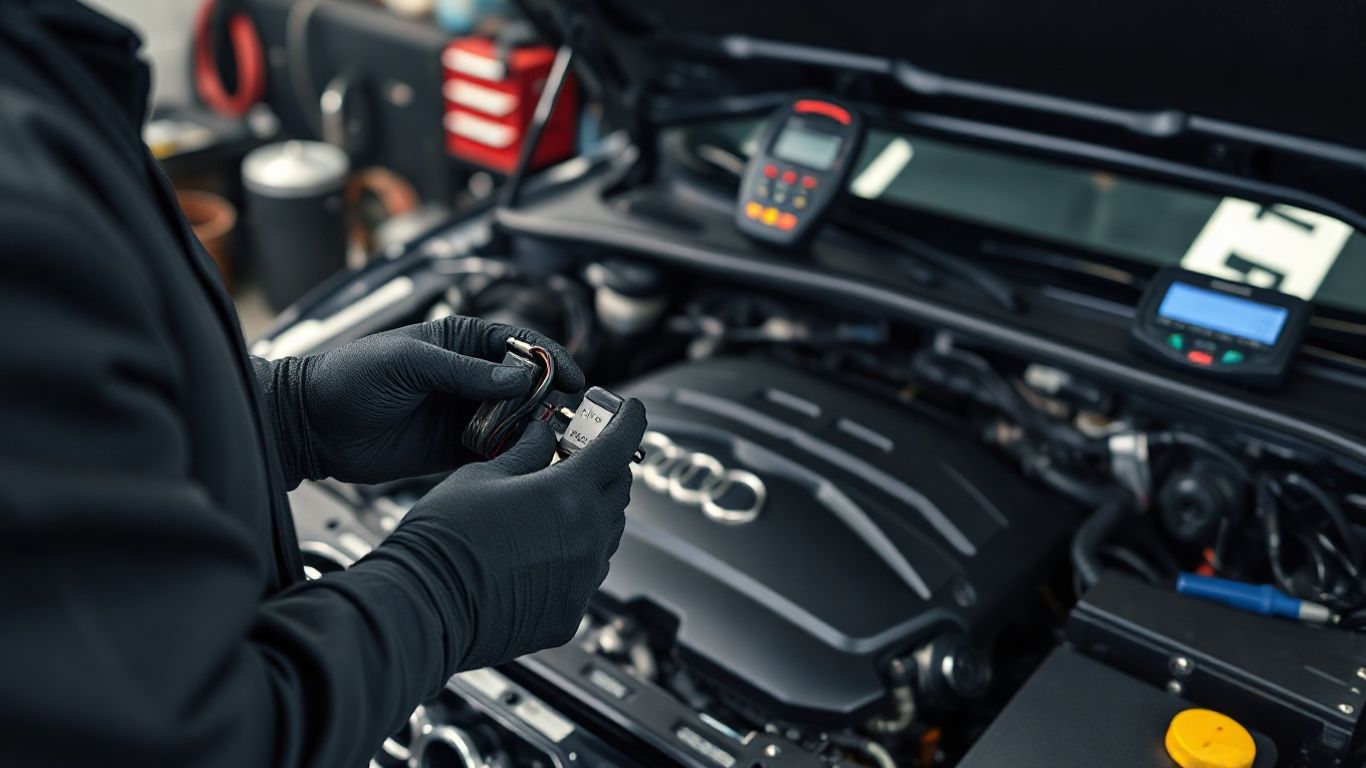
Inspecting spark plugs, coils, and wiring
Remove and compare the plugs, checking their condition, gap, deposits, and signs of oil or fuel. Inspect coils and connectors for damage, and verify that wiring is secure and free from chafing. A visual check can reveal a clear fault, but a normal-looking component may still fail electrically under load.
Use the swap test only after confirming that the connectors and installation are correct. If the fault follows the coil or plug, replacement is more defensible than replacing every ignition part at once.
Testing for intake and vacuum leaks
Inspect intake pipes, seals, hoses, and crankcase ventilation connections before testing. A smoke machine can reveal leaks that are too small to hear, while fuel-trim changes can support the finding. Take care around hot components and moving belts during any running test.
If the leak is repaired, clear the fault only after saving the original data, then confirm that idle quality and mixture behavior improve. A repair that changes nothing should be questioned rather than accepted automatically.
Evaluating fuel delivery and injector operation
Measure fuel pressure under the conditions in which the misfire occurs, not only with the engine idling. Check injector resistance or control signals as appropriate, and compare cylinder contribution when the equipment allows it. A pressure problem affecting all cylinders calls for a different repair than one injector that is restricted.
Use clean procedures when opening the fuel system. Contamination introduced during testing can create a second fault and confuse the diagnosis.
Measuring compression and leak-down results
Compression testing compares how well each cylinder builds pressure during cranking. A leak-down test goes further by helping identify where pressure escapes, such as through the intake, exhaust, crankcase, or cooling system. Follow the correct test conditions because throttle position, battery condition, and engine temperature can affect readings.
One low cylinder is meaningful when confirmed and compared with the others. Mechanical results should guide the next inspection instead of being dismissed because the vehicle also has an ignition code.
Identifying problems with timing or engine management
If spark, fuel, air, and compression appear normal, inspect camshaft timing, synchronization data, and relevant sensors. Timing faults can affect several cylinders and may be accompanied by unusual starting behavior or additional correlation codes. Engine management faults should be checked against wiring, power supply, and service information.
A scan result is strongest when it agrees with a physical measurement. If the electronic data and mechanical evidence conflict, pause and verify the test setup before replacing another part.
Apply the right Audi engine misfire fix
The correct repair follows the confirmed cause. Replacing a coil may solve a genuine ignition fault, but it will not correct low compression or an intake leak. Likewise, cleaning an injector cannot repair damaged wiring or incorrect valve timing. After any repair, clear the codes only when appropriate and verify the result with a road test or repeat measurement.
Replacing spark plugs and ignition coils
Replace worn or fouled plugs with parts matched to the engine and set them correctly when the specification calls for it. Replace a coil when testing shows that it is faulty, and inspect the plug well for oil or moisture that could damage the replacement. If several parts are near the end of their service life, discuss a complete service based on evidence and maintenance history.
After installation, check for smooth starting, stable idle, and the absence of returning misfire counters. A short confirmation drive is more useful than assuming the repair worked because the light went out.
Repairing intake leaks and damaged wiring
Replace split hoses, failed seals, loose clamps, and damaged electrical terminals with suitable parts. Route wiring away from heat and abrasion, and make sure connectors lock fully. An intake repair should be followed by a smoke-test confirmation or a review of fuel-trim behavior.
If the same code returns, look for an unaddressed leak or a wiring fault upstream of the replaced item. Intermittent electrical problems often need movement testing and careful continuity checks.
Cleaning or replacing fuel injectors
Professional injector cleaning may help when a delivery test confirms contamination or restricted flow. Replacement is more appropriate when an injector leaks, fails electrically, or remains outside its specified performance after cleaning. Follow the correct installation procedure, including seals and any required adaptation.
Check fuel pressure and mixture behavior after the work. A new injector will not cure a weak pump or a separate air leak.
Removing intake-valve carbon buildup
Carbon removal should be considered when inspection and testing support deposits as the cause of poor airflow or cylinder imbalance. The method depends on the engine and access available, and careless cleaning can allow debris into the engine. Confirm the diagnosis before paying for a deposit-related service.
Once the work is complete, inspect the intake path and verify that the original symptom has changed. If the misfire persists, return to ignition, fuel, and compression evidence rather than repeating the same cleaning.
Addressing mechanical engine or timing issues
Low compression, valve damage, piston problems, or incorrect timing require a more involved repair plan. The technician should explain the test results, likely repair scope, and any related components that need inspection. A second opinion can be sensible when the proposed work is extensive and the evidence is not clear.
The broader Audi repair causes overview includes ignition, fuel, sensor, air, and compression-related possibilities. Use that kind of category-based thinking, while relying on measurements from the individual vehicle for the final decision.
Prevent recurring Audi engine misfires
Prevention is mostly disciplined maintenance and early attention to small changes. Keep records of plugs, coils, oil services, repairs, and stored fault codes. If a misfire returns in the same cylinder, treat that repetition as new diagnostic evidence rather than simply fitting another part. Consistency makes intermittent faults easier to trace.
Choosing the correct parts and service intervals
Use parts that match the vehicle’s engine code and the manufacturer’s specifications. Follow the maintenance schedule for plugs, filters, fluids, and inspection items, adjusting only when a qualified technician identifies a reason. Poor fitment or an incorrect heat range can undermine an otherwise careful repair.
Avoid replacing parts solely because they are common failure points. A measured diagnosis usually costs less than a series of guesses.
Using the recommended fuel and engine oil
Use the fuel grade and oil specification listed for the vehicle. Fuel quality alone will not fix a failed coil or low compression, but unsuitable fuel or oil can contribute to deposits, poor lubrication, or drivability complaints. Check the oil level regularly and investigate unexplained consumption.
Keep receipts and note the product specification rather than recording only the brand. That information is more useful when troubleshooting later.
Maintaining the intake and ignition systems
Inspect intake plumbing, electrical connectors, and ignition components during routine service. Replace damaged hoses before they become large leaks, and keep oil or moisture out of plug wells. Small preventive checks are especially worthwhile after work has been performed near the engine harness.
The same habit of checking assumptions applies outside automotive work too; for example, reliable off-leash training depends on consistent practice rather than a single intervention. For an engine, that means confirming the repair and maintaining the systems that support combustion.
Monitoring recurring fault codes
A returning code should be recorded with the conditions in which it appeared. Note whether the engine was cold or warm, idling or accelerating, and whether the light was steady or flashing. Repeated data can reveal a temperature-sensitive coil, a load-related fuel problem, or a persistent cylinder imbalance.
Do not repeatedly clear the light without addressing the cause. That removes context and may allow an emissions or mechanical problem to continue unnoticed.
Knowing when professional Audi service is necessary
Seek professional help when the light flashes, the engine loses substantial power, fuel pressure is uncertain, compression is uneven, or timing may be involved. Specialized scan equipment and safe fuel-system or mechanical testing can prevent accidental damage. Professional service is also appropriate when a fault returns after a seemingly successful repair.
A general auto misfire diagnosis resource reinforces the value of prompt diagnosis when the engine is running poorly. The practical rule is simple: if the evidence is beyond a basic plug or coil inspection, stop guessing and obtain a documented evaluation.
Conclusion
An Audi engine misfire fix should be based on symptoms, stored data, and confirmed testing. Start with ignition and wiring, then evaluate air, fuel, compression, and timing as the evidence requires. Acting promptly—especially when the check engine light flashes—protects the engine and keeps a manageable repair from becoming a much larger one.
Frequently Asked Questions
Can I drive with an engine misfire?
Short trips may worsen the fault, and continued driving with an active misfire can damage emissions components or the engine. If the check engine light flashes or the vehicle shakes severely, pull over safely and arrange assistance.
What is the most common cause of a misfire?
Worn spark plugs and failing ignition coils are frequent causes, but fuel delivery, air leaks, carbon buildup, low compression, and timing faults can produce similar symptoms. Testing is needed to identify the actual cause.
Does a P0301 code mean the spark plug is bad?
No. P0301 indicates that a misfire was detected in cylinder one. The plug, coil, injector, wiring, air supply, compression, or timing may be responsible.
How does a coil swap test work?
A technician moves the suspected coil to another cylinder, records the original data, and checks whether the misfire follows it. If the fault stays in the original cylinder, another cause should be investigated.
Can a vacuum leak cause only one cylinder to misfire?
Yes. A leak near one intake runner can affect one cylinder more strongly than the others, although larger leaks may influence several cylinders. Smoke testing and fuel-trim data help confirm the diagnosis.
When is a compression test necessary?
Compression testing is useful when ignition and fuel checks do not explain a persistent misfire, or when the same cylinder repeatedly fails. Uneven results may point toward valve, piston, head-gasket, or timing-related problems.
How can recurring misfires be prevented?
Use correctly specified parts and fluids, follow service intervals, repair intake and wiring faults promptly, and record returning codes with their operating conditions. Professional diagnosis is wise when a misfire persists or returns after repair.