

Key Takeaways
A check engine light is a warning to investigate, not a diagnosis by itself. The light’s behavior and the car’s symptoms help determine what to do next.
- A steady light often allows a cautious short drive, while a flashing light needs immediate attention.
- Common causes include EVAP leaks, ignition faults, sensor failures, intake leaks, and catalytic converter problems.
- Direct-injection and turbocharged engines can develop carbon, vacuum, boost, and timing-related faults.
- An OBD-II scan is a useful starting point, but a code must be interpreted alongside live data and symptoms.
- Clearing a code without repairing the underlying fault usually leads to its return.
What the Audi check engine light means
The check engine light appears when the engine control unit detects a reading or operating condition outside its expected range. It can involve combustion, fuel delivery, airflow, emissions, or timing. A warning does not identify one failed part automatically, so the light should be treated as the beginning of a diagnosis rather than the answer.
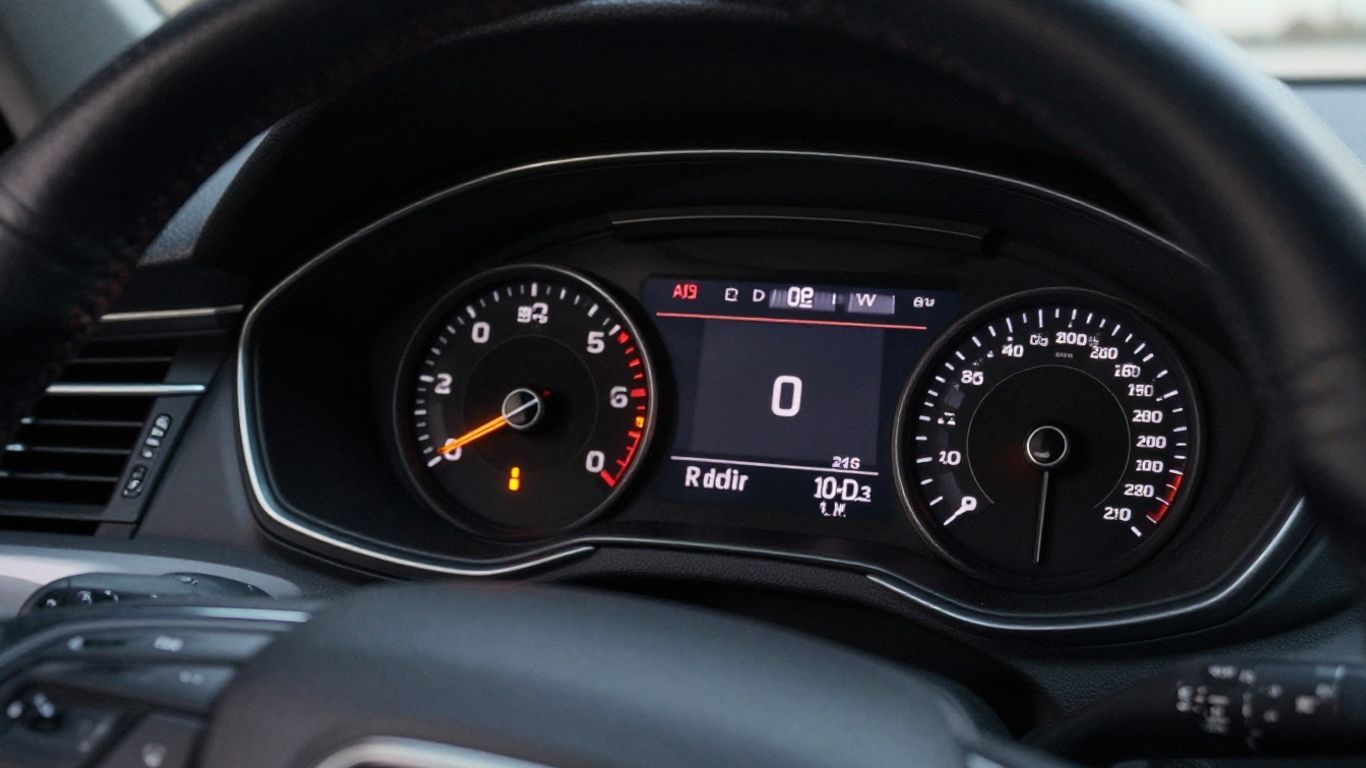
How the engine control unit detects problems
The engine control unit compares information from sensors with expected operating patterns. It can monitor combustion quality, exhaust oxygen content, intake air, boost pressure, and other conditions while the vehicle is running. A single unusual reading may not be enough to turn on the light; repeated or sufficiently severe deviations are more likely to set a fault.
The difference between a steady and flashing light
A steady warning generally indicates a fault that needs attention soon, even if the car feels normal. A flashing light is more urgent because it can indicate an active misfire, which may send unburned fuel into the exhaust and overheat the catalytic converter. Reduce load and stop driving when it is safe if the light flashes, the engine shakes badly, or power drops sharply.
Why the warning may appear with other dashboard messages
A fault in one system can affect several monitored conditions, so the check engine light may appear with messages about reduced power, stability control, or the electronic throttle. Those extra warnings do not necessarily mean every related system has failed. They do mean the vehicle should be assessed as a whole rather than repaired from one dashboard symbol alone.
How Audi diagnostic trouble codes guide the repair
Diagnostic trouble codes narrow the search by identifying a monitored circuit, operating condition, or cylinder-related fault. They do not always name the defective component: a lean code, for example, can result from an intake leak, fuel-delivery issue, or inaccurate sensor reading. The most useful diagnosis combines the code with freeze-frame data, inspection, testing, and the driver’s description of the symptoms.
Common Audi check engine light causes
The most familiar Audi check engine light causes range from a loose fuel cap to faults that require testing of the engine and emissions systems. A warning can appear before a noticeable drivability problem, or it may arrive with hesitation, rough running, poor fuel economy, or an unusual exhaust smell. Start with simple checks, but avoid assuming that the easiest explanation is the correct one.
Loose or damaged fuel cap and EVAP leaks
The evaporative-emissions system keeps fuel vapors contained and tests whether the system holds pressure or vacuum as expected. A loose, damaged, or poorly sealing cap can trigger a leak code, as can a cracked hose, faulty purge valve, or leak elsewhere in the vapor system. If tightening the cap does not resolve the warning after several drive cycles, the system needs a proper leak diagnosis.
Failing oxygen sensors and air-fuel sensors
Oxygen and air-fuel sensors provide feedback about exhaust oxygen and combustion mixture. A deteriorating sensor can contribute to poor fuel economy, hesitation, or mixture-related codes, but wiring, exhaust leaks, and a genuine fueling problem can create similar readings. Testing the signal and the surrounding system is more reliable than replacing a sensor based on the code description alone.
Worn spark plugs and ignition coil problems
Spark plugs and ignition coils are common sources of misfire faults. The engine may idle unevenly, hesitate under acceleration, or lose power, and a severe active misfire can make the warning flash. A technician can compare cylinder data and move components when appropriate to determine whether the fault follows a coil, remains with the plug, or points to another cause.
Mass airflow sensor and intake leaks
The mass airflow sensor measures incoming air so the control unit can calculate fuel delivery. Contamination, an electrical problem, or an air leak after the sensor can make the measured airflow disagree with the engine’s actual needs. Before condemning the sensor, inspect intake ducting, clamps, hoses, and crankcase ventilation connections for splits or loose fittings.
Catalytic converter and emissions system faults
Catalytic converter efficiency faults can appear when the exhaust readings suggest the converter is no longer reducing pollutants as expected. The converter may be affected by age, contamination, restriction, or an unresolved misfire upstream. Because replacing it without finding the original cause can lead to another failure, emissions diagnosis should follow the evidence from codes and sensor data.
Audi-specific problems that can trigger the warning
Some problems are especially relevant to engines with direct injection, forced induction, or complex emissions controls. Their symptoms can overlap with ordinary ignition or sensor faults, which is why a familiar pattern still needs confirmation. Model year, engine type, mileage, maintenance history, and previous repairs all change the likelihood of a particular cause.
Carbon buildup on direct-injection engines
Direct-injection engines can develop deposits on intake-side components over time because fuel is not sprayed across the intake valves in the same way as in port-injected designs. Buildup may contribute to rough running, reduced response, or misfire and airflow-related faults. Deposit cleaning is a measured repair decision, not something to assume from a check engine light alone.
PCV valve and vacuum leak failures
The positive crankcase ventilation system manages crankcase vapors and pressure. A failed valve, split diaphragm, or disconnected vacuum hose can create an unmetered-air condition, whistling noise, rough idle, and lean mixture faults. Smoke testing or careful vacuum diagnosis can reveal leaks that are difficult to see during a quick visual inspection.
Turbocharger, boost, and diverter valve issues
A turbocharged engine may set a warning when commanded and measured boost do not agree. Possible areas include a boost hose, wastegate control, diverter valve, pressure sensor, or the turbocharger itself. Hissing, whistling, sluggish acceleration, and reduced-power operation are useful clues, but boost-related codes still require pressure and control checks before parts are replaced.
Timing chain and variable valve timing faults
Variable valve timing relies on accurate oil pressure, control valves, sensors, and mechanical timing. A fault may cause difficult starting, rough running, rattling, or correlation codes between crankshaft and camshaft positions. Because incorrect mechanical timing can damage an engine, persistent timing symptoms deserve prompt professional assessment rather than repeated code clearing.
Diesel particulate filter and EGR problems
On diesel models, the particulate filter and exhaust gas recirculation system can trigger warnings when soot loading, flow, temperature, or pressure readings are outside expected limits. Short trips and interrupted regeneration can complicate the picture. The correct next step depends on the stored codes and measured values; forcing a regeneration without checking for an underlying fault is not a safe shortcut.
How to diagnose the cause safely
Diagnosis should move from evidence to testing, not from warning light to parts shopping. Record when the light appeared, whether it is steady or flashing, and what changed in the vehicle’s behavior. A careful first pass can prevent both unnecessary repairs and continued driving with a serious fault.
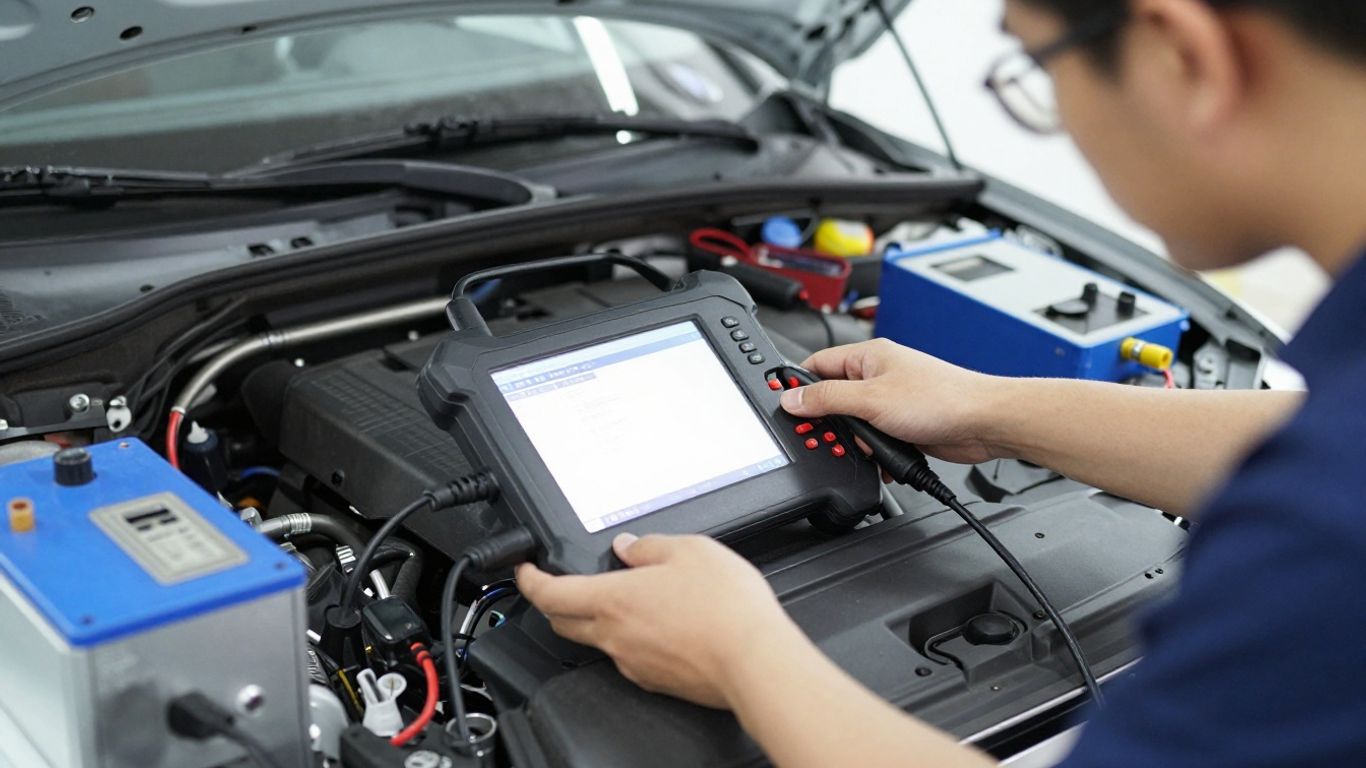
Reading Audi fault codes with an OBD-II scanner
An OBD-II scanner can retrieve emissions-related codes and show whether the fault is current, pending, or stored. Write the codes down before clearing anything, including any cylinder or system designations. Basic readers may not access every manufacturer-specific module, so a scan result is a starting point rather than a complete vehicle health report.
Checking live data and freeze-frame information
Freeze-frame information records conditions such as engine speed, load, temperature, and fuel-trim behavior when a fault was stored. Live data shows whether those conditions are still present and whether sensor readings respond as expected. Comparing the data with the actual symptoms helps distinguish a failed sensor from a problem that is causing the sensor to report an unusual condition.
Inspecting hoses, connectors, and fluid levels
A visual inspection is worthwhile after the initial scan, provided the engine is cool and moving or hot components are avoided. Look for loose intake clamps, split vacuum hoses, damaged wiring, disconnected connectors, and fluid levels outside their normal range. These simple findings can explain a code, but do not probe fuel systems or electrical circuits casually.
A short diagnostic sequence keeps the inspection orderly:
- Confirm whether the light is steady or flashing.
- Record every code and the freeze-frame conditions.
- Check for obvious intake, vacuum, wiring, or fluid problems.
- Test the suspected system before replacing a component.
That sequence preserves useful evidence and reduces the chance of erasing the clues that led to the warning. It also makes a later conversation with a repair shop far more productive.
When a professional Audi diagnostic scan is necessary
Professional help is appropriate when the light flashes, the engine runs roughly, several warning messages appear, or the code points toward timing, boost, fuel pressure, or emissions hardware. It is also sensible when a generic scanner provides a code but no clear path to testing. For broader reading, Audi diagnostic guidance discusses the value of detailed fault information without treating a code as a diagnosis.
Unrelated maintenance decisions can also suffer from rushed assumptions; even property planning mistakes illustrate why checking the full situation matters before committing to a remedy. The comparison is simple: gather the relevant evidence first, then choose the repair.
How serious is an Audi check engine light?
Severity depends on the light’s behavior, the symptoms, and the system involved. A quiet steady light on an otherwise normal-running car is different from a flashing light accompanied by shaking or a loss of power. When in doubt, favor safety and arrange a diagnosis rather than testing the car through continued hard driving.
Situations that require immediate roadside action
Stop as soon as it is safe if the warning flashes continuously, the engine is misfiring severely, oil pressure or coolant temperature warnings appear, or smoke and strong fuel smells are present. Do not continue simply because the vehicle still moves. A tow may be less costly than turning a manageable ignition or cooling-system issue into extensive engine or exhaust damage.
When it may be safe to drive a short distance
A short, gentle drive to a repair facility may be reasonable when the light is steady, the engine is smooth, temperatures are normal, and no major warning accompanies it. Keep speed and engine load modest, avoid towing or hard acceleration, and stop if symptoms change. This is a practical risk judgment, not a guarantee that the fault is minor.
Symptoms that indicate possible engine damage
Persistent knocking, heavy smoke, severe oil consumption, overheating, metal debris, or a sudden loss of compression deserves urgent attention. So do repeated misfires that continue after basic ignition checks. These symptoms suggest the problem may extend beyond a sensor or emissions component and should not be diagnosed by replacing parts at random.
How driving habits can worsen the underlying fault
Hard acceleration can aggravate boost, ignition, and fueling problems, while continued driving with a misfire can overheat the catalytic converter. Repeated short trips may also prevent some emissions systems from completing their normal operating routines. Until the cause is known, smooth driving and prompt testing are safer than trying to make the warning disappear through a long drive.
Repair costs and next steps
Repair pricing varies with the engine, access time, parts choice, diagnostic effort, and whether the original fault has caused secondary damage. A small leak and a failed converter can both illuminate the same dashboard symbol while carrying very different bills. Ask for the diagnostic finding, the proposed repair, and the reason the repair addresses the stored code.
Typical costs for sensors, ignition parts, and emissions repairs
Sensors and ignition parts are often less expensive than catalytic converters or turbocharger-related repairs, but labor and calibration can change the total substantially. A single coil or plug may be straightforward, while an intake leak hidden beneath other components takes longer to locate. The useful comparison is not just part price; it is the complete tested repair and its warranty.
| Repair area | Possible underlying fault | Why diagnosis matters |
|---|---|---|
| Ignition | Spark plug, coil, wiring, or engine issue | Misfire codes can have several causes |
| Air and fuel mixture | Sensor, intake leak, or fuel delivery | Replacing a sensor may miss the real leak |
| EVAP system | Cap, hose, purge valve, or tank leak | A pressure or smoke test locates the leak |
| Emissions | Converter, exhaust leak, or upstream misfire | The original fault may damage a new converter |
This comparison explains why a code-based estimate should include testing details. A repair that fixes the cause is usually better value than the cheapest part that happens to match the code wording.
Why clearing the code does not fix the problem
Clearing the code removes stored information and may turn off the light temporarily, but it does not repair a leak, misfire, sensor, or mechanical fault. The control unit will run its checks again as the relevant conditions return. Clearing also erases freeze-frame evidence that could help identify what was happening when the fault occurred.
When aftermarket parts may create new issues
Aftermarket components vary in fit, calibration, materials, and quality. An unsuitable sensor, ignition part, or emissions component can produce new readings that look like a separate fault or cause the original warning to return. Confirm compatibility with the exact engine and emissions configuration, and keep the original diagnosis in view instead of choosing solely by price.
How to prevent recurring check engine light problems
Prevention starts with maintenance appropriate to the engine and with attention to small changes in drivability. Keep service records, use the specified fluids and replacement intervals, and address rough running before it becomes a flashing warning. If a repair is completed, verify that the relevant monitors run successfully and that the vehicle is rechecked if the light returns.
Conclusion
An Audi check engine light is best handled as useful diagnostic information: note its behavior, protect the engine from further stress, retrieve the codes, and test the suspected system. Simple causes do exist, but persistent or severe symptoms call for professional diagnosis rather than guesswork.
Frequently Asked Questions
Can I drive with a steady check engine light?
A short, gentle drive may be reasonable if the light is steady and the car has normal power, temperature, and engine behavior. Arrange a diagnosis soon and stop if the light flashes or symptoms worsen.
What does a flashing check engine light mean?
A flashing light commonly signals an active misfire or another severe condition. Reduce load, pull over safely, and seek immediate assistance to limit possible catalytic converter or engine damage.
Can a loose fuel cap turn on the warning light?
Yes. A cap that is loose, damaged, or not sealing can allow an evaporative-emissions leak. If the light remains on after the cap is corrected, the system needs further testing.
Does an OBD-II code identify the failed part?
Not always. A code usually identifies a monitored condition or circuit, and several different faults can create that condition. Inspection and targeted testing are needed to confirm the failed component.
How long can I wait before diagnosing the light?
Do not delay when the light flashes, the engine runs poorly, or other warning messages appear. With a steady light and no symptoms, schedule testing promptly rather than waiting for the issue to become more expensive.
Why did the light return after a repair?
The original cause may not have been repaired, the replacement part may be incompatible, or a related fault may have been missed. A returning light should be rescanned and compared with the earlier diagnosis.
Can routine maintenance prevent a check engine light?
Regular maintenance can reduce the chance of ignition, intake, fluid, and emissions problems, but it cannot prevent every fault. Prompt attention to rough running, unusual noises, and changes in fuel economy is equally useful.