

Key Takeaways
Audi suspension knocking is a symptom, not a diagnosis. The sound’s timing, location, and response to steering or braking can help narrow the cause before any parts are replaced.
- Small knocks often come from worn links, bushings, mounts, or loose hardware.
- Ball-joint and control-arm symptoms deserve faster attention because they can affect wheel control.
- A careful inspection should include suspension play, tire condition, alignment, and fastener torque.
- Standard, sport, adaptive, and air suspension systems can create different diagnostic paths.
- Replace parts based on confirmed wear, then align the vehicle whenever geometry may have changed.
What Audi suspension knocking sounds like and when it occurs
Audi suspension knocking can be a single dull tap, a sharper metallic knock, or a repeated clunk over uneven pavement. The sound may seem minor at first, but its pattern often gives more information than its volume. Start by recording when it happens rather than guessing which part is responsible. A systematic suspension noise guide can be useful when several components could produce a similar symptom.
How knocking differs from clunking, rattling, and creaking
A knock usually sounds like a component shifting or contacting another surface under load. A clunk is often heavier and may suggest more movement, while a rattle can point to a loose shield, link, spring seat, or fastener. Creaking tends to involve rubber, a dry bearing, or binding as the suspension moves slowly. These descriptions are not precise diagnoses, but they help a technician reproduce the problem.
Why bumps, turns, braking, and acceleration produce different symptoms
A sharp bump can load a sway bar link, mount, or control-arm joint quickly. Turning changes the angle and load on steering and suspension joints, while braking shifts weight forward and can expose movement in a worn bushing. Acceleration loads the opposite direction and may reveal looseness that is silent during steady driving. Note whether the noise appears during one maneuver or several.
What the location and timing of the noise can reveal
A sound that seems to come from the front left may actually travel through the subframe or body from another point. Listen for whether it occurs at the instant the wheel hits a bump, as the suspension rebounds, or after the car settles. Front and rear noises can also be confused inside the cabin, especially with the windows closed. Location is a clue, not proof.
How speed, temperature, and road surface affect the sound
Low-speed driving over repeated small bumps often exposes link or bushing play, while a larger bump may load a mount or spring seat more dramatically. Cold weather can make rubber less flexible and change the sound temporarily. Smooth roads may hide the fault completely. Keep a short note of speed, temperature, road surface, steering angle, and whether the car was loaded.
The most common causes of Audi suspension knocking
The most common causes range from relatively simple worn links to faults that need a more careful inspection. Components can also wear together, so replacing the first visibly damaged part may not end the noise. This is where a quality parts supplier can help customers compare used, genuine, and aftermarket parts after the failed component has been identified.
Worn sway bar links and bushings
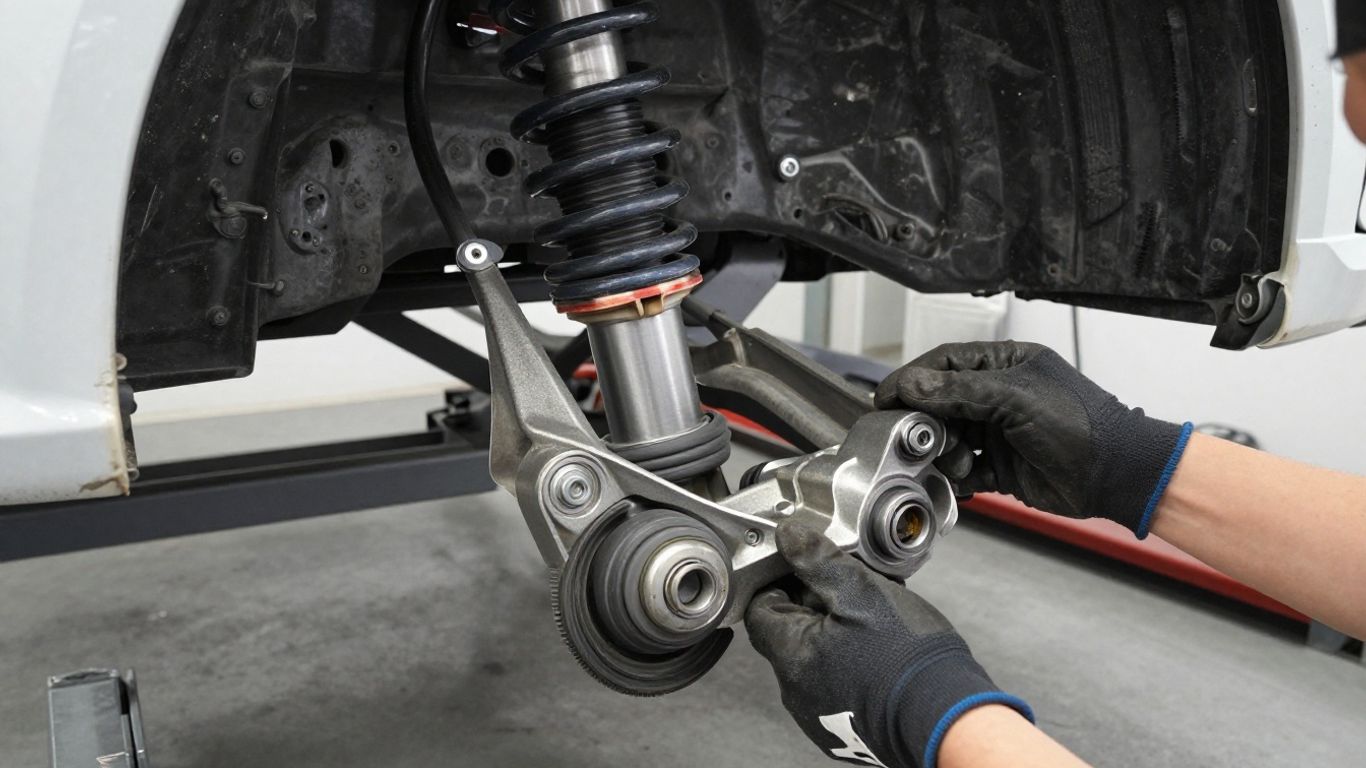
Sway bar links and bushings are frequent sources of a light, repetitive knock over small bumps. A link may have play at one or both ends, while a bushing can allow the bar to move more than intended. The noise may be most obvious on uneven surfaces where one wheel rises before the other. Inspection should check the joints, boots, mounting points, and surrounding hardware.
Failing control arm bushings and ball joints
Control-arm bushings manage movement while helping hold suspension geometry. Cracks, separation, or excessive movement can create a knock, steering vibration, pulling, or uneven tire wear. Ball joints deserve particular care because they connect suspension movement to the steering knuckle. A case involving an Audi A5 linked front knocking, inner-edge tire wear, and worn lower control arms; it is a useful example of why symptoms should be considered together in an Audi A5 control-arm case.
Damaged strut mounts, bearings, or shock absorbers
A worn upper mount can knock as the strut loads and unloads, and a tired bearing may creak or bind while the steering wheel turns. Shock absorbers can also leak or lose control, allowing extra suspension movement that makes other wear more obvious. Look for fluid, damaged rubber, uneven ride height, and a change in the vehicle’s response after a bump.
Loose fasteners, springs, and suspension components
Not every knock is caused by wear. A loose mounting bolt, displaced spring, damaged spring seat, or underbody panel can create a sudden metallic sound. Recent suspension work makes fastener checks especially important, although torque should be verified with the correct procedure rather than tightened by feel. A spring that is cracked or not seated correctly should not be ignored.
Air suspension and adaptive damping issues
Air suspension faults may involve an air spring, valve block, compressor-related behavior, ride-height sensor, or a mounting point. Adaptive damping adds electrical and hydraulic components that can complicate diagnosis. A change in ride height, warning message, uneven stance, or repeated compressor operation is more significant than an isolated noise. Avoid working beneath an unsupported vehicle with air suspension.
How to diagnose Audi suspension knocking safely
Diagnosis should begin with observation and a safe visual check, not forceful testing beneath a vehicle. Park on level ground, use suitable wheel chocks, and never rely on a jack alone. A technician may need to reproduce the noise with the suspension loaded, unloaded, or both. The goal is to identify excessive movement and its source without creating a new hazard.
Inspecting the suspension for visible damage
Look for leaking dampers, torn dust boots, cracked bushings, bent arms, broken springs, damaged link joints, and marks where metal has contacted metal. Compare the left and right sides when possible. Also check whether a wheel sits unusually far forward or backward in the arch. Visible damage is valuable evidence, but an intact-looking part can still have internal play.
Checking for play in joints and bushings
A lift inspection can expose looseness that is difficult to see on the ground. The technician may use approved tools to load a joint while watching the stud, bushing, or mounting point. Each component should be checked in a way that does not mistake normal movement for failure. The correct test varies by suspension design, so aggressive levering at home is not a substitute for professional inspection.
Performing a road test without masking the noise
Turn off the radio and choose a familiar, low-traffic route with several safe surfaces. Reproduce one condition at a time: a small bump, a larger dip, light braking, gentle acceleration, and a slow turn. Avoid deliberately driving over potholes or speeding to make the sound louder. If a passenger records the timing from inside the cabin, the technician may have a clearer starting point.
When a lift inspection or chassis ear is necessary
A lift is useful when the noise cannot be isolated from the driver’s seat or when several components are suspect. A chassis-ear system, used by a technician, can compare sound at different mounting points during a controlled road test. This is especially helpful when vibration travels through the subframe and makes the apparent location misleading. Diagnostic equipment should confirm a physical inspection, not replace it.
Why alignment and tire checks should not be skipped
Suspension wear can alter toe, camber, or caster, and a tire can reveal that change before the driver notices poor handling. Check for inner- or outer-edge wear, feathering, pressure problems, and a damaged wheel. The following quick comparison helps separate related clues from the noise itself:
| Finding | What it may suggest | Useful next check |
|---|---|---|
| Knock over repeated small bumps | Link or sway bar bushing movement | Inspect joints and bar mounts |
| Pulling or steering vibration | Control-arm, tire, wheel, or alignment issue | Check play and measure alignment |
| Uneven ride height | Spring, air, or damper concern | Compare heights and scan the system |
| Noise during steering | Mount, bearing, joint, or tire interference | Turn slowly while observing movement |
The table is only a guide because more than one fault can exist at once. A tire inspection and alignment reading can prevent a suspension repair from being judged successful while the vehicle still wears tires or pulls to one side.
Diagnosing the noise by Audi model and suspension setup
Audi models share broad suspension principles, but their layouts, equipment, age, and service history differ. The same knock may have different likely sources on a compact sedan and a large SUV. Model-specific forums can offer useful symptom language, but they should not replace inspection. For example, an A6 and S6 suspension discussion shows how several possible faults can be considered before a worn link or bushing is confirmed.
Common issues on Audi A4 and A5 models
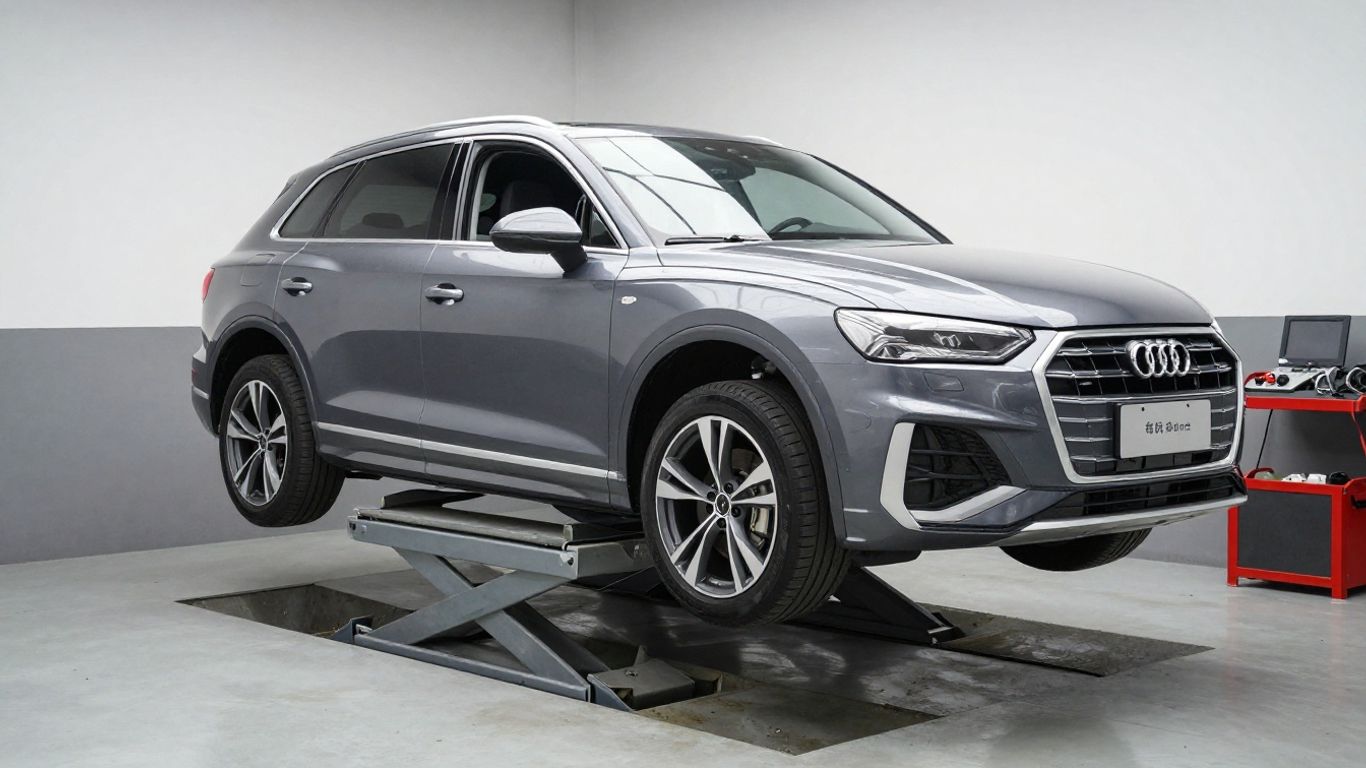
A4 and A5 owners may encounter noise from front links, control-arm bushings, ball joints, strut mounts, or loose hardware. The exact part depends on generation and suspension option, so the model year and build details matter. A front knock accompanied by tire wear or pulling should be treated as a geometry issue as well as a noise complaint.
Suspension knocking on Audi A6 and S6 models
Larger and higher-performance versions can have more complex suspension arrangements and greater component loads. A noise over small bumps may still come from a link or bushing, but dampers, mounts, and specialized systems should also be considered. A community discussion about an S6 noise illustrates why a reported location alone may not identify the failed part.
Potential causes on Audi Q5 and Q7 SUVs
SUVs place different loads on suspension components because of their size, ride height, and possible passenger or cargo weight. Check links, arms, ball joints, springs, dampers, and underbody protection. If the noise changes when the vehicle is loaded, compare ride height and handling before assuming the extra weight itself is the cause.
Differences between standard, sport, adaptive, and air suspension
Standard and sport setups may differ in spring, damper, bushing, or ride-height specifications. Adaptive systems add control components, while air suspension adds air springs, valves, sensors, and compressor behavior to the diagnostic picture. Parts should be matched to the installed setup, not simply to the model name. A parts supplier offering quality used, genuine, and aftermarket parts should still be given the vehicle’s exact details before sourcing anything.
How quattro components can complicate the diagnosis
All-wheel-drive hardware can transmit vibration and noise through the body, making a suspension fault sound closer to the center or opposite side of the car. Driveshafts, mounts, and related components may need consideration when the symptom appears under acceleration rather than bumps. That does not mean every knock is drivetrain-related. Reproduce the noise under different loads and inspect the suspension first where the evidence points there.
How urgent is Audi suspension knocking?
Urgency depends on what is moving and how the vehicle behaves, not simply on how loud the knock sounds. A faint noise with normal steering and braking may allow a careful trip to a workshop. A sudden change in control, ride height, or wheel position calls for a safer response. When in doubt, stop driving and arrange an inspection rather than testing the fault at higher speed.
Warning signs that make the vehicle unsafe to drive
Do not continue normally if the steering wheel changes position, the car wanders, a wheel appears tilted, braking becomes unstable, or a spring is broken. A tire rubbing the body, a severe new vibration, fluid loss from a damper, or a suspension warning combined with a low corner also deserves prompt attention. Towing may be safer than driving when the cause is unclear.
Symptoms that suggest a worn ball joint or control arm
Clunks combined with steering looseness, pulling, uneven tire wear, or visible joint movement are more concerning than an isolated bushing squeak. A ball joint or control arm can affect wheel location and alignment, so symptoms may grow quickly after a major impact. Do not diagnose these parts by shaking the wheel casually; proper support and loading are essential.
When a minor bushing noise can wait for service
A quiet, repeatable noise with stable handling may be suitable for a scheduled appointment, particularly when a technician has checked the vehicle and found no dangerous play. Keep trips short and avoid heavy loads, rough roads, and fast cornering until it is assessed. A general suspension noise checklist can help organize observations before the visit.
How suspension faults affect handling, braking, and tire wear
Loose components can change wheel alignment as the car moves, reducing consistency during braking or cornering. A worn damper may allow extra bounce, while a damaged bushing can let the wheel shift under acceleration or braking. Watch for feathered tread, edge wear, uneven braking feel, or repeated steering correction. These effects are practical reasons to repair the cause rather than simply quiet the sound.
When deciding whether to drive to a workshop, use these signs as a conservative guide:
- Stop and arrange recovery if a wheel is visibly misaligned or the tire is rubbing.
- Drive only cautiously to service if handling remains normal and no dangerous play is found.
- Avoid towing, heavy cargo, and rough roads until the inspection is complete.
- Recheck the vehicle immediately if the noise suddenly becomes louder or more frequent.
This approach keeps a manageable appointment from becoming a roadside failure. It also gives the technician a clearer record of how the condition changed.
Repair options and typical service decisions
Once the source is confirmed, the repair decision should consider the failed part, the condition of nearby components, and the vehicle’s intended use. The cheapest individual part is not always the lowest-cost repair if labor must be repeated. A quality parts supplier can help source used, genuine, or aftermarket options, but the correct specification and fit remain the priority.
Replacing individual parts versus complete suspension kits
One failed link may be replaced individually when surrounding parts are in good condition. A complete arm or suspension kit can make more sense when several bushings and joints are worn, labor overlaps, or the parts are commonly serviced together. The decision should follow inspection results and service history rather than a universal rule.
Choosing between original Audi parts and aftermarket components
Original, used genuine, and aftermarket parts each involve different considerations of price, condition, warranty, and expected service life. A used genuine part must be checked for wear, damage, and correct application. An aftermarket component should come from a reputable source and match the vehicle’s suspension specification. Fitment information is more useful than a broad model-only search.
When both sides of an axle should be replaced together
Paired replacement is often considered for links, springs, dampers, or similar wear items when both sides have comparable age and mileage. It can help keep handling balanced, but it is not automatically required for every component. Replace the unaffected side when inspection, manufacturer guidance, or the part’s service pattern supports doing so.
Why new hardware and correct torque specifications matter
Suspension fasteners often secure parts that carry high loads and move repeatedly. Reusing one-time-use hardware or tightening a bushing fastener with the suspension at the wrong height can create a repeat failure or unwanted preload. Use the specified hardware, torque sequence, and ride-height position. A report of a loose or stripped mounting point should prompt a careful repair, not just a quick retightening.
When suspension repairs require a wheel alignment
Alignment is usually appropriate after replacing control arms, knuckles, subframe-related parts, or components that affect steering geometry. It may also be wise after a major impact or when tire wear shows the settings have changed. Record the before-and-after readings so the result can be checked. A new part cannot correct a separate bent component or damaged wheel.
Preventing recurring suspension knocking
Suspension parts wear through mileage, impacts, weather, load, and time. Prevention is less about avoiding every rough road and more about noticing changes before several components are affected. Keep repair invoices and alignment readings together so repeated failures can be compared. This is especially useful when a parts supplier is helping source a replacement across Melbourne, Sydney, Brisbane, or elsewhere in Australia.
Inspecting suspension parts during routine maintenance
Ask for links, bushings, ball joints, mounts, springs, dampers, tires, and fasteners to be checked during routine servicing. A visual inspection can identify a torn boot or leak before a knock becomes obvious. If the vehicle has recently struck a pothole or curb, request a focused inspection rather than waiting for the next scheduled interval.
Protecting components from potholes, curbs, and heavy loads
Slow down for damaged pavement when it is safe, keep tires correctly inflated, and avoid climbing curbs at an angle that shocks one wheel. Heavy cargo changes suspension loads, particularly on SUVs and vehicles with older springs or dampers. After a strong impact, look for a pull, vibration, altered ride height, or new tire wear.
Recognizing early signs of bushing and shock wear
Early clues include a faint tap, extra bounce, nose dive under braking, uneven tire wear, or a steering response that feels less settled. These symptoms may be gradual and easy to dismiss. Writing them down with mileage and road conditions makes the eventual inspection more efficient and may reveal a pattern across services.
Keeping air suspension systems and ride-height sensors maintained
Air-equipped vehicles benefit from checking for uneven height, slow settling, warning messages, and unusual compressor activity. Ride-height sensors and their links should be kept free of damage and inspected when suspension work is performed. Do not attempt to release pressure or work beneath an air-suspended vehicle without the correct equipment and procedure.
Using service records to track repeated suspension problems
Record the replaced part, side of the vehicle, mileage, alignment readings, and whether the noise changed afterward. Repeated failures on one corner may point to an impact, a related worn component, or an installation issue. Clear records also make it easier for a parts supplier to identify the right quality used, genuine, or aftermarket replacement when the vehicle needs service again.
Conclusion
Audi suspension knocking is best handled as a pattern to investigate rather than a sound to guess at. Note when it occurs, inspect the full suspension and tires, treat handling changes seriously, and match any replacement part to the vehicle’s exact setup. A measured diagnosis usually saves more time and money than replacing parts one at a time.
Frequently Asked Questions
Can I keep driving with Audi suspension knocking?
It depends on the cause and the vehicle’s behavior. A mild, stable noise may allow a cautious trip to a workshop, but steering looseness, visible wheel misalignment, severe vibration, or a broken spring calls for stopping and arranging recovery.
What is the most common cause of a suspension knock?
Worn sway bar links, bushings, control-arm bushings, ball joints, strut mounts, and loose hardware are common possibilities. The exact cause depends on when the noise occurs and whether handling or tire wear has also changed.
Can bad tires sound like suspension knocking?
Yes. Tire damage, uneven wear, a bent wheel, or incorrect pressure can create vibration and road noise that seems to come from the suspension. Tires and wheels should be checked alongside the suspension rather than treated as unrelated.
Does a suspension knock always mean a serious fault?
No. Some noises come from a minor bushing or link issue, but sound alone cannot establish risk. The urgency rises when the knock is paired with steering movement, pulling, unstable braking, visible damage, or abnormal ride height.
Should suspension parts be replaced in pairs?
Sometimes. Paired replacement is commonly considered for components with similar wear patterns, such as dampers or springs, but the decision depends on inspection results, mileage, manufacturer guidance, and the part involved.
Will a wheel alignment fix suspension knocking?
Alignment corrects wheel-angle settings; it does not repair a worn joint, bushing, mount, or loose fastener. An alignment may be needed after a suspension repair, but it should follow diagnosis and replacement of the faulty component.
How can I help a mechanic find the noise faster?
Describe the road surface, speed, steering angle, temperature, and whether braking or acceleration changes the sound. Note the apparent corner and record a safe short video or audio clip if possible, without distracting the driver.