

Key Takeaways
A starter problem can look like a battery fault, a wiring issue, or a much larger electrical failure. Careful observation and a few basic tests help separate those possibilities before parts are replaced.
- A starter motor cranks the engine; it does not recharge the battery or control fuel and ignition.
- Clicking, slow cranking, grinding, and complete silence are useful clues, but none proves the starter is at fault alone.
- Battery condition, cable connections, grounds, relays, and the starter solenoid should be checked before condemning the motor.
- A clean diagnosis can lead to a connection repair, a rebuild, or a complete starter replacement.
- Intermittent symptoms deserve attention because a starter that works today may leave the car immobile tomorrow.
What Audi starter motor failure means
Audi starter motor failure means the electric motor or its supporting circuit cannot turn the engine fast enough, reliably enough, or at all. The fault may be inside the starter, but the same no-start experience can come from a weak battery, damaged cable, poor ground, or control-circuit problem. That is why replacing the first suspected part is not always the quickest solution.
The starter motor’s role in the starting system
When the ignition is switched on, the starter circuit sends battery power to a solenoid and electric motor. The solenoid helps engage the starter gear, while the motor turns the engine through the flywheel or flexplate until combustion can take over. Once the engine is running, the starter disengages.
The starter operates only for a short period, but it handles a high electrical load. A fault can therefore appear suddenly, even when the car was running normally on the previous drive. Repeated attempts to start the vehicle may add heat and drain the battery, making the original symptom harder to interpret.
How the starter differs from the battery and alternator
The battery stores electrical energy and supplies the heavy current needed during cranking. The starter converts that electrical energy into mechanical rotation. The alternator takes over after the engine starts, producing electrical power and replenishing the battery as the vehicle runs.
A weak battery can make a healthy starter sound sluggish, while a failing alternator can leave the battery undercharged and create repeated starting trouble. Conversely, a strong battery and normal charging voltage do not rule out worn starter contacts or an internal motor fault. The parts work together, but they do different jobs.
Why Audi models may show different failure patterns
Different engines, starter locations, battery arrangements, and control systems can change how a failure sounds or behaves. Heat around the starter, access to the terminals, and the vehicle’s history of short trips may all influence the symptoms. Even two cars of the same model can behave differently if their batteries, grounds, or previous repairs differ.
The useful approach is to record what happens each time: one click, rapid clicks, a slow crank, a free-spinning whine, or no sound at all. That pattern is more informative than the simple statement that the car “will not start.”
When a no-start condition points to another component
If the engine cranks at a normal speed but never fires, the starter may be doing its job. The problem could instead involve fuel delivery, ignition, engine timing, immobiliser authorization, or a sensor. If there is no crank, the battery and starting circuit deserve attention first, but a control-module or selector-position fault can also interrupt the command.
A useful first reference is this guide to Audi starter symptoms, particularly when the sound changes from one attempt to the next. Treat online symptom lists as starting points, not as a substitute for electrical testing.
Common symptoms of a failing Audi starter motor
Starter faults rarely arrive with a neat warning light. Drivers usually notice a change in sound, speed, or consistency when the key or start button is used. The same symptom can have several causes, so the timing and pattern matter as much as the noise itself.
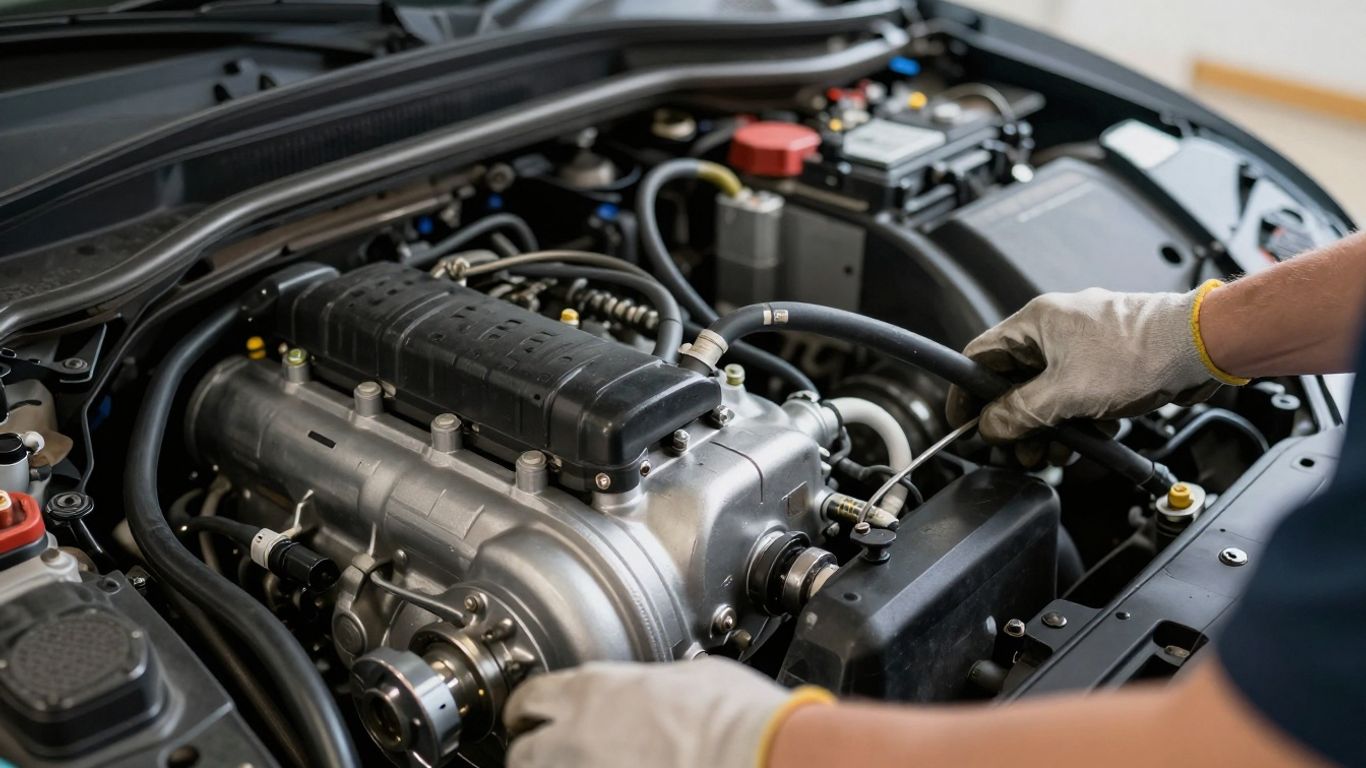
A short recording of the starting sound can help a technician compare a normal attempt with a failed one. It is also worth noting whether the dashboard lights dim sharply, whether the car starts after waiting, and whether a jump-start changes anything.
Clicking without the engine turning over
A single click may mean the solenoid is moving but the starter motor is not receiving or using sufficient current. Rapid clicking more often suggests voltage is collapsing under load, commonly because of a weak battery or poor connection. Neither sound identifies the starter by itself.
If the lights become noticeably dim while a single click repeats, test the battery and its terminals before ordering a motor. If battery voltage remains satisfactory and the cables pass their tests, attention can move toward the solenoid and starter internals.
Slow or intermittent cranking
A starter that turns the engine slowly may be worn, binding, or receiving too little power. Cold weather can expose a marginal battery, while a heat-soaked engine bay can make an aging starter temporarily reluctant. Intermittent cranking is especially valuable evidence because it often appears before complete failure.
The car may start normally several times and then crank weakly on the next attempt. That does not make the symptom harmless; it simply means the fault has not yet become constant. A test performed while the problem is present is usually more revealing than a quick visual inspection.
Grinding, whirring, or unusual starting noises
Grinding can indicate that the starter gear is not engaging the flywheel cleanly, while a high-pitched whirring sound may mean the motor is spinning without properly turning the engine. Continuing to operate the starter when these noises occur can damage mating gears and increase the repair involved.
Stop trying repeatedly if the sound is harsh or mechanical. A technician can inspect engagement, mounting, and the condition of the teeth rather than assuming the electric motor alone is responsible. A broken or loose mounting point can also alter alignment.
Electrical power with no response from the starter
Dashboard lights and accessories can work even when the starter circuit cannot deliver the current needed for cranking. A silent start attempt may result from a failed solenoid, open fuse or relay, ignition-switch signal, neutral-safety input, immobiliser authorization, or disconnected cable.
This is where a broader diagnosis helps. Guidance on diagnosing a faulty starter is useful for organizing the initial checks, but a no-response condition still needs measurements at the vehicle in question. Electrical power elsewhere in the car does not prove that power reaches the starter.
The main causes of Audi starter motor failure
A starter can fail because its internal parts wear out, but external conditions often contribute to the process. Low battery voltage, resistance in a cable, oil contamination, and repeated long cranking can all increase the load placed on the motor. Finding the cause matters because a replacement starter can suffer the same fate if the surrounding fault remains.
Worn brushes, bearings, and internal contacts
Brushes and commutator contacts wear as the motor operates, while bearings can develop drag or play. Internal contacts may work in one position and fail in another, creating the familiar pattern of intermittent starting. Eventually, the motor may click without turning or stop responding altogether.
A rebuild may be practical when the housing and main components are serviceable. However, the condition of the armature, gear mechanism, solenoid, and bearings must be assessed together. Replacing one worn internal part without checking the rest can produce a short-lived repair.
Weak batteries, corroded terminals, and poor grounds
The starter needs substantial current for a brief period. Corrosion, a loose terminal, or a damaged ground strap can restrict that current even when the battery appears charged. A battery that has lost capacity can show a reasonable resting voltage and still collapse during cranking.
The following checks help distinguish a low-power problem from a motor problem:
- Confirm the battery is charged and sized correctly for the vehicle.
- Inspect positive and negative terminals for looseness, heat damage, or corrosion.
- Check the engine-to-body ground strap and its contact surfaces.
- Compare voltage at the battery with voltage at the starter during cranking.
These checks are simple, but they prevent a common mistake: fitting a new starter to compensate for resistance elsewhere in the circuit. A starter motor failure guide also provides useful background on worn internal parts, batteries, and solenoids.
Faulty starter solenoids and electrical connections
The solenoid controls the high-current connection and helps move the starter gear into engagement. Burned contacts, a weak coil, or a poor signal wire can stop the motor from operating even when the motor itself is usable. A relay, fuse, ignition switch, or control input can create a similar result upstream.
Testing should follow the circuit rather than jump straight to the starter. A command present at the solenoid terminal with no motor response points in a different direction from a missing command. That distinction makes the repair more precise.
Heat, oil leaks, moisture, and repeated starting strain
High under-hood temperatures can worsen an already marginal starter, producing a no-start condition after a hot drive and normal operation once the car cools. Oil contamination can damage insulation and attract debris, while moisture encourages corrosion at exposed connections. Long repeated cranking also creates heat in the motor and cables.
A starter that fails only when hot deserves a comparison between cold and heat-soaked testing. If an oil leak or damaged shield is present, replacing the motor without correcting that condition may simply postpone the next failure. Unusual noises, burning smells, or smoke call for stopping the starting attempt and arranging an inspection.
How to diagnose the problem accurately
Good diagnosis begins with the symptom and ends with a measured result. Start with the battery and visible connections, then follow the start command toward the starter. This order is efficient because it checks common, relatively simple causes before more involved removal work.
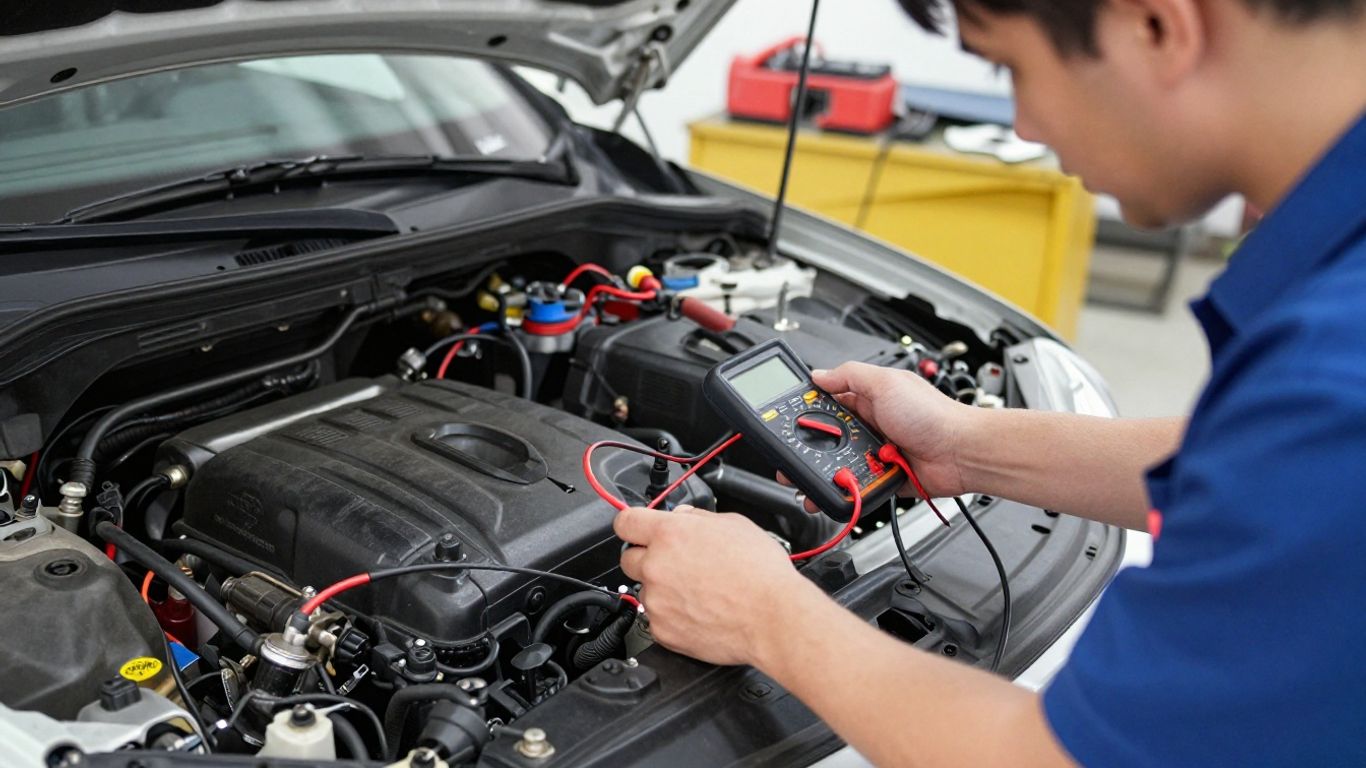
The process should also account for the exact failure state. A starter that works cold but not hot may need a different test strategy from one that never responds. The broader principle of failure detection and switching applies here in a simple way: identify where the expected electrical path stops before changing components.
Checking battery voltage and starting-system power
Measure resting battery voltage after the vehicle has been parked, then observe the voltage while the engine is cranking or while the starter is commanded. A low reading under load may indicate a discharged or weak battery, though the result should be considered alongside battery age and charging history.
Also check whether the battery is being recharged correctly once the engine runs. A replacement starter cannot solve an alternator or battery problem that keeps the starting system underpowered. When possible, test during the actual failure rather than relying on a later moment when the vehicle happens to start.
Testing the starter circuit, fuse, relay, and ignition switch
The starter circuit should be checked for a command signal when the key or button is operated. Fuses and relays are inexpensive points to inspect, but they should be tested rather than judged by appearance. Depending on the vehicle, the start request may also pass through a gear-position switch, immobiliser system, or electronic control module.
A missing signal means the starter may be innocent. A present signal with correct battery power but no rotation shifts suspicion toward the solenoid or motor. This is more dependable than diagnosing from a single click.
Inspecting cables, grounds, and terminal connections
Look for loose fasteners, green or white corrosion, frayed cables, heat discoloration, and ground straps that are cracked or poorly attached. A cable can look acceptable outside while having high resistance internally. Cleaning a connection is worthwhile only when the terminal can be tightened securely and the cable remains sound.
The inspection should include both ends of each high-current cable. Testing only the battery terminals can miss resistance between the engine block, body, and starter. This careful approach is also useful when following advice on common starter problems, where battery and electrical connections can mimic a failed motor.
Using scan tools and voltage-drop testing
A scan tool may reveal stored faults or show whether the vehicle recognizes the start request, but it does not replace physical testing of high-current circuits. Voltage-drop testing while the starter is operating can identify resistance in the positive side or ground side that a simple continuity check may miss.
Record the readings and conditions: battery temperature, engine temperature, whether the fault was present, and whether the engine cranked. Those details turn a vague intermittent complaint into evidence that can guide the repair.
Repair and replacement options
The appropriate repair depends on what testing finds, how accessible the starter is, and the condition of related components. Sometimes a terminal or ground correction restores normal operation. Other times the starter has internal wear and replacement is more sensible than repeated attempts to revive it.
When cleaning or repairing connections may be enough
A loose terminal, corroded ground, or damaged cable can create symptoms that closely resemble starter failure. Cleaning the contact surfaces, tightening the hardware, and replacing a compromised cable may restore full current flow. The repair should then be verified with another voltage-drop or starting test.
Simply spraying a connection and hoping for improvement is not a lasting method. The surfaces must be clean and mechanically secure, and the underlying cause of corrosion should be addressed. If the starter still draws excessive current or fails to respond, continue the diagnosis rather than repeating the cleaning.
Signs that the starter motor needs rebuilding
A starter may be a candidate for rebuilding when brushes, bearings, contacts, or the solenoid are worn but the main housing and armature remain serviceable. Rebuilding can involve disassembly, cleaning, testing, and replacement of several internal parts. Quality depends on the parts used and the testing performed afterward.
A rebuild is less attractive when the casing is damaged, the gear mechanism is badly worn, or the motor has suffered severe heat or contamination. The decision should consider access and labor as well as the price of the internal parts. The cheapest component is not always the lowest-cost repair overall.
Choosing an OEM, remanufactured, or aftermarket starter
A replacement should match the engine, transmission, mounting arrangement, electrical connection, and required output. “OEM,” “remanufactured,” and “aftermarket” describe different sourcing and production paths, but the important practical questions are fitment, test coverage, warranty, and supplier support.
Check the part number against the vehicle identification details rather than relying only on appearance. A good parts supplier should be able to confirm compatibility before dispatch. If the original failure involved heat, oil, or a poor ground, correct that issue at the same time.
What to expect from labor time and repair costs
Labor varies widely because some starters are easy to reach while others sit behind exhaust, intake, or underbody components. The final cost may include diagnosis, removal and installation, the starter itself, replacement cables or terminals, and any work needed to correct an oil leak or heat shield.
Ask for a written estimate that separates testing from parts and labor. A careful shop should explain why the starter is being replaced and whether the battery and charging system were tested. This protects against paying for a new motor when the real fault is elsewhere.
How to prevent future starter motor problems
Starter motors are wear items, but their service life is affected by the condition of the complete starting system. Regular battery care and prompt attention to electrical symptoms can reduce unnecessary strain. Prevention is less about a special treatment and more about not allowing small faults to remain unresolved.
Maintaining battery health and charging performance
Have the battery tested when cold starts become slower, after repeated jump-starts, or when the vehicle sits for long periods. Confirm that the charging system restores energy while the engine runs. Short trips, long storage, and accessory use can leave the battery chronically undercharged.
Use the correct battery specification and ensure it is secured properly. A loose battery can suffer vibration damage, while an undercharged battery makes every start harder on the starter. Battery maintenance is especially valuable before seasonal temperature changes.
Protecting terminals from corrosion and moisture
Keep terminal connections clean, tight, and protected with a suitable terminal treatment after the contact surfaces have been prepared. Avoid trapping water around electrical connections, and inspect battery covers, cable boots, and ground points during routine servicing.
Corrosion is not always dramatic at first. A small amount of resistance can become a large voltage loss when the starter demands high current. Early cleaning and inspection are far cheaper than diagnosing a roadside no-start later.
Addressing oil leaks and electrical faults early
Oil leaking onto a starter can contaminate components and collect dust, while a damaged cable can heat up under load. Repairing the leak or cable protects the replacement part and reduces the risk of repeated failure. Electrical warning signs should be investigated even if the vehicle still starts.
Do not ignore flickering lights, a burning smell, repeated fuse failures, or a starter that sounds different. These clues may point beyond the motor itself. Addressing them early also avoids the kind of prolonged troubleshooting described in broader follow-up strategies, where unresolved issues tend to become harder to close out.
Recognizing intermittent symptoms before complete failure
If the car starts only after several attempts, cranks slowly on some mornings, or refuses to start when hot, keep a record and arrange testing. Intermittent faults are often easier to locate before a component stops working completely because the symptom can still be reproduced.
Avoid repeatedly holding the key or start button for long periods. Pause between attempts, especially if the starter sounds strained, and seek help if the battery becomes weak. Early attention may turn an inconvenient connection repair into a manageable workshop visit instead of a recovery call.
Conclusion
Audi starter motor failure is a useful description of a symptom, not a diagnosis by itself. Listen to the starting sound, check battery power and cable condition, test the control circuit, and confirm the starter’s performance under load before choosing a repair. That method gives you the best chance of fixing the actual fault and avoiding an unnecessary replacement.
Frequently Asked Questions
What does a starter motor do?
The starter motor uses electrical power from the battery to rotate the engine until it can begin running on its own.
Can a weak battery sound like a bad starter?
Yes. A weak battery or poor connection can cause clicking, slow cranking, or complete silence, closely resembling starter failure.
Does clicking always mean the starter is bad?
No. Clicking can come from low battery voltage, corroded terminals, a poor ground, a faulty solenoid, or a problem elsewhere in the start circuit.
Why does a car start when cold but not when hot?
Heat can worsen internal starter wear, electrical resistance, or solenoid faults. Testing the vehicle during the hot no-start condition is helpful.
Can a starter be repaired instead of replaced?
Sometimes. A rebuild may be suitable when internal parts are worn but the housing and major components remain serviceable.
How long does starter replacement take?
Labor time depends on access to the starter and the vehicle’s engine layout. Some replacements are straightforward, while others require removal of surrounding components.
Should the battery be replaced with the starter?
Not automatically. The battery should be tested first, along with the charging system and cables, so each part is replaced only when it has failed or no longer meets requirements.