

Key Takeaways
Audi electrical system issues can begin with a weak battery but may also involve charging hardware, wiring, software, or control modules. Careful testing is safer and more useful than replacing parts based on a single warning light.
- A weak 12-volt battery can cause starting, lighting, and accessory problems.
- Alternator output, grounds, fuses, and connections should be checked together.
- Warning messages often identify a monitored fault, not the failed part itself.
- A parasitic-drain test can explain repeated dead-battery incidents.
- Prompt diagnosis helps prevent a small electrical fault from becoming a larger repair.
What Audi electrical system issues can affect
Audi electrical system issues can reach far beyond a no-start condition. The 12-volt battery, charging circuit, starter, lighting, comfort features, infotainment equipment, and driver-assistance systems all depend on stable power and reliable communication. Because several control units may share information, one fault can sometimes create several apparently unrelated symptoms.
A useful overview of multiple control modules explains why a warning on the instrument cluster does not always identify the component that needs replacement. The first step is to separate the symptom from its likely source.
Battery and charging system failures
The battery supplies power for starting and supports the vehicle when demand briefly exceeds alternator output. A weak battery may produce slow cranking, dim lights, repeated warning messages, or a complete no-start condition. If the alternator or voltage regulator is not maintaining the correct output, replacing the battery alone will usually provide only temporary relief.
A charging fault can also appear while driving. The vehicle may continue operating for a short time on stored battery power, then lose electrical functions as voltage falls. That is why a battery warning deserves prompt attention, especially if it is accompanied by dimming lights or multiple system alerts.
Starter and ignition problems
A starter problem often sounds different from a discharged battery. You may hear a click, a single heavy engagement, or nothing at all while the dashboard remains illuminated. Loose battery connections, a poor ground, a starter motor fault, or a problem in the starting-control circuit can produce similar results.
Ignition-related electrical faults may cause hard starting, intermittent stalling, or an engine that cranks without running. Diagnosis should account for both power delivery and the signals that allow the engine-management system to authorize operation.
Lighting, windows, and accessory faults
Headlights, interior lamps, power windows, door locks, mirrors, and climate controls can reveal unstable voltage or a localized circuit fault. One failed accessory may point toward a fuse, switch, connector, or motor, while several accessories failing together suggests a shared supply, ground, or control-module concern.
Intermittent operation is especially useful information. Note whether the fault occurs after rain, during cold starts, when a door moves, or when several electrical loads are switched on. Those details can shorten the inspection considerably.
Infotainment and driver-assistance glitches
Infotainment screens that reboot, disappear, or respond slowly may be reacting to low voltage, a communication interruption, or a module fault. Driver-assistance alerts can behave similarly, although the underlying issue may involve a sensor, wiring, calibration, or network communication rather than the display itself.
Treat these features as safety-related when they affect braking, steering assistance, visibility, or parking information. If a warning limits a safety function, follow the vehicle’s instructions and arrange diagnosis rather than repeatedly clearing the message.
Common causes of Audi electrical problems
The causes of Audi electrical problems range from ordinary battery aging to moisture damage and failed electronic components. Symptoms can overlap, so a part that appears suspicious is not automatically the root cause. A sensible inspection starts with basic power and connection checks before moving toward network or software diagnosis.
The most useful early question is whether the fault is constant or intermittent. A constant failure may be easier to isolate, while an intermittent fault often leaves clues in stored codes, connection condition, voltage history, or the circumstances in which it appears.
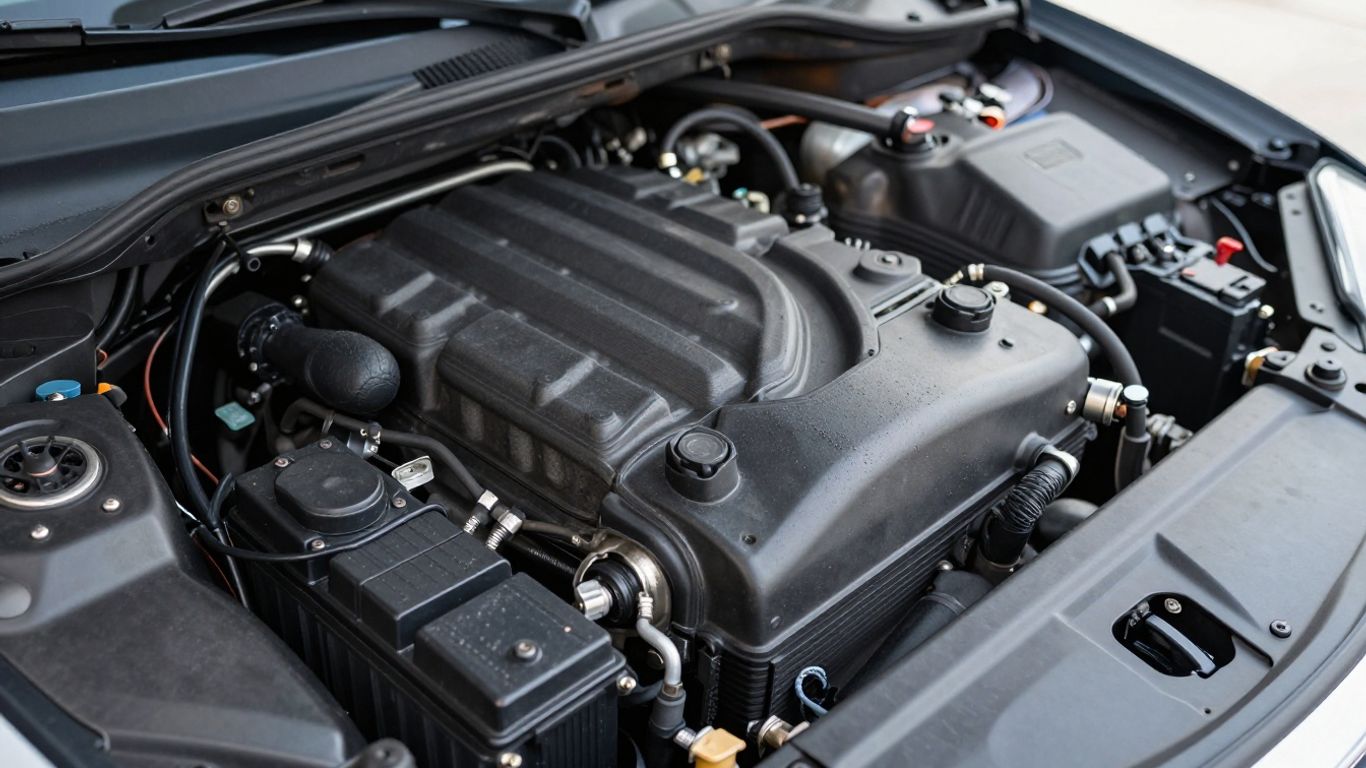
Aging or weak 12-volt batteries
A 12-volt battery gradually loses its ability to store and deliver energy. Short trips, long periods parked, extreme temperatures, and repeated deep discharges can make the weakness more noticeable. A battery can show acceptable voltage at rest and still fail a proper load or capacity test.
Battery age is useful context, but it is not proof of failure. The battery should be assessed alongside charging performance and the possibility that another circuit has been drawing power while the vehicle is off.
Alternator and voltage regulator defects
The alternator replenishes battery energy while the engine runs, and the voltage regulator helps control its output. A fault in either area may cause a battery warning, flickering lights, poor charging, or a drained battery after a drive. Belt condition and the alternator’s electrical connections also belong in the inspection.
Testing under different electrical loads can reveal a problem that is not obvious at idle. The result should be interpreted with the vehicle’s design and the test equipment in mind rather than judged from one quick reading.
Blown fuses, damaged wiring, and poor connections
A blown fuse usually protects a circuit from excessive current; replacing it without finding the reason it opened can lead to another failure. Damaged insulation, pinched wiring, loose terminals, and poor grounds can create resistance, heat, or intermittent operation.
For owners comparing symptoms with likely causes, this electrical fault guide is a useful general reference. The practical lesson is simple: inspect the complete circuit, not just the fuse that happens to be open.
Water intrusion and corrosion
Moisture can enter around seals, drains, connectors, battery compartments, or wiring routes. Corrosion then increases resistance and may interrupt communication between components. The resulting fault can disappear when the area dries and return after the next wet-weather drive, making it easy to misdiagnose.
A proper inspection looks for damp trim, residue, green or discolored terminals, swollen insulation, and evidence of water tracking. Cleaning a visible terminal may not be enough if moisture has reached a connector or control unit.
Software faults and control module failures
Electronic modules can store fault information, lose communication, or behave incorrectly because of a software issue, an internal failure, or unstable power. A module-related warning does not necessarily mean the module itself must be replaced; low voltage and network interruptions can produce similar codes.
The repair decision should follow testing. Resetting a fault without identifying why it occurred may make the vehicle appear fixed until the same condition returns.
Warning signs that indicate an electrical fault
Electrical faults rarely announce themselves in only one way. A dashboard message may appear before a starting problem, while an accessory glitch may be the first sign of a weakening battery or poor connection. Recording what happens, when it happens, and whether the engine is running gives a technician far better evidence.
Do not ignore a warning simply because the vehicle still drives normally. Some faults remain minor, but others can reduce starting reliability or disable a safety-related feature without much notice.
Dashboard warning lights and error messages
Battery, charging, engine, transmission, brake, airbag, and driver-assistance warnings can all have an electrical cause. A general message indicates that a monitored system has detected an abnormal condition; it does not always name the failed wire, sensor, or module.
Write down the exact wording and take a photograph if it disappears. The timing of the message and any related symptoms can be as valuable as the code retrieved later.
Slow starts, stalling, or intermittent power loss
A starter that turns the engine slowly may indicate low battery capacity, high resistance in a connection, or a starting-circuit problem. Stalling or intermittent power loss raises the stakes because the cause may involve charging, ignition authorization, engine management, or a disrupted connection.
If power loss occurs in traffic, move to a safe location and avoid repeated restart attempts that may further discharge the battery. A vehicle that restarts after waiting still needs an explanation.
Flickering lights and unusual electrical behavior
Flickering interior or exterior lights can reflect unstable charging voltage, a loose connection, a poor ground, or a failing lamp circuit. Other clues include windows moving at different speeds, locks cycling unexpectedly, screens rebooting, or warning lights appearing together.
These symptoms are more informative when described as a pattern. Note which functions change at the same time and whether engine speed, weather, or movement of a door affects them.
Battery drain while the vehicle is parked
A battery that repeatedly goes flat while parked may be reaching the end of its service life, but it may also be losing energy through a parasitic draw. A module that does not enter its normal sleep state, an accessory left active, or a circuit fault can all contribute.
Avoid relying on frequent jump-starts as a routine. They may get the vehicle moving, but they do not distinguish between a bad battery, a charging fault, and an unwanted electrical load.
Burning smells, heat, or visible wiring damage
A hot fuse, melted connector, burning odor, smoke, or exposed conductor requires immediate caution. These signs can indicate excessive resistance or current and should not be treated as a minor inconvenience.
Switch off the vehicle when safe and do not continue operating a circuit that is visibly overheating. Fire risk and damage to nearby components make prompt professional inspection appropriate.
How to diagnose Audi electrical system issues
Diagnosis works best as a sequence, beginning with the condition of the power supply and moving toward individual circuits and control modules. Guessing from one symptom often leads to parts being replaced without resolving the original fault. The goal is to reproduce the concern, measure the relevant circuit, and confirm the repair afterward.
A technician may need information about battery age, recent repairs, jump-starts, water exposure, aftermarket equipment, and the exact conditions surrounding the failure. Those details can point the inspection in the right direction.
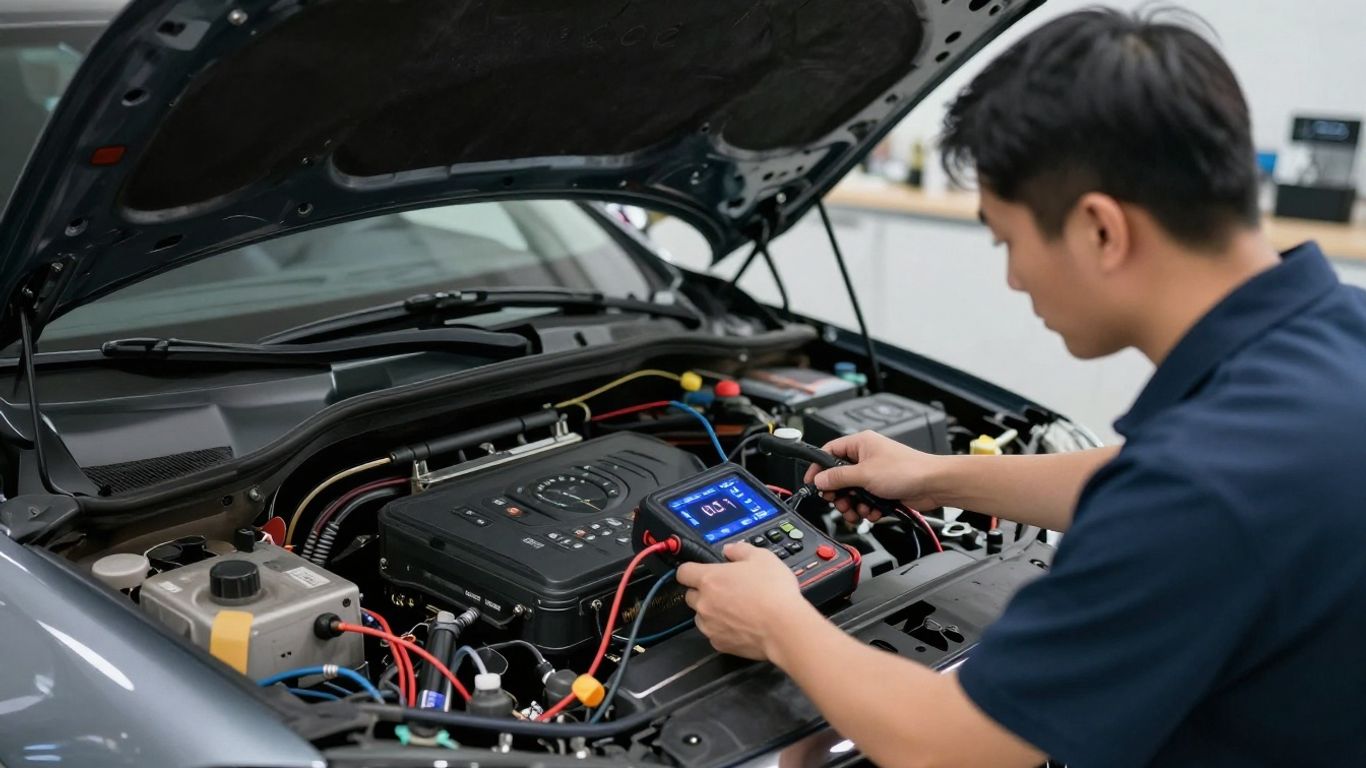
Checking battery voltage and alternator output
A voltage check at rest provides a starting point, but it does not prove that the battery can deliver sufficient starting current. Testing during cranking and while the engine runs gives a clearer view of battery performance and alternator output.
Measurements should be made with suitable equipment and interpreted under known conditions. Electrical load, engine speed, temperature, and the state of the battery can all affect the result.
Inspecting fuses, grounds, and battery connections
The inspection should include battery terminals, ground straps, fuse panels, main power cables, and accessible connectors. Corrosion or looseness can create enough resistance to cause a no-start condition, dimming, or erratic module behavior even when the component itself is healthy.
A visual check is valuable but not always sufficient. Voltage-drop testing under load can identify resistance that looks normal when the circuit is carrying little or no current.
Scanning control modules for diagnostic trouble codes
A full diagnostic scan can reveal stored, pending, or communication-related faults across more than one module. The code is a direction for further testing, not a direct instruction to replace the named component.
Record codes before clearing them, including their status and related data when available. Clearing the memory too early can remove useful evidence and make an intermittent problem harder to reproduce.
Testing for parasitic battery drain
A parasitic-drain test measures current consumption after the vehicle has been allowed to enter its normal parked state. The process requires patience because modules and accessories may take time to shut down. Opening doors or waking the vehicle during the test can change the reading.
Once an excessive draw is confirmed, circuits can be isolated methodically. Pulling fuses at random is less reliable than using the vehicle’s wiring information and observing how the measured current changes.
Distinguishing software issues from hardware failures
Software-related symptoms may follow a low-voltage event, a communication interruption, or a repeatable operating condition. Hardware faults are more likely to show measurable loss of power, abnormal resistance, physical damage, or a failure that remains after stable power and communication are confirmed.
The distinction is not always obvious from the dashboard. A useful diagnostic process combines scan data with electrical measurements and physical inspection rather than treating either source as definitive on its own.
Repair options and likely service decisions
The correct repair depends on the confirmed cause, the condition of surrounding components, and whether the fault has affected other circuits. Some cases end with a battery and connection service; others require component replacement or specialized programming. A clear diagnosis helps separate necessary work from speculative work.
The table below shows how common findings can guide the next decision, while recognizing that the final choice depends on test results and vehicle configuration.
| Finding | Likely direction | Confirmation needed |
|---|---|---|
| Low battery capacity | Replace the 12-volt battery | Battery test and charging check |
| Low or unstable charging output | Inspect or replace charging components | Output and wiring tests |
| Open fuse or high-resistance connection | Repair the circuit | Fuse, voltage-drop, and continuity tests |
| Excessive parked current | Isolate the affected circuit | Parasitic-drain measurement |
This framework prevents a battery replacement from masking an alternator fault or an active drain. It also gives the owner a clearer explanation of why a repair is being recommended.
When a battery replacement is enough
Battery replacement may resolve the concern when testing confirms low capacity and the charging system, connections, and parked-current draw are normal. The replacement should match the vehicle’s required specification rather than being chosen on physical size alone.
A new battery is not a complete answer when the old one failed because of another fault. Charging output and the condition of the terminals should be checked before the vehicle is returned to regular use.
Repairing wiring, grounds, fuses, and connectors
A repair may involve cleaning and securing terminals, replacing a damaged section of wiring, restoring a ground, correcting a connector problem, or finding the cause of a blown fuse. The work should preserve circuit protection and use an appropriate repair method rather than a temporary twist or improvised splice.
After the repair, the circuit needs to be tested under the conditions that originally produced the fault. Intermittent problems require particular care because a stationary visual inspection may not reproduce them.
Replacing alternators, starters, or control modules
Alternators and starters should be replaced when testing confirms an internal or mechanical failure, not merely because the battery is discharged. Control-module replacement is an even more consequential decision because the original fault may be elsewhere in the power or communication circuit.
Before installing a module, verify power, ground, network connections, and related components. This reduces the chance of damaging a replacement or returning the vehicle with the same underlying problem.
Updating software and performing module adaptations
Some repairs require software updates, configuration, or adaptations after a component is installed. These procedures help the vehicle recognize and operate the repaired system correctly, but they should follow a confirmed diagnosis rather than serve as a substitute for one.
The exact procedure depends on the vehicle and module involved. Service records should document what was updated or adapted so future diagnosis starts with accurate information.
When specialist diagnostic equipment is necessary
Specialist equipment becomes valuable when several modules report communication faults, a safety feature is affected, a parasitic drain is difficult to isolate, or a replacement module needs configuration. It can also help retrieve manufacturer-specific information that a basic code reader may not show.
If the fault is intermittent or returns after a basic repair, escalating the diagnosis is usually more efficient than continuing to replace inexpensive parts. A broader Audi electrical repair guide can help owners understand why advanced testing may be recommended.
How to prevent recurring Audi electrical problems
Prevention is mostly consistent maintenance and quick attention to changes in behavior. A healthy battery can still fail if the charging system is weak, and a clean terminal cannot compensate for damaged wiring or water intrusion. Keeping a record of repairs and recurring symptoms makes future visits more productive.
Small checks matter because electrical faults often become more expensive after heat, corrosion, or repeated low-voltage events has affected additional components.
Following the correct battery registration procedure
Some vehicles require the replacement battery to be registered or adapted so the charging strategy matches the battery installed. The procedure and requirements vary by vehicle, so follow the service information applicable to the specific model and year.
Registration does not repair a charging fault or a parasitic draw. It is one step in the replacement process, not a substitute for testing the rest of the system.
Keeping battery terminals and grounds clean
Terminals and grounds should be secure, clean, and protected from contamination. Inspection is especially sensible after a battery replacement, jump-start, or period of difficult starting.
Do not overlook the ground path between the battery, body, and engine. A problem in that path can imitate a failed battery or starter and may affect several systems at once.
Protecting wiring from moisture and corrosion
Keep drains clear and address damaged seals or wet carpeting before corrosion spreads. When a connector is exposed to moisture, drying the surrounding area alone may not stop damage that has already begun inside the connection.
Avoid forcing, stretching, or trapping wiring during accessory installation or interior work. Physical strain can create faults that appear only when the vehicle moves or a panel is opened.
Addressing warning signs before the battery fails
A slow start, flickering lamp, intermittent window, or new warning message is worth recording and reporting. Acting while the vehicle still starts normally can make testing easier and may prevent repeated deep discharges.
Useful details include the date, weather, mileage, battery age, and whether the symptom followed a repair or jump-start. A short symptom history often saves more time than repeated trial-and-error repairs.
Scheduling periodic electrical system inspections
Periodic checks can include battery condition, charging output, terminal security, grounds, visible wiring, and evidence of moisture. The right interval depends on use, climate, vehicle age, and the history of electrical faults.
An inspection is particularly worthwhile before extended travel or after a recurring no-start event. Preventive testing cannot guarantee that an electrical component will never fail, but it can expose weak points before they become inconvenient or unsafe.
Conclusion
Audi electrical system issues are easier to resolve when symptoms are documented and diagnosis follows a measured path from battery and connections to charging hardware, circuits, and control modules. Prompt attention to warnings, careful testing, and correct post-repair procedures can reduce repeat failures and avoid replacing parts that were never at fault.
Frequently Asked Questions
What is the most common cause of an electrical problem?
A weak 12-volt battery is common, but poor connections, charging faults, wiring damage, water intrusion, and module problems can create similar symptoms. Testing is needed to identify the actual cause.
Can a bad battery cause multiple warning lights?
Yes. Low or unstable voltage can affect several electronic systems at once and produce multiple warnings. The battery and charging system should be tested before assuming that several modules have failed.
How can I tell whether the alternator is failing?
Possible clues include a battery warning, dim or flickering lights, repeated battery discharge, and electrical problems that appear while driving. Alternator output must be measured under appropriate conditions to confirm the fault.
Why does the car start after a jump but fail again later?
A jump-start may temporarily provide enough energy to crank the engine, but it does not fix a weak battery, charging problem, or parasitic drain. The underlying system needs to be tested.
Should I keep driving with an electrical warning light on?
That depends on the warning and the vehicle’s behavior. Stop safely if there is smoke, burning odor, severe power loss, or a safety-system warning, and arrange diagnosis rather than continuing to drive normally.
What does a parasitic drain mean?
A parasitic drain is electrical current used while the vehicle is parked and should be asleep. A small amount may be normal, but excessive draw can discharge the battery and must be isolated by testing individual circuits.
Why are intermittent electrical faults difficult to find?
They may depend on temperature, moisture, vibration, engine speed, or a module entering and leaving its sleep state. Reproducing the condition and keeping detailed symptom notes can make the fault much easier to isolate.