
Key Takeaways
Fuel injector trouble can look like an ignition, air-intake, or fuel-pump problem, so diagnosis matters more than guessing. The right repair depends on the injector design, the confirmed fault, and the condition of the surrounding fuel system.
- Rough running, misfires, hesitation, and hard starting are common warning signs.
- Deposits, contamination, leaks, wiring faults, and fuel-pressure problems can all affect injector performance.
- Fault codes and fuel-trim data help narrow the problem but do not prove that an injector is faulty.
- Cleaning may help with deposits, while a damaged or leaking injector usually needs replacement.
- Driving with severe misfires, fuel smells, or smoke can turn a manageable repair into engine damage or a safety concern.
Understanding how Audi fuel injectors work
Audi fuel injectors meter fuel into the engine in carefully timed pulses. The engine control unit adjusts those pulses according to engine speed, load, temperature, air measurement, and oxygen-sensor feedback. When delivery becomes uneven, combustion suffers even if the injector is only partly restricted.
The role of injectors in fuel delivery
An injector is an electrically operated valve designed to open for a specific interval and spray a controlled amount of fuel. In a gasoline engine, that fuel must mix with air in the intended place and at the intended time. A weak spray pattern, restricted passage, or inconsistent opening can leave one cylinder richer or leaner than the others.
The injector is only one part of the delivery chain. The tank, filter, pump, fuel rail, pressure regulator, wiring, and engine computer all influence whether the commanded quantity reaches the cylinder.
Differences between FSI, TFSI, and diesel systems
FSI and TFSI gasoline engines use direct injection, sending fuel into the combustion chamber at high pressure. TFSI engines add turbocharging to many applications, which increases airflow and cylinder pressure and can make fueling faults more noticeable under load. TDI diesel engines use a different combustion strategy and injector arrangement, with fuel injected into highly compressed air rather than ignited by a spark plug.
Those differences affect the tests a technician chooses. A gasoline direct-injection system should not be approached like a simple port-injection system, and diesel smoke or starting symptoms need to be assessed alongside rail pressure, glow-system operation, and injector correction data.
How injector performance affects combustion
A healthy injector delivers a repeatable spray that supports a stable air-fuel mixture. If flow is too low, the cylinder may misfire or run lean; if an injector dribbles or stays open too long, excess fuel can produce smoke, poor economy, or oil contamination. These effects often become clearest during cold starts, acceleration, or idle.
A useful first principle is match the symptom to the test. A misfire that follows an injector when components are swapped suggests a different path than a misfire that stays with the ignition coil or cylinder.
Why direct-injection Audi engines need special attention
Direct-injection injectors operate in a demanding environment and rely on accurate pressure control and sealing. Deposits can alter the spray pattern, while a small leak can affect starting, mixture control, and crankcase oil. Access may also be more involved than on older fuel systems.
The FSI injector buildup discussion offers a useful example of why small deposits can matter, but forum observations should be treated as clues rather than a substitute for measured testing. A technician should confirm the actual fault on the specific engine.
Common symptoms of Audi fuel injector problems
Audi fuel injector problems rarely have one unique symptom. Rough running can come from ignition, vacuum leaks, compression loss, or sensor faults, while poor economy may reflect tire pressure, driving conditions, or an unrelated fuel-system issue. Look for patterns and changes over time rather than treating a single symptom as proof.
Rough idle, misfires, and engine hesitation
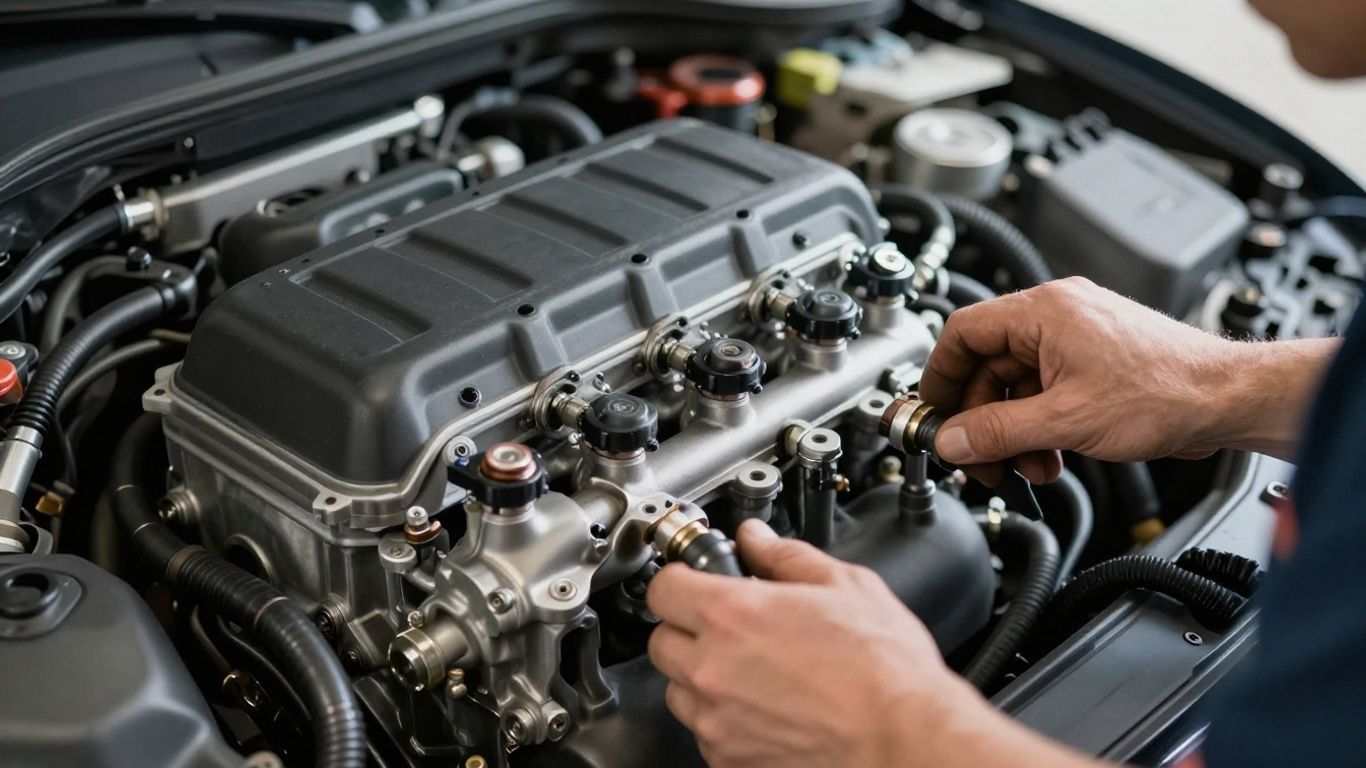
An uneven idle may indicate that one cylinder is receiving too little or too much fuel. Hesitation when pulling away can point to a delivery problem, particularly when it appears alongside a cylinder-specific misfire. Cold-start roughness is also worth recording because some injector faults are more obvious before the engine reaches operating temperature.
The common injector symptom guide describes the same broad pattern seen across many vehicles: rough idling, hesitation, and reduced efficiency can overlap. The overlap is why a scan and physical checks are needed.
Hard starting and extended cranking
A leaking injector can allow fuel into a cylinder after the engine is switched off, while a restricted or non-opening injector can leave the mixture too lean during cranking. Either condition may produce extended cranking, an uneven start, or a brief stumble immediately after the engine fires.
Ask whether the problem is worse hot, cold, after refueling, or after the vehicle sits overnight. That timing can help separate injector leakage from low battery voltage, fuel-pump weakness, or an ignition fault.
Poor fuel economy and reduced performance
An injector that delivers too much fuel wastes fuel and may cause sluggish response. An injector that delivers too little can reduce power, especially when the engine is under load, while the control system may add fuel to compensate. Turbocharged engines can make this loss of performance feel sudden even when the underlying restriction developed gradually.
Fuel economy should be compared over more than one trip. Traffic, weather, tire pressure, short journeys, and a dragging brake can all produce a change that has nothing to do with injectors.
Fuel smells, smoke, and unusual exhaust emissions
A strong fuel smell around the vehicle or in the exhaust deserves prompt attention. It may indicate an external leak, an injector that is not sealing, or incomplete combustion. Black smoke generally suggests excess fuel on gasoline or diesel engines, while blue smoke points more toward oil and should not automatically be blamed on injectors.
Diesel owners should also consider the possibility of oil dilution when fuel enters the crankcase. The diesel injector problems guide discusses leaking and stuck-open injectors as faults that can bring both drivability and safety concerns.
Check engine light and stored fault codes
The check engine light may record a cylinder misfire, mixture adaptation, injector circuit fault, or fuel-pressure problem. A code identifies what the control system observed, not necessarily the failed part. Freeze-frame data, live fuel trims, and the conditions under which the code returned are often more useful than the code description alone.
Do not erase the codes before recording them. The original data can show whether the fault appeared during a cold start, acceleration, idle, or a low-fuel condition.
What causes fuel injector problems in Audi vehicles
Injectors can fail mechanically, electrically, or because another part of the fuel system is operating outside its expected range. Contamination is only one possibility. A careful diagnosis looks at the fuel itself, pressure, wiring, seals, and the engine’s combustion condition.
Carbon and varnish buildup from contaminated fuel
Fuel residue can form varnish, and contaminants can restrict the injector inlet or alter its spray. Direct-injection engines may also accumulate deposits in areas exposed to combustion heat. A deposit-related fault often develops gradually, with increasingly rough idle, a small fuel-trim correction, or reduced response.
Poor storage, contaminated fuel, and neglected filtration increase the risk. However, deposit symptoms should not be assumed when a pressure test or electrical check points elsewhere.
Leaking or stuck injectors
An injector may leak when closed, stick partially open, or fail to open consistently. Leakage can cause difficult starting, an over-fueled cylinder, fuel odor, or oil dilution. A stuck-closed injector can produce a persistent misfire and may leave a cylinder dangerously lean under load.
The distinction matters because cleaning cannot reliably repair a cracked body, damaged nozzle, failed internal valve, or injector that does not hold pressure. Those conditions generally call for replacement after confirmation.
Electrical faults and damaged injector wiring
The control circuit depends on sound wiring, connectors, power supply, and injector resistance. Heat, vibration, oil contamination, or a loose terminal can interrupt the signal. A circuit code may therefore reflect a harness or connector problem rather than the injector itself.
Inspection should include the connector fit and wiring near the engine, not just a resistance reading at the injector. A static measurement can look normal while a wire opens when the engine moves or warms up.
High-pressure fuel system issues
Direct-injection systems depend on the correct rail pressure during starting and operation. A weak high-pressure pump, pressure-control fault, restricted supply, or faulty sensor can imitate injector trouble across several cylinders. If multiple cylinders show similar symptoms, system pressure deserves attention before replacing several injectors.
Pressure must be tested with equipment suitable for the system. Improvised methods can be unsafe and may not capture the pressure behavior that matters during cranking or acceleration.
Problems linked to age, mileage, or poor maintenance
Time and mileage expose injectors and seals to repeated heat cycles, vibration, and fuel chemistry. Missed filter changes, neglected service, or repeated operation with a very low fuel level may add stress to the system. Still, mileage alone does not establish a failure.
The most useful maintenance history includes the last fuel-system service, previous misfire repairs, fuel quality concerns, and whether the symptom began after other work. That context helps prevent unnecessary parts replacement.
How to diagnose a faulty Audi fuel injector
Diagnosis should move from broad evidence to targeted testing. First record the complaint and scan data, then compare cylinders and verify fuel pressure, wiring, and combustion. A good process avoids treating the most visible code as the final answer.
Reading misfire and fuel-trim fault codes
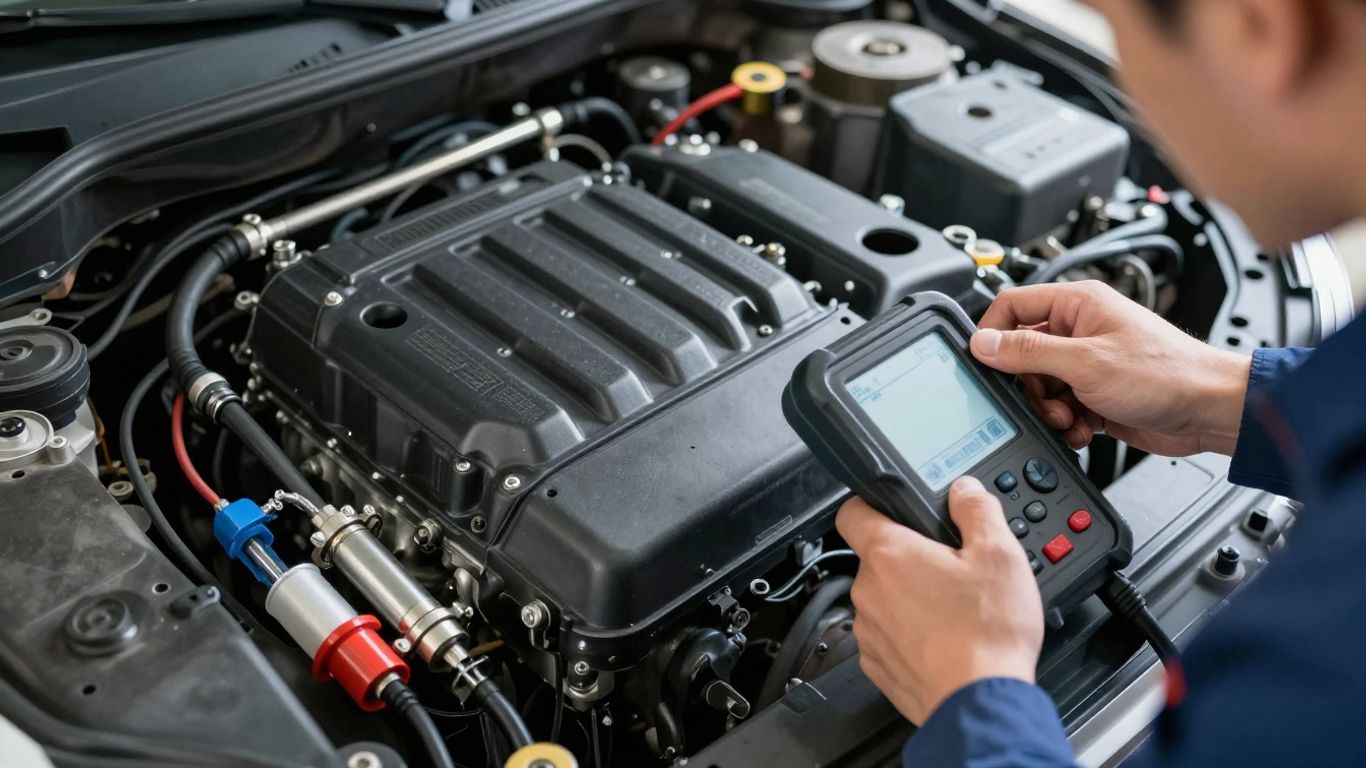
A scan tool can show which cylinder is misfiring and whether the control system is adding or subtracting fuel. Positive trims may indicate that the system is compensating for insufficient fuel, unmetered air, or another cause; negative trims may point toward excess fuel. These readings must be interpreted with engine temperature and operating condition.
Codes that return immediately after clearing may indicate an electrical fault, while faults that appear only under load may require road-test data. Neither pattern proves an injector without supporting tests.
Comparing injector balance and cylinder performance
A balance test compares how much each injector contributes under controlled conditions. Cylinder contribution, roughness, and misfire counters can reveal an outlier. On some systems, a technician may compare commanded and measured values or use a suitable bench test after removal.
The goal is to find a meaningful difference between cylinders, not merely a number that looks unusual. Results should be considered alongside compression, spark quality, and the cylinder’s operating history.
Performing leak-down and fuel-pressure tests
A pressure-hold or leak-down test checks whether fuel pressure falls abnormally after the system is shut down. A rapid drop can come from an injector, pump check valve, regulator, or another part of the circuit. Rail-pressure testing during cranking and load can reveal a supply problem that a static inspection misses.
Because fuel is pressurized and flammable, these tests belong with someone who has the correct tools and procedures. The result should identify whether pressure is being lost and where the loss is most likely occurring.
Checking injector wiring and electrical resistance
The technician can inspect injector power, control pulses, connector condition, and resistance against the applicable service specification. Resistance alone is limited: an injector may pass a basic electrical check yet have a mechanical restriction or intermittent fault.
The wiring should be checked under conditions that reproduce the complaint when appropriate. A connector that looks clean can still have poor terminal tension or a broken conductor inside its insulation.
Distinguishing injector faults from spark or compression problems
Swapping an ignition coil or spark plug between cylinders can show whether the misfire follows the component. Compression or leak-down testing can identify valve, piston, or head-gasket concerns. Vacuum leaks, intake deposits, and sensor errors may also create mixture symptoms that resemble injector failure.
A diagnostic sequence is strongest when each test changes the next decision. Replacing an injector before checking spark and compression can leave the original fault untouched and increase the repair bill.
Audi models and engines commonly affected
Injector concerns can occur across several Audi model families, but the exact injector, pressure requirements, access procedure, and software strategy vary by engine code and model year. The badge on the trunk is not enough to identify the correct part. Service information and the vehicle identification number should guide fitment.
FSI and TFSI direct-injection engines
FSI and TFSI engines place the injector in the combustion chamber, where heat, pressure, and spray-pattern accuracy matter. A deposit or sealing issue may affect one cylinder first, while a broader fuel-pressure fault can affect several. The engine code is essential when comparing parts or procedures.
Symptoms such as cold-start misfire or uneven idle should be investigated with the engine’s specific diagnostic data. Generic advice can miss differences between generations.
Symptoms specific to turbocharged Audi engines
Turbocharged engines may show hesitation or reduced boost response when fueling cannot keep up with airflow and load. A driver may notice the problem more during merging or climbing than during gentle cruising. Misfires under boost can also trigger protective power reduction.
Those symptoms are not exclusive to injectors. Charge-air leaks, ignition weakness, wastegate issues, and fuel-pressure loss can feel similar, so load-based testing is valuable.
Diesel injector concerns in TDI models
TDI injectors have their own wear, sealing, spray, and correction-value concerns. Hard starting, rough idle, smoke, poor acceleration, and increased fuel use may arise from injector problems, but glow plugs, compression, exhaust-gas systems, and rail pressure also deserve consideration.
A diesel injector that leaks or sticks open can create more than a drivability complaint. Continued operation may contribute to oil dilution or excessive exhaust smoke, making prompt assessment sensible.
Model-year differences in injector design
Injector design, electrical connections, operating pressure, and required calibration can change between model years and engine revisions. Even vehicles with similar displacement may use different components. Never assume that an injector from a nearby model year is interchangeable.
A parts catalog match should be checked against the physical connector, engine code, and manufacturer requirements. If the repair procedure calls for new seals or calibration data, those details are part of fitment too.
Using the vehicle identification number to confirm fitment
The VIN helps a parts specialist or technician identify the vehicle’s production details and engine configuration. It should be used together with the engine code and the number printed on the existing injector when available. This is especially useful when revisions or superseded part numbers exist.
Before ordering, confirm whether the replacement is supplied with seals, whether calibration is required, and whether the shop can perform any required adaptation. A correct-looking part is not necessarily a correct match.
Cleaning, repairing, or replacing Audi fuel injectors
The right remedy follows the failure mode. Cleaning can restore flow when deposits are the issue, but it cannot repair every internal or electrical fault. Replacement also involves more than removing one component and installing another.
When professional injector cleaning may be enough
Professional cleaning may help when testing shows restricted flow or an altered spray pattern without evidence of a cracked body, failed coil, or persistent leak. A proper service typically measures the injector before and after cleaning rather than promising improvement based only on mileage.
Fuel-system additives may have a limited preventive role, but they are not equivalent to controlled bench cleaning. If the injector still fails a flow, spray, or leak test afterward, replacement is the safer conclusion.
Situations that require injector replacement
Replacement is generally considered when an injector leaks, fails electrically, has a damaged body or nozzle, or remains outside specification after cleaning. A persistent cylinder-specific misfire that follows the injector during a controlled diagnostic swap also supports replacement.
The underlying cause should be addressed at the same time. A contaminated tank, failing pump, damaged connector, or incorrect pressure can shorten the life of a new injector.
Choosing OEM, remanufactured, or aftermarket injectors
The choice should be based on verified specification, testing, warranty, and compatibility rather than price alone. A remanufactured injector should have documented flow and leak testing, while an aftermarket part needs a clear fitment reference for the exact engine.
Ask whether the component includes calibration information and seals. For a difficult-to-access engine, a cheaper part that fails early may cost more once labor is repeated.
Replacing injector seals and related components
Injector seals are exposed to heat and pressure and may need replacement whenever an injector is removed. The installer should inspect the sealing surfaces, retainers, connectors, fuel rail, and nearby hoses. A damaged seal can create a leak or an air and combustion problem that looks like injector failure.
Clean installation matters. Dirt entering the rail or injector seat can damage the new component or prevent proper sealing, so the area should be prepared according to the service procedure.
Coding and calibration after installation
Some systems require injector calibration data or an adaptation procedure after installation. The purpose is to allow the control system to account for the individual injector’s characteristics. Skipping a required procedure can leave rough running, mixture errors, or warning lights after an otherwise correct mechanical repair.
The technician should verify the procedure for the exact engine rather than assuming every model uses the same steps. A final scan, road test, and check for leaks complete the repair.
Audi fuel injector repair costs and prevention
Repair pricing varies widely because injector access, system pressure, diagnosis time, and the number of affected components differ. A quote should separate testing, parts, labor, seals, coding, and any related fuel-system work. The cheapest initial estimate is not always the lowest total cost.
Parts and labor factors that affect repair pricing
A single easily accessible injector may require modest labor, while a direct-injection or diesel repair can involve more involved access and additional safety procedures. The injector’s design, availability, calibration requirements, and whether seals or rail components are renewed also affect the total.
For a broad view of pricing variables, the injector repair cost overview discusses how fault type, labor intensity, and model can change an estimate. Its figures should not be treated as a quote for a particular vehicle or location.
When multiple injectors should be replaced together
Replacing several injectors may make sense when testing identifies more than one failure, contamination affected the whole set, or labor access is unusually difficult. It is not automatically necessary simply because one injector has failed. Evidence, service guidance, and the condition of the remaining units should drive the decision.
A shop should explain whether the recommendation is based on test results or convenience. Keeping a healthy injector can be reasonable when it passes flow and leak checks and the system is clean.
Maintenance practices that reduce injector deposits
Good maintenance cannot prevent every injector failure, but it can reduce avoidable contamination and make symptoms easier to catch. Useful habits include:
- Use the specified fuel grade and buy from reputable, busy stations.
- Follow the vehicle’s scheduled filter and service requirements.
- Investigate a misfire, fuel smell, or hard start before it becomes constant.
- Keep records of fuel-system repairs, cleaning, and injector calibration.
These steps support diagnosis as well as prevention. Prompt attention is particularly valuable when a warning light flashes or the engine is actively misfiring.
Choosing fuel, additives, and service intervals
Use fuel that meets the vehicle manufacturer’s specification and be cautious with products promising to cure a confirmed mechanical fault. Additives may help maintain a clean system in some circumstances, but they cannot restore a failed solenoid, damaged nozzle, or leaking injector.
Service intervals should follow the vehicle’s maintenance information and operating conditions. Frequent short trips, long storage, or uncertain fuel quality may justify a conversation with a technician rather than an arbitrary cleaning schedule.
Deciding whether to drive or tow a vehicle with injector symptoms
A flashing warning light, severe shaking, strong raw-fuel smell, visible leak, heavy smoke, or rapidly worsening performance is a reason to stop driving and arrange professional help. Continued misfire can overheat emissions components, while fuel leakage creates a fire risk. A mild intermittent hesitation still deserves an appointment, but it should not be ignored.
When in doubt, towing is safer than testing the vehicle through repeated hard acceleration. Provide the shop with the symptoms, stored codes, and conditions that make the problem appear.
Conclusion
Audi fuel injector problems can originate in the injector itself or anywhere from the tank to the engine’s combustion chamber. Careful comparison of symptoms, scan data, pressure, wiring, and cylinder performance helps distinguish a cleanable deposit from a component that needs replacement. Prompt diagnosis protects drivability, fuel economy, and the engine from avoidable secondary damage.
Frequently Asked Questions
What are the most common signs of a bad fuel injector?
Common signs include rough idle, cylinder misfires, hesitation, hard starting, poor fuel economy, fuel odor, smoke, and a check engine light. These symptoms overlap with other faults, so testing is needed before replacing an injector.
Can dirty fuel injectors cause a misfire?
Yes. Restricted flow or an uneven spray pattern can create an imbalanced mixture and cause a cylinder to misfire. Ignition, compression, air leaks, and fuel-pressure faults can cause similar symptoms.
Is injector cleaning better than replacement?
Cleaning is appropriate when deposits restrict an otherwise serviceable injector. Replacement is usually needed for a failed electrical component, damaged body or nozzle, or an injector that continues to leak or fail flow testing after cleaning.
How can a technician confirm an injector is faulty?
A technician may combine fault-code analysis, fuel-trim data, cylinder comparison, balance testing, leak-down testing, fuel-pressure measurement, wiring checks, and spark or compression tests. No single reading proves every type of injector failure.
Can a leaking injector damage an engine?
It can. Excess fuel may wash oil from cylinder walls, dilute engine oil, foul combustion components, or create unsafe fuel vapors. A strong fuel smell, smoke, or difficult starting should be assessed promptly.
Should all fuel injectors be replaced at once?
Not necessarily. Multiple replacement may be sensible when several units fail testing or contamination affects the entire set, but a healthy injector does not automatically need replacement. The decision should follow test results and service guidance.
Is it safe to drive with injector symptoms?
A mild symptom may allow a short, gentle trip to a repair facility, but a flashing warning light, severe misfire, raw-fuel smell, visible leak, or heavy smoke warrants stopping and arranging a tow. Continuing to drive can increase damage and risk.