

Key Takeaways
Audi suspension repair is easier to manage when you recognize changes early and understand what a shop is testing. Ride height, handling, noises, tire wear, and the type of suspension all help shape the diagnosis.
- Uneven ride height can point to an air leak, spring problem, or damaged mounting part.
- Excessive bouncing, nose diving, and body roll often indicate reduced damping or worn suspension hardware.
- A proper diagnosis separates suspension faults from wheel, tire, steering, and brake problems.
- Air suspension repairs can involve air springs, compressors, valves, sensors, and electronic calibration.
- Alignment and routine inspections help protect new parts and keep the vehicle predictable.
Understanding your Audi’s suspension system
The suspension connects the body to the wheels while allowing each wheel to respond to bumps and changes in road surface. It also helps maintain tire contact, steering control, and a stable ride. The exact arrangement varies by trim and model, so a repair estimate should begin with identifying the system installed on the vehicle.
Key components and their functions
Springs support the vehicle’s weight and determine much of its ride height. Shocks and struts control how quickly the springs compress and rebound, while control arms, bushings, and ball joints guide wheel movement. Mounts and hardware hold those pieces in position and can create noise when they loosen or deteriorate.
A strut may combine structural support with damping, whereas a separate shock absorber works alongside a spring and other links. That distinction matters because replacing one worn component does not always correct the underlying movement or noise.
Conventional suspension versus air suspension
A conventional setup generally uses coil springs, shocks or struts, and mechanical links. Air suspension uses inflatable air springs and additional components such as a compressor, valves, height sensors, and control electronics. It can adjust ride height, but it also introduces more parts that need to be tested when the vehicle sits low or unevenly.
The difference is useful when reviewing repair information. A guide to Audi air suspension costs can provide helpful general context, but the actual estimate still depends on the vehicle, failed component, labor time, and parts selected.
How suspension affects handling, comfort, and safety
Damping keeps the body from continuing to bounce after a bump, while properly located wheels help the tires track through turns and braking. When a shock, bushing, or ball joint wears, the vehicle may feel less settled even if the problem is not yet dramatic. Stable tire contact matters because it supports predictable steering and braking.
Suspension condition also affects tire wear. A damaged component can change wheel position or allow movement that produces feathering, cupping, or wear along one edge. Those patterns are clues, not a diagnosis by themselves.
Audi models with common suspension differences
Sedans, wagons, and SUVs may use different combinations of springs, struts, shocks, and air-suspension equipment. Performance-oriented trims can have firmer settings, while larger luxury models may use electronically controlled or height-adjustable systems. Model year and option package are just as important as the badge on the trunk.
Before parts are ordered, a technician should verify the vehicle identification number and suspension configuration. That prevents a conventional component from being confused with an electronically controlled or air-suspension part.
Signs your Audi needs suspension repair
Suspension wear often develops gradually, so the first clue may be a change in feel rather than a dramatic failure. Pay attention to how the vehicle sits after parking, how it reacts to bumps, and whether the steering remains centered. An inspection is sensible when several small changes appear together.
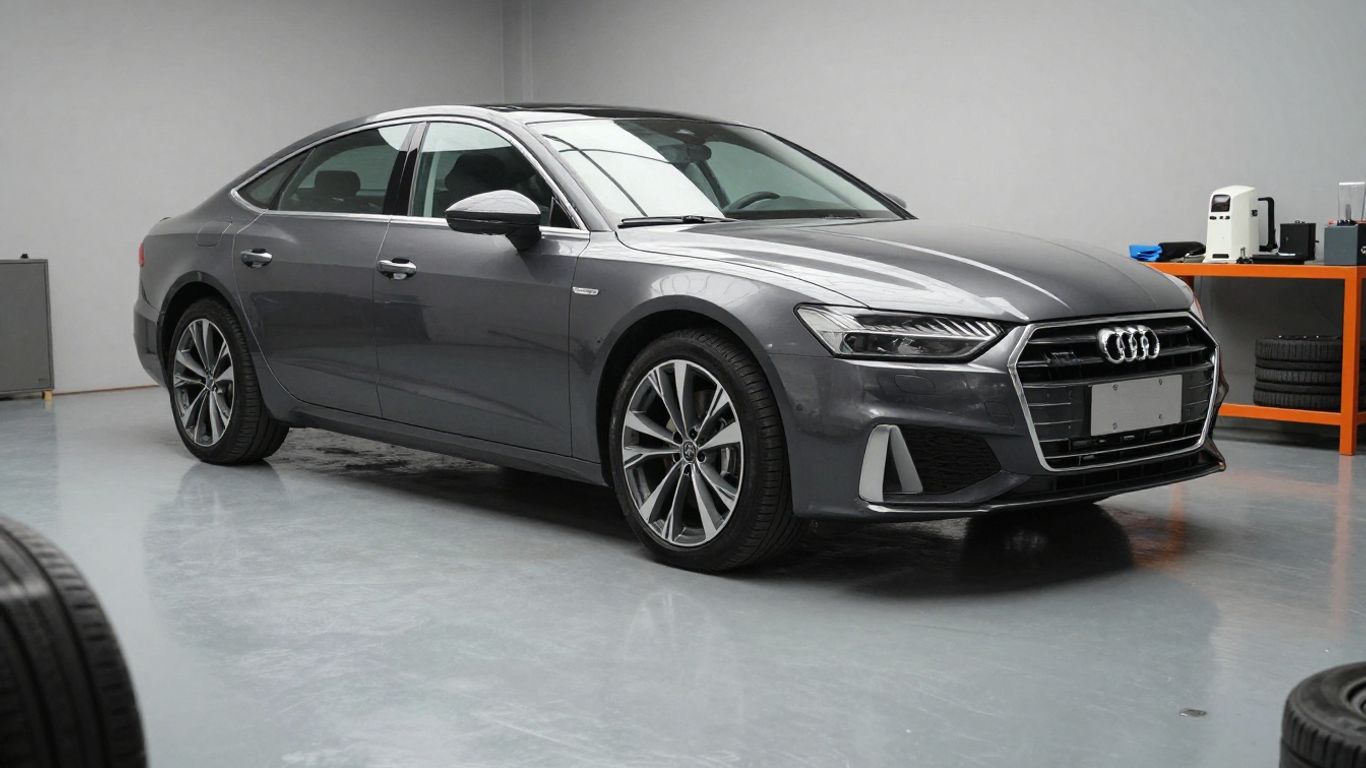
Uneven ride height or a sagging corner
One corner that sits lower than the others can indicate a broken coil spring, a collapsed air spring, an air leak, or a problem with height-sensing hardware. If the vehicle sinks after being parked, note how quickly it happens and whether the position changes overnight.
Do not assume that adding air or resetting a warning light fixes the cause. A leak or failed support can place extra strain on the compressor and may turn a smaller repair into a broader system problem.
Excessive bouncing, body roll, or nose diving
A vehicle that keeps bouncing after a bump may have weak damping. Excessive lean in a turn or pronounced nose diving under braking can also suggest worn shocks, struts, springs, or related links. These symptoms can become more noticeable when the vehicle is loaded.
The safest response is to reduce speed and arrange an inspection rather than testing the behavior repeatedly on the road. A shop can check for leakage, movement, and uneven response without relying only on a short road test.
Clunking, knocking, or grinding noises
Clunks over small bumps commonly come from loosened or worn suspension connections, bushings, mounts, or ball joints. A grinding sound may involve a damaged spring, a bearing, a brake component, or contact between parts. The location and timing of the noise help narrow the possibilities.
Record whether the sound occurs while turning, braking, accelerating, or crossing a particular type of bump. That simple detail gives the technician a more useful starting point than the word “noise” alone.
Uneven tire wear and steering changes
Feathered tread, cupping, or wear on one shoulder can accompany alignment changes or looseness in the suspension. Pulling, wandering, a crooked steering wheel, or delayed response may also deserve attention. Tire pressure and wheel damage should be checked at the same time because they can produce similar sensations.
A suspension inspection should not end with replacing the visibly worn tire. If the cause is still present, the replacement may develop the same pattern and the vehicle may continue to feel unstable.
Diagnosing Audi suspension problems
Good diagnosis combines a visual check, hands-on testing, road observations, and electronic scans when applicable. The goal is to identify the failed part and understand why it failed, not simply to replace the component nearest the symptom. A careful process also prevents unnecessary work on healthy parts.
Visual inspections for leaks and damaged parts
The technician may look for fluid on shocks, cracked or displaced springs, torn bushings, damaged boots, leaking air lines, and corrosion around mounting points. The vehicle should be inspected safely with the wheels supported as appropriate, since some faults are easier to see when the suspension is loaded or unloaded.
Air-suspension leaks may be subtle. A vehicle that lowers after sitting, a compressor that runs unusually often, or a corner that rises slowly can guide leak testing even when no obvious damage is visible.
Testing shocks, struts, springs, and control arms
Testing can include checking fasteners, measuring ride height, looking for play, and comparing movement from side to side. A road test may reveal bounce, harshness, steering wander, or noise that cannot be confirmed while stationary. The results should be considered together rather than treated as isolated pass-or-fail clues.
The following observations are useful to bring to an appointment:
- The speed and road surface that trigger a noise.
- Whether the vehicle changes height while parked.
- Any recent impact with a pothole, curb, or road debris.
- Changes in braking stability, steering feel, or tire wear.
Those details help focus the inspection, but they do not replace measurements and component checks. Suspension movement can transfer noise through the body, making its apparent location misleading.
Scanning electronic air suspension systems
Electronically controlled systems may store fault codes related to height sensors, valves, wiring, compressors, or control modules. A scan can identify useful information, but the code is only one part of the diagnosis. Wiring, air pressure, leaks, and mechanical condition still need to be verified.
A warning light that disappears after a restart should not be dismissed. Intermittent faults can return under particular temperatures, loads, or driving conditions, so the technician may need to review stored data and test the system through its operating range.
Distinguishing suspension faults from wheel or brake issues
A vibration at a particular speed may come from a tire or wheel rather than the suspension. Pulling while braking may involve a brake caliper, while a humming sound can point toward a wheel bearing. Steering and drivetrain components can also imitate suspension symptoms.
This is why a useful estimate explains the evidence behind the recommendation. Replacing suspension parts without ruling out wheel, tire, brake, and steering causes can leave the original complaint unresolved.
Common Audi suspension repairs
Repairs range from replacing a single worn connection to restoring an entire air-suspension corner. The correct scope depends on measured wear, the condition of neighboring parts, and whether the failure caused secondary damage. Parts should be replaced in a way that preserves the vehicle’s intended geometry and ride behavior.
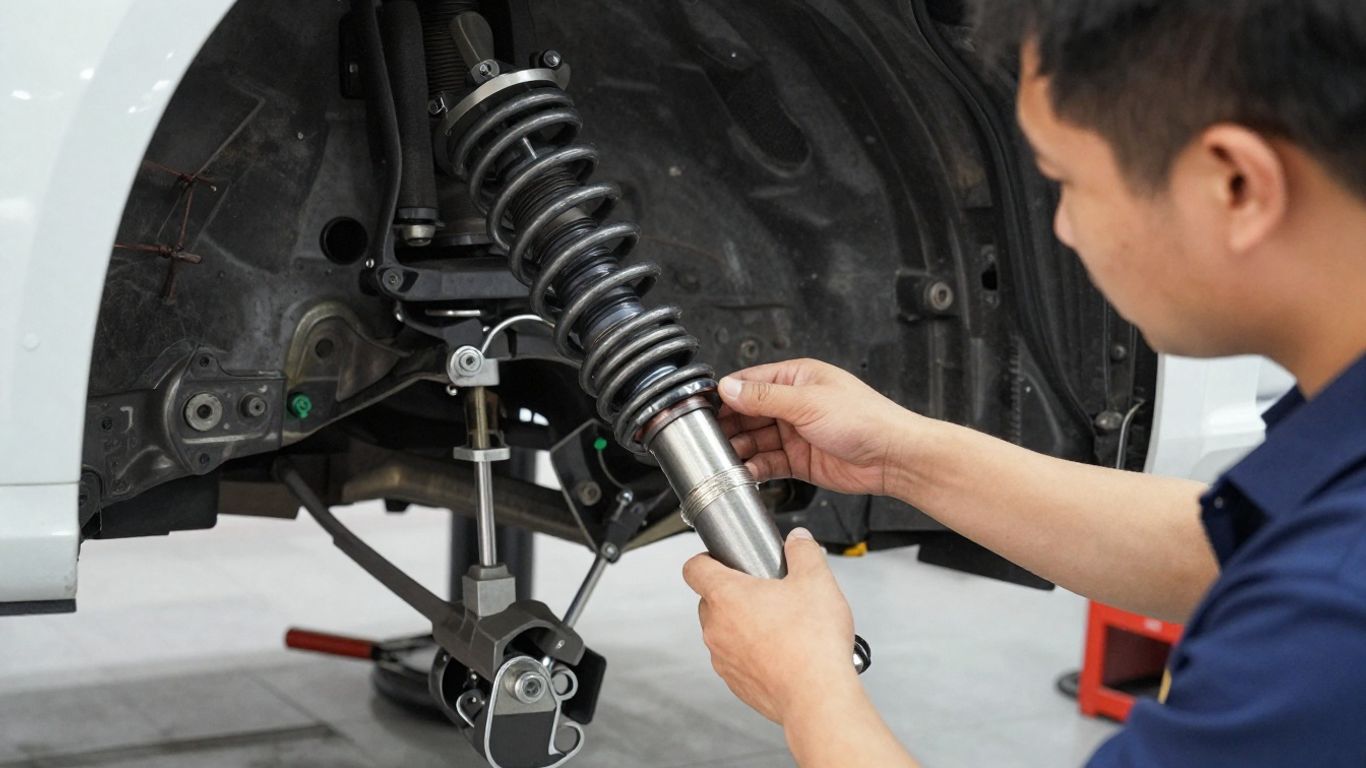
Replacing worn shocks and struts
Shocks and struts are replaced when they leak, lose damping, or develop related mounting problems. Because these parts influence ride control, technicians commonly compare both sides of an axle and inspect mounts, boots, and bump stops during the job.
After installation, the vehicle should be checked for correct seating, fastener torque, and abnormal movement. If ride height or wheel position changes, an alignment may also be appropriate.
Repairing air suspension compressors and air springs
Air-suspension repair may involve locating a leak, replacing an air spring, servicing a compressor, or addressing a valve, sensor, line, or electrical fault. A compressor that has worked too hard because of a leak may be damaged even after the leak is repaired.
The system should be tested for pressure retention and correct height operation after parts are installed. Calibration or a relearn procedure may be needed, depending on the vehicle’s design and the work performed.
Replacing control arms, bushings, and ball joints
Control arms locate the wheel, while bushings allow controlled movement and reduce vibration. Ball joints provide a moving connection between suspension components and the steering knuckle. Wear in any of these parts can produce looseness, clunks, uneven tire wear, or changes in alignment.
A shop should explain whether it is replacing an individual bushing, a complete arm, or a related joint. The choice can depend on part design, labor access, and the condition of the surrounding hardware.
Correcting broken springs and damaged mounting hardware
A broken spring can lower one corner and may damage a tire or nearby component if the break shifts. Worn mounts, isolators, bolts, and other hardware can create noise or prevent a new spring or strut from sitting correctly. Replacing visibly damaged hardware helps the repair function as intended.
The vehicle should be rechecked after the repair for ride height, noise, and alignment. If the break followed a collision or severe pothole impact, the inspection should include wheels and other underbody parts as well.
Audi suspension repair costs
The price of Audi suspension repair varies widely because “suspension repair” can mean a single bushing, a pair of struts, or several air-system components. Vehicle configuration, parts quality, accessibility, and diagnostic time all affect the estimate. A low initial quote is not necessarily the lower final cost if it leaves related damage unaddressed.
Parts and labor factors that affect pricing
Labor is influenced by rust, seized fasteners, limited access, and whether adjacent components must be removed. Parts pricing varies between original-equipment, equivalent aftermarket, and lower-cost options. Electronic systems may also add scan, testing, and calibration time.
Ask whether the estimate covers one side or both sides, diagnosis, shop supplies, alignment, taxes, and any required programming. A written breakdown makes it easier to compare like-for-like proposals.
Typical costs for shocks, struts, and springs
Conventional repairs are often more predictable than air-suspension work, but there is no single price that fits every model. A front strut replacement may include a mount and alignment, while a spring repair may require additional hardware or work on both sides of an axle.
The table below shows the main pricing variables rather than promising fixed totals.
| Repair area | What commonly changes the price | Possible related work |
|---|---|---|
| Shocks or struts | Part design, access, and axle coverage | Mounts, boots, bump stops, alignment |
| Coil springs | Spring type and broken hardware | Isolators, mounts, alignment |
| Control arms | Complete arm versus bushing service | Ball joints, fasteners, alignment |
| Air suspension | Leaks, compressor condition, electronics | Calibration, pressure testing, lines |
Use the categories to ask better questions, not to treat them as a substitute for a vehicle-specific inspection. The final estimate should identify the failed component and explain any recommended companion work.
Air suspension replacement and compressor costs
Air repairs can become expensive when more than one part has failed. A leaking air spring, an overworked compressor, a damaged valve block, and an electronic fault may produce similar symptoms but require very different repairs. The system should be tested before a compressor or complete corner assembly is approved.
A suspension repair cost guide can help frame the conversation, while the shop’s diagnosis determines what applies to the specific vehicle. Ask whether the quote includes leak testing, system testing, and any required calibration.
When an estimate may include alignment or calibration
Alignment is often recommended after work that changes wheel location, ride height, or steering geometry. Air-suspension systems may require height calibration or an electronic relearn after component replacement. These steps help confirm that the repaired vehicle is operating within its intended settings.
A shop should tell you whether alignment and calibration are included, optional, or required after the proposed repair. That clarity prevents a surprising add-on and protects the parts you just paid to install.
Choosing the right Audi suspension repair shop
The right shop should be able to explain the symptom, the test that confirmed it, and the repair that follows. Experience matters, but so does transparency: a confident recommendation should still be supported by measurements or observable evidence. Look for a process that treats suspension as part of the vehicle’s steering, braking, and tire-contact system.
Audi-specific tools and technical experience
Some systems need manufacturer-level scan access, suspension-height data, or procedures that a basic code reader cannot provide. Ask whether the technician has worked on the suspension configuration in your model and year. Experience with mechanical components should be paired with the ability to test electronic systems when present.
For broader comparison, German suspension service is a useful example of how a shop may describe diagnosis and repair experience, though every facility should be evaluated on its own documentation and workmanship.
OEM versus aftermarket replacement parts
Original-equipment parts are designed for the vehicle’s specified application, while aftermarket parts vary by manufacturer, construction, and warranty. A less expensive part is not automatically poor, and an expensive part is not automatically the best choice. The key is understanding what is being installed and how it matches the vehicle’s suspension setup.
Ask for the part brand, warranty terms, and whether the quoted component changes ride height, damping, or system compatibility. Keep that information with the repair record.
Warranty coverage and repair documentation
A useful invoice lists the diagnosed fault, parts replaced, labor performed, alignment or calibration work, and warranty limitations. It should also state whether the warranty covers parts, labor, or both. Documentation becomes especially valuable if a related symptom returns or the vehicle is serviced elsewhere.
Do not confuse a warranty with a promise that another component cannot fail. Suspension systems contain several interacting parts, and a new issue may require a separate diagnosis.
Questions to ask before approving the work
Before authorizing repairs, ask what failed, how it was tested, and what could happen if the work is delayed. Clarify whether both sides of an axle are recommended, whether an alignment is included, and what parts will be used. These questions turn a vague estimate into a repair decision you can evaluate.
The same habit of checking scope and documentation is useful when reviewing unrelated service providers, such as commercial sign maintenance, subscription billing systems, prepackaged snack choices, or CIPD qualifications. Those links are not automotive guidance, but the shared principle is simple: understand what is included before committing.
Keeping your Audi suspension in good condition
Preventive care cannot stop every spring, bushing, or air spring from wearing out, but it can make changes easier to catch. Routine inspections are especially valuable after pothole impacts, curb strikes, or a long period of carrying heavy loads. Small findings are usually easier to address than a failure that affects several connected parts.
Inspecting suspension components during routine service
Have the underbody checked for leaks, cracked rubber, loose hardware, damaged springs, and unusual tire wear during routine service. Ask the technician to note developing wear even if it does not yet require replacement. A record of measurements and observations helps show whether a condition is changing.
If the vehicle has air suspension, pay attention to compressor run time and how quickly the vehicle reaches its selected height. A new pattern is worth reporting rather than waiting for a warning light.
Maintaining correct tire pressure and wheel alignment
Correct tire pressure supports consistent handling and helps prevent misleading wear patterns. Alignment keeps the wheels pointed and positioned as intended, but it cannot correct a loose ball joint, broken spring, or worn bushing. Both tire condition and suspension condition should be considered together.
Check pressure when the tires are cold and use the vehicle’s recommended setting. After a significant suspension repair or impact, confirm whether an alignment check is needed.
Avoiding road hazards and excessive loads
Potholes, abrupt curb impacts, and road debris can bend or crack components that were previously sound. Excessive cargo or towing loads can also change ride height and place additional demand on springs, dampers, and air-system parts. Slow down for rough surfaces when conditions allow and avoid carrying more than the vehicle is designed to handle.
Damage is not always visible immediately. A new pull, vibration, noise, or height change after an impact justifies an inspection even if the tire appears intact.
When to schedule a professional inspection
Schedule an inspection when a warning light appears, a corner sags, the ride becomes unsettled, or a new noise persists. Inspection is also wise when tire wear changes unexpectedly or steering no longer feels consistent. If braking stability or wheel control seems impaired, limit driving until the vehicle can be assessed.
A professional inspection is more useful when you describe when the symptom occurs and what changed beforehand. That context helps the technician reproduce the concern and decide which tests should come first.
Conclusion
Audi suspension repair is less mysterious when symptoms are documented, the suspension type is identified, and the estimate is tied to a clear diagnosis. Early attention to ride height, noises, handling, and tire wear can help prevent secondary damage and keep the vehicle safer and more comfortable to drive.
Frequently Asked Questions
How often should suspension components be inspected?
Have them checked during routine service and after a major pothole, curb impact, unusual tire wear pattern, or change in handling. The correct interval depends on driving conditions, mileage, vehicle age, and suspension design.
Can I drive with a clunking suspension noise?
A mild noise may not indicate an immediate loss of control, but it should not be ignored. Limit unnecessary driving and arrange an inspection, especially if the sound is accompanied by pulling, looseness, uneven height, or braking changes.
Should shocks and struts be replaced in pairs?
Replacing them in pairs on the same axle can help preserve balanced damping, though the recommendation depends on test results and the condition of the other side. A technician should explain why one-side or two-side replacement is appropriate.
What causes a vehicle to sag on one side?
Possible causes include a broken coil spring, leaking air spring, damaged air line, failed valve, height-sensor issue, or mounting problem. The cause must be tested rather than assumed from the vehicle’s appearance.
Does suspension repair always require a wheel alignment?
No, but alignment is commonly checked or recommended when work changes wheel location, ride height, or steering geometry. The repair estimate should state whether alignment is included or advised.
Are air suspension repairs more expensive than conventional repairs?
They can be, because air systems include additional components such as air springs, compressors, valves, sensors, and control electronics. The actual cost depends on which parts failed and whether secondary damage is present.
Can worn suspension parts cause uneven tire wear?
Yes. Loose or damaged suspension components can alter wheel position or allow movement that wears the tread unevenly. Tire pressure, alignment, wheel condition, and steering parts should also be checked before assigning the cause.