

Key Takeaways
DPF regeneration is a normal process, but repeated interruptions or a fault elsewhere in the engine system can stop it from completing. Warning lights, changing performance, and a rising oil level are reasons to check the vehicle rather than guess at a fix.
- Regeneration burns accumulated soot; it does not remove ash from the filter.
- Repeated short trips may prevent a regeneration cycle from finishing.
- A warning light can have several causes, so fault codes and live data matter.
- Forced regeneration, cleaning, or replacement should follow a proper diagnosis.
- Follow the owner’s manual and service advice, and act promptly if symptoms persist.
How DPF regeneration works in an Audi
A diesel particulate filter (DPF) traps soot in the exhaust so it does not simply pass out of the tailpipe. The filter needs periodic regeneration, in which heat burns much of that soot away. The details and operating conditions vary by vehicle, so use the owner’s manual for model-specific guidance. Understanding the basic cycle makes it easier to tell normal operation from a problem.
How soot builds up in the diesel particulate filter
Combustion produces tiny soot particles, and the DPF catches them as exhaust passes through. This is a normal part of the filter’s job, not evidence by itself that a part has failed. Over time, soot accumulates until the vehicle needs to raise the exhaust temperature and burn it off. Regeneration reduces soot, but non-combustible ash can remain and gradually take up space in the filter.
What triggers active and passive regeneration
Passive regeneration can take place when exhaust temperatures are high enough during suitable driving. If those conditions do not occur often enough, the vehicle may initiate active regeneration by raising exhaust temperature through its engine management strategy. The driver may not notice the process, though some vehicles show signs such as a change in idle behavior or cooling-fan operation. If a warning appears, consult the manual rather than relying on a generic threshold or fixed driving recipe.
How driving conditions affect regeneration
A steady drive can give a regeneration cycle more opportunity to complete than frequent stop-start travel, but the right conditions depend on the model and the warning displayed. Repeated short, slow journeys may mean the exhaust does not stay hot for long enough. That is one reason Audi DPF problems are often discussed alongside city driving and warning signs. When the vehicle’s manual recommends a particular response, follow that guidance only if it is safe and the vehicle has no other warning that calls for stopping.
Why interrupted regeneration can cause trouble
If the engine is switched off during a regeneration attempt, the process may stop before enough soot has burned away. One interrupted cycle does not automatically mean the filter is damaged, but repeated interruptions can allow soot loading to rise and may bring on a warning or restricted performance. In some circumstances, repeated active attempts can also contribute to fuel entering the engine oil, which is why a changing oil level deserves attention. Repeated interruption is a clue, not a diagnosis; other faults can produce similar symptoms.
Signs of Audi DPF regeneration problems
A warning on the dashboard is useful information, but it is only one part of the picture. Changes in power, fuel use, or oil level can help explain whether the issue is recurring or worsening. Keep track of when symptoms appear and what the vehicle was doing beforehand. Those details can help a technician distinguish an interrupted cycle from a sensor or engine fault.

What the DPF warning light can indicate
A DPF light may indicate that soot loading has reached a level that needs attention, but the meaning depends on the vehicle and whether other warning lights are present. Check the owner’s manual for the exact message and instructions. A warning that remains on, returns soon after a drive, or appears alongside other alerts should not be treated as a routine reminder. A diagnostic scan can reveal whether the vehicle has stored a regeneration-related fault or another issue.
How reduced power or limp mode may feel
A vehicle that feels unusually sluggish, responds poorly to the accelerator, or limits its available power may be protecting itself after detecting a fault. A blocked filter can be one possible cause, but so can faults elsewhere in the engine or exhaust system. Avoid demanding acceleration or continuing a long journey if the car is behaving unpredictably. If power loss is severe or accompanied by additional warnings, arrange professional diagnosis.
Why fuel economy can worsen during repeated regeneration attempts
Active regeneration can change how the engine operates, and repeated attempts may coincide with increased fuel use. A single trip with poorer economy is not enough to confirm a DPF problem; route, traffic, load, and other mechanical issues can affect consumption too. Note whether the change persists and whether it occurs with a warning light or other symptoms. A technician can compare that account with fault codes and live data.
When a rising oil level may point to a problem
On some diesel engines, repeated regeneration attempts can allow fuel to dilute the engine oil. A level that rises above its normal range, or oil that smells strongly of fuel, should be checked promptly. Do not assume that topping up or changing the oil alone will solve the underlying cause. Follow the vehicle manual’s guidance and seek advice before continuing to drive if the oil level is above the permitted range.
Common causes of failed or incomplete regeneration
Regeneration depends on more than the filter itself. Driving patterns can limit the time available for the process, while a faulty sensor or an engine problem may prevent the system from starting or completing it. A filter can also become restricted or physically damaged. A careful diagnosis matters because the same dashboard warning may point to different underlying causes.
How short trips and low-speed driving prevent regeneration
Frequent cold starts and short journeys may not provide enough sustained operating time for the exhaust to reach conditions needed for regeneration. That does not mean every city-driven vehicle will develop a fault, but a pattern of interrupted trips can make completion less likely. For background on the relationship between urban journeys and filter blockages, see this guide to blocked Audi DPF filters. It is more useful to consider the vehicle’s actual warning and service data than to assume a driving pattern is the only cause.
How faulty sensors can disrupt the regeneration cycle
The engine management system relies on sensor information, including readings related to exhaust temperature and pressure across the filter. If a sensor, connector, or wiring circuit provides implausible data, the system may misjudge conditions or inhibit regeneration. A sensor fault can resemble a filter problem from the driver’s seat, so replacing the DPF without checking the readings can miss the real issue. Diagnosis should compare scan-tool data with the expected behavior and physical inspection.
How EGR, intake, or turbo issues can increase soot
Problems affecting air supply or combustion can increase soot production, putting more load on the DPF than the normal regeneration cycle can manage. Possible areas for a technician to inspect include the exhaust gas recirculation (EGR) system, intake tract, and turbocharger. These components should not be assumed faulty simply because the DPF warning is on. Evidence from fault codes, live data, and inspection helps determine whether an engine-side issue is contributing.
When a blocked or damaged DPF needs attention
A filter that remains restricted after the cause of the problem has been addressed may need specialist assessment. Soot can be burned during regeneration, but ash is not removed that way; physical damage is a separate concern and cannot be fixed by a regeneration cycle. The right next step depends on the filter’s condition and the vehicle’s measured data. A workshop can assess whether cleaning is suitable or whether replacement should be considered.
How to diagnose the problem
A useful diagnosis starts by recording the exact warning messages and when they appear, then checking the vehicle’s stored codes and operating data. Do not treat one number or a single code as a complete verdict: the conditions around the reading matter. A thorough assessment also checks related sensors, wiring, and engine systems. This measured approach helps separate a regeneration that has been interrupted from a filter that is physically compromised.
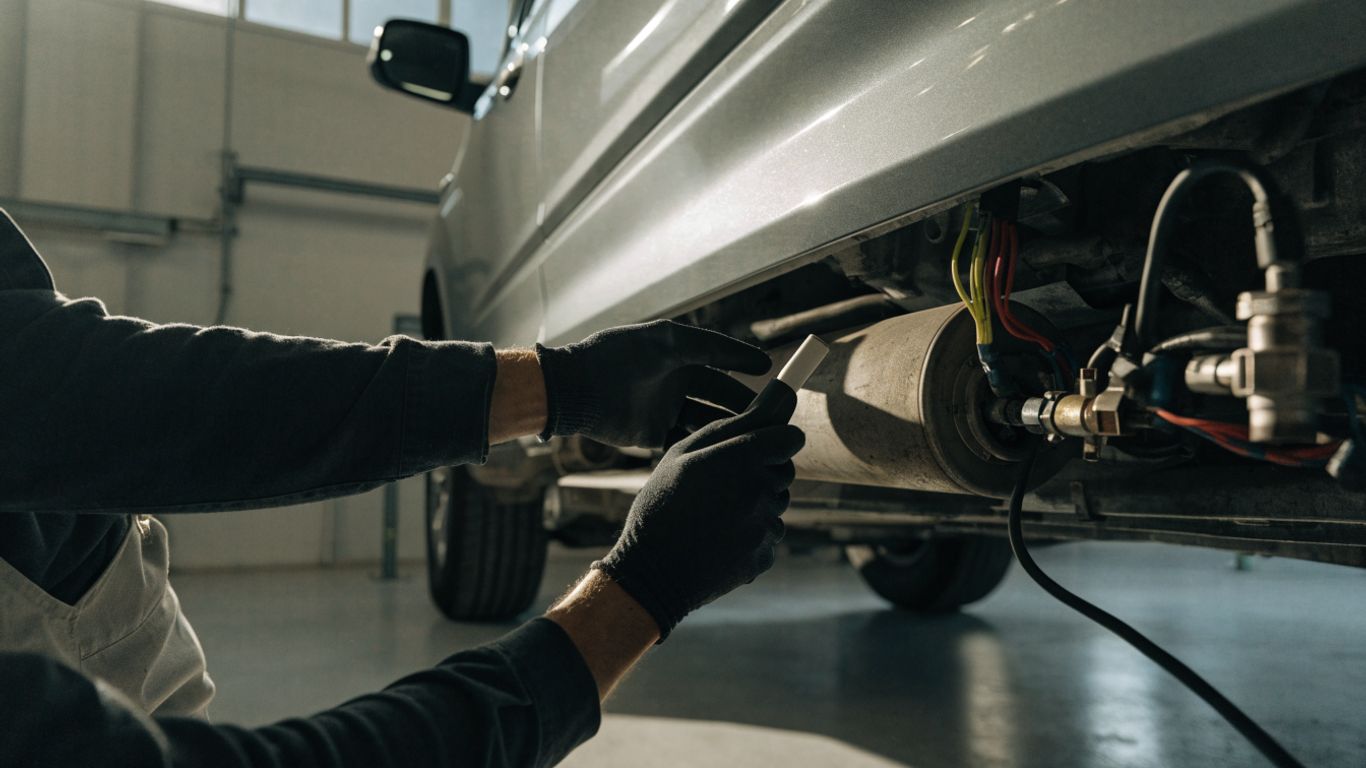
Read fault codes and live data with a suitable scan tool
A scan tool that can access the vehicle’s relevant engine data can show stored and pending faults, as well as whether regeneration is being requested or inhibited. A generic code reader may provide only part of the picture. A technician will interpret codes alongside the symptoms, service history, and live readings, rather than swapping parts based on a code description alone. For a broader explanation of the diagnostic process, see this DPF fault diagnosis guide.
Check soot load, exhaust temperatures, and differential pressure
Readings for estimated soot load, exhaust temperature, and pressure difference across the filter can help reveal whether regeneration is occurring and how restrictive the system may be. Their meaning depends on the vehicle, test conditions, and sensor accuracy, so no single value should be treated as a universal pass-or-fail limit. A technician can compare relevant readings with manufacturer information and check whether they change in a plausible way. The following table shows how those checks fit together, not a substitute for model-specific specifications.
| Check | What it can help assess | Why context matters |
|---|---|---|
| Estimated soot load | Whether soot accumulation may be limiting regeneration | It is an estimate and must be read with other data |
| Exhaust temperature | Whether the system is reaching conditions for regeneration | Sensor location and operating state affect the reading |
| Differential pressure | How much resistance is measured across the filter | A faulty sensor or blocked line can distort the result |
| Stored fault codes | Which systems have reported an issue | A code points to a check, not automatically a failed part |
Taken together, the readings can help narrow the next test. If pressure seems high, for example, the technician still needs to verify the pressure sensor and its connections before concluding that the filter itself is blocked.
Inspect related sensors, wiring, and exhaust components
A scan is only as reliable as the signals it receives. Inspection may include sensor connectors, wiring, pressure lines, and exhaust components for damage, loose connections, or leaks. The mechanic should also consider whether another engine fault is producing excess soot or preventing the system from meeting its operating conditions. This broader check reduces the risk of treating a symptom while leaving its cause in place.
Distinguish a regeneration fault from a DPF that is physically damaged
Fault codes and data can suggest that the system is not regenerating, but they do not prove that the filter substrate is cracked or otherwise damaged. A workshop may need to inspect the filter and compare pressure behavior with other evidence. These distinctions affect whether regeneration, cleaning, repair of another component, or replacement is appropriate. Asking what evidence supports the proposed repair is reasonable, especially when the recommended work is extensive.
Repair options and when to seek professional help
The right repair depends on why regeneration failed and what condition the filter is in. A suitable drive may be enough in some situations when the manual explicitly recommends it, but repeated warnings or abnormal vehicle behavior call for diagnosis. Workshop procedures also have safety requirements because exhaust temperatures can become very high. Avoid improvised cleaning methods or attempts to force a cycle without the proper equipment and checks.
When a longer drive may allow regeneration to complete
If the vehicle displays a DPF warning and the manual instructs the driver to continue driving under specified conditions, a sustained drive may allow the cycle to finish. Only do this when it is safe, legal, and consistent with the manual; do not follow generic online speed or duration advice in place of vehicle-specific instructions. If the warning does not clear, returns quickly, or appears with other alerts, arrange diagnosis instead of repeating the same drive. Stop and seek help if the vehicle feels unsafe or has a serious warning.
What a workshop forced regeneration involves
A forced regeneration is a controlled workshop procedure initiated with suitable diagnostic equipment, after checking that the vehicle and filter are in a condition where the procedure is appropriate. The technician monitors system data and must account for the high temperatures involved. It is not a universal remedy: an underlying sensor or engine fault may need repair first, and a filter with excessive ash or physical damage may not respond as intended. Ask the workshop what checks support the procedure and how it will confirm the result.
When cleaning or DPF replacement may be necessary
Cleaning may be considered when the filter is restricted and its condition makes cleaning appropriate. Replacement may be necessary if it is damaged or cannot be returned to serviceable condition, but that decision should follow inspection and measurement rather than a warning light alone. The cause of excess soot or incomplete regeneration should also be addressed, or the replacement filter may face the same problem. Some repair decisions depend on the service records and previous work, just as Quonset hut garages involve their own considerations around use, construction, and upkeep; the comparison is only about making a decision with the full context in view.
Why clearing fault codes alone may not fix the cause
Clearing a code removes the stored alert from view; it does not repair a failed sensor, correct an engine fault, or remove ash from a filter. If the fault remains, the warning may return when the vehicle repeats its checks. Request a diagnosis of the cause, not only a reset, and ask whether the repair was confirmed afterward. Clear documentation of the work is useful in vehicle care, much as biomedical equipment maintenance records help track checks and service history in a different setting.
How to reduce the risk of future regeneration problems
A few consistent habits can make problems easier to catch early, although no driving routine can guarantee that a filter will never develop a fault. Pay attention to the manual’s instructions and do not ignore recurring warnings. Keep service records and mention any earlier DPF work when seeking help. When a process depends on several steps and supporting documents, even guides to Visa Juvenil residency applications illustrate why organized records matter—though the subject itself is entirely different.
Match driving habits to the vehicle’s regeneration needs
If most journeys are very short, be alert to a DPF message and follow the manufacturer’s instructions when they appear. Do not make an unnecessary high-speed trip or attempt a regeneration under unsafe conditions. Where the vehicle repeatedly fails to complete the process despite suitable driving, a mechanical or sensor fault may be responsible and needs investigation. A routine that works for one model may not suit another.
Follow the correct oil specification and service schedule
Use the oil specification listed for the vehicle and keep to its service schedule. The correct oil matters for the emissions system, and the manual or a qualified technician can confirm what applies to the particular engine. Check the oil level as directed, especially if repeated regeneration attempts or fuel dilution are suspected. If the level is rising or outside the stated range, seek advice rather than simply adding oil.
Address engine warning lights and performance changes promptly
A DPF warning accompanied by loss of power, rough running, smoke, or another engine alert deserves more attention than a warning that clears in the manner described by the manual. Note when the symptom occurs and whether it changes after the engine warms up or during a journey. That account helps a technician recreate the concern. Timely checks can prevent a smaller fault from being mistaken for a filter-only problem.
Confirm repairs with a post-service scan and road test
After a repair, the workshop should verify that the original fault is resolved and that relevant data behaves as expected. A post-service scan and an appropriate road test can help confirm the outcome, while a quick code reset alone cannot. Keep the invoice and any diagnostic findings with the service history. If warnings return, share those records rather than starting the diagnosis from scratch.
Conclusion
Audi DPF regeneration problems can stem from interrupted journeys, faulty signals, engine issues, or a filter that needs further attention. The most dependable path is to follow the vehicle’s instructions, use fault codes and live data to identify the cause, and confirm that any repair has worked. Persistent warnings, restricted power, or a rising oil level are good reasons to seek professional advice rather than keep trying the same fix.
Frequently Asked Questions
What does DPF regeneration do?
Regeneration raises exhaust temperature so accumulated soot in the particulate filter can burn away. It does not remove non-combustible ash.
Can short trips cause DPF problems?
Repeated short or slow journeys may not provide enough time or suitable conditions for a regeneration cycle to complete. They are one possible contributor, not the only cause.
Can I keep driving with a DPF warning light on?
Check the owner’s manual for the specific warning and instructions. If the light persists, returns, or appears with other warnings or reduced power, arrange a diagnosis.
How can I tell if regeneration has completed?
The vehicle may stop displaying a warning or return to its usual behavior, but indications vary. Follow the manual and use a diagnostic scan if the warning remains or comes back.
Does forced regeneration fix every blocked DPF?
No. It may be unsuitable if an underlying fault has not been repaired, or if the filter has excessive ash or physical damage. A workshop should assess the condition first.
Can a DPF problem raise the engine oil level?
Repeated regeneration attempts can, in some circumstances, contribute to fuel entering the oil. A rising level should be checked promptly against the vehicle’s guidance.
When should a DPF be cleaned or replaced?
Cleaning or replacement depends on the cause of the restriction and the filter’s measured and physical condition. Diagnosis should establish whether the filter is serviceable and address any fault that caused the problem.