

Key Takeaways
Used parts can lower a repair bill, but the full cost and the part’s condition matter as much as its listed price.
- Compare used, new OEM, and aftermarket options for the specific repair.
- Check fit using your Audi’s details and the part number where available.
- Ask about condition, testing, returns, warranty, shipping, and installation.
- Buy from a seller whose policies and part descriptions are clear.
- Consider whether a reusable part makes sense for the vehicle’s remaining life.
How used Audi parts can reduce repair costs
The Benefits of used Audi parts often start with the purchase price: a previously used component may cost less than a new replacement. That difference is only one part of the calculation, though. Labor, delivery, fit, and the possibility of needing another repair can change the overall value. Compare the complete options before deciding.
Compare used parts with new OEM and aftermarket options
A fair comparison looks at the same part and repair across the available choices. A used component may have a lower asking price, while new OEM and aftermarket options each come with their own costs and terms. Ask for a written quote when possible, and make sure the comparison includes the part itself rather than relying on a general price impression.
A simple comparison can help keep the decision grounded. The actual prices and coverage vary by seller and part, so use current quotes rather than assuming one category is always cheaper.
| Option | Price to compare | Questions to ask |
|---|---|---|
| Used part | Listed part price | What is known about its condition? |
| New OEM part | Part and supply cost | What coverage and return terms apply? |
| Aftermarket part | Part and supply cost | Is it listed as compatible with the vehicle? |
Once the prices are side by side, consider the answer to those questions alongside the amount you would save. A lower listing price is useful only if the part suits the repair and the terms are acceptable.
Factor in labor, shipping, and installation costs
The part’s price does not include every expense involved in a repair. Shipping can add a meaningful amount, while installation labor may be similar regardless of whether the component is new or used. Before ordering, ask the repairer whether the proposed part is suitable and whether any extra work or checks could affect the estimate.
It can help to write down the full cost in one place before comparing sellers. Include the part price, shipping, expected labor, and any stated return or warranty conditions. For a different kind of vehicle-related cost comparison, moving a car overseas involves shipping and preparation questions, though it is not a guide to sourcing repair parts.
Know when a used part offers the best value
A used part may be worth considering when its condition is described clearly, compatibility can be checked, and the total cost is attractive for the repair. On the other hand, a small saving may not justify uncertainty about fit or condition. Think about how long you plan to keep the car, too; a repair that suits a short-term need may not be the right choice for a vehicle you expect to drive for years.
Why original Audi parts can be a good fit
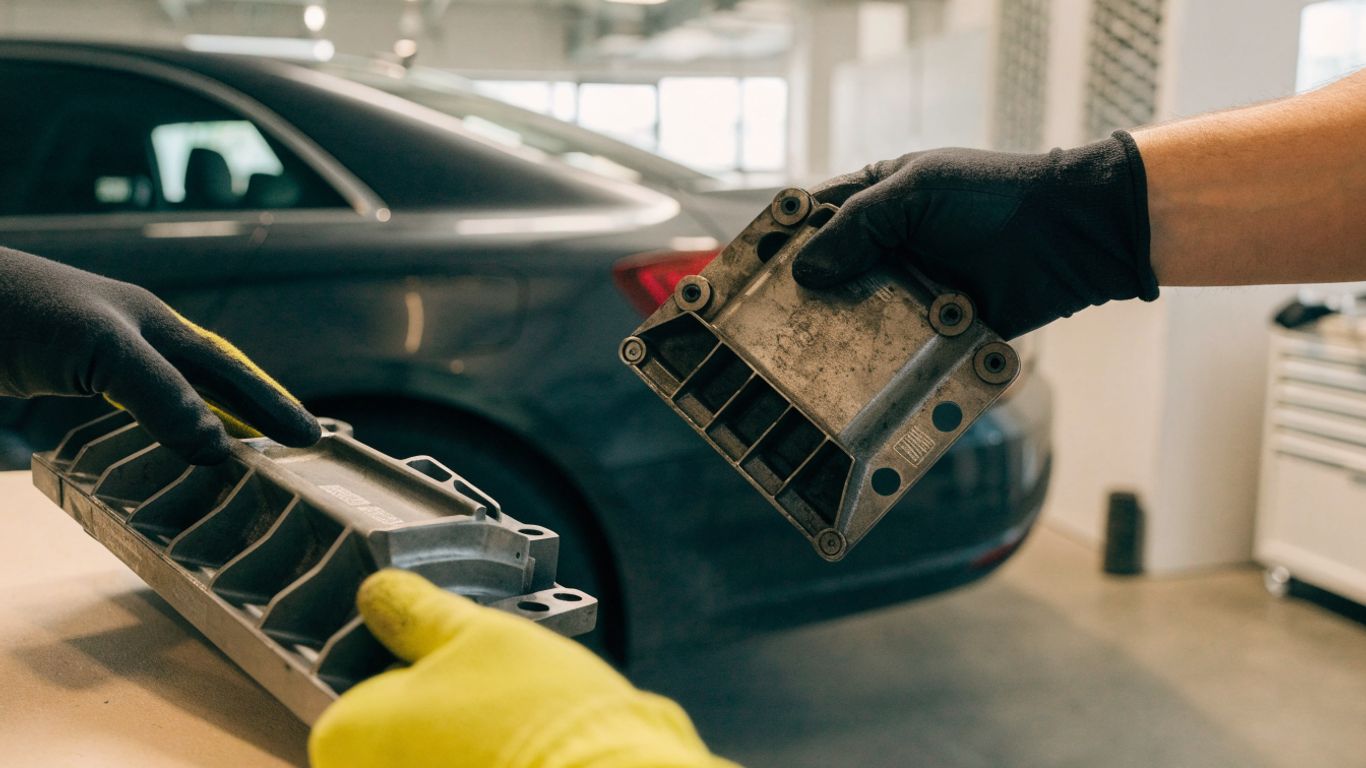
Factory-made components are designed for a particular vehicle application, but a used part still needs to be checked against the car it will go into. Model year, trim, and part details can all matter when comparing listings. A familiar label by itself is not enough to confirm fit. Use the vehicle information and seller’s details to make the match as specific as possible.
Understand the advantages of factory-made components
A factory-made part can be a useful option to compare when the repair calls for a component intended for the vehicle’s original application. With a used part, the question is not only whether it was made for the right vehicle, but also whether its condition is suitable now. Ask the seller what information is available and whether the part’s identity can be confirmed before you buy.
Match parts to your Audi’s model year and trim
Two vehicles that look similar may not necessarily use the same replacement component. Give the seller the model year, trim, and any other vehicle details requested, then ask them to confirm the listing against those details. If you are unsure which information applies, a repair professional or parts specialist can help clarify it before an order is placed.
Check part numbers and vehicle identification details
When a listing provides a part number, compare it with the number on the original component or the number confirmed for your vehicle. Share the vehicle identification details with the seller if they use them to verify fit, and ask about any differences rather than guessing. Keeping the listing, part number, and seller’s confirmation together can make it easier to resolve a mismatch later.
How to assess the condition of used Audi parts
A used component has a history, and its price alone cannot tell you what shape it is in. Ask what the seller knows about the part and what checks have been performed. For visible items, request clear photos from more than one angle. For parts whose condition is harder to judge from a picture, ask what inspection or testing information is available.
Review mileage, age, and vehicle history
If the seller can provide mileage or background information for the donor vehicle, treat it as useful context rather than a guarantee of the part’s condition. Age, storage, and the way a component was used may also be relevant. Ask which details are known and which are estimates, so you can weigh the evidence without filling gaps with assumptions.
Look for wear, damage, and signs of previous repairs
Photos and a detailed description can help you spot obvious concerns before ordering. Depending on the component, look for visible damage, corrosion, worn surfaces, missing fittings, or evidence of a repair. A list of checks makes it easier to keep the conversation with a seller specific:
- Request photos of the part from several angles.
- Ask whether any damage or missing pieces are known.
- Check whether connectors, fasteners, or attached components are included.
- Ask for details of any previous repair or modification.
Use the answers to decide whether you need more information before proceeding. A seller who cannot confirm a detail may still be able to provide other useful information, but do not treat an unanswered question as proof that the part is sound.
Ask about testing and inspection procedures
Inspection can mean different things to different sellers, so ask what was actually checked. Find out whether the part was tested, what the test covered, and whether the seller can share the result or describe any limits. A clear explanation helps you judge how much confidence to place in the listing without assuming that every used component has undergone the same process.
Where to find reliable used Audi parts
Used parts may be listed by specialist dismantlers, salvage yards, and online sellers. Each listing needs the same careful review: check the part details, condition, fit information, and the business’s policies. A broad search can turn up many options, but more listings do not automatically mean a better match. Narrow the search with your vehicle details and the part you need.

Compare specialist dismantlers, salvage yards, and online sellers
A specialist dismantler may have experience identifying parts for particular vehicles, while a salvage yard or online seller may offer other ways to search inventory. Compare the information each provides rather than relying on the seller category alone. For example, Chuck & Eddies describes used Audi parts and states that parts are inspected before shipping; Trinity Car Parts describes a nationwide used-parts inventory; and Das Parts describes used genuine Audi parts in Canada. Treat each listing and its terms as the details to verify for your own purchase.
Search pages can also surface material that is unrelated to Audi parts. The Advisory covers finance topics, a page on olive-oil hair care concerns hair care, bumper stickers are a vehicle accessory, and LiftMaster concerns garage door openers. Those links are not sources for Audi-part fit or condition; keep the search focused on listings and policies that address the repair itself.
Check seller ratings and business policies
Ratings can provide context, but they should not replace a close look at the seller’s terms. Check how returns are handled, whether warranty coverage is stated, and how the business responds to questions about fit or condition. If details are unclear, ask before paying and save the reply with your order information.
Request clear photos and detailed part descriptions
A useful listing identifies the part and explains what is included, what condition it is in, and any known issues. Photos should show the actual item where possible, not only a generic example. If an image leaves an important area hidden, ask for another view. Clear descriptions and direct answers make it easier to compare options without relying on guesswork.
What to check before buying
Before placing an order, pause to verify the details that are hardest to fix once a part is on its way. Confirm that the part matches the vehicle and repair, then read the seller’s return and warranty terms. Check delivery cost and timing as well. A few questions up front can help prevent an avoidable mismatch or an unexpected expense.
Confirm compatibility with your vehicle
Share the exact vehicle details requested by the seller, including model year and trim, and provide the part number when available. Ask for explicit confirmation that the listed component is suitable for that application. If the answer is vague, get clarification from a parts specialist or repair professional before ordering rather than relying on a similar-looking part.
Review return windows and warranty coverage
Read the terms closely to learn how long you have to request a return, what conditions apply, and whether the part has warranty coverage. Check whether the policy addresses incorrect fit, a part that arrives damaged, or a fault discovered after installation. Keep the listing and written seller responses so you can refer to the agreed details if a problem comes up.
Compare shipping costs and delivery timelines
Delivery cost and timing can affect the real value of a part, especially if the repair is waiting on it. Confirm the shipping charge, estimated arrival window, and any handling conditions before checking out. If timing is important, ask whether the estimate is firm or approximate and make sure it works for your repair plan.
How used parts can support more sustainable repairs
Choosing a usable secondhand component can give an existing part another role in a repair instead of requiring a newly manufactured replacement. The environmental effect depends on the part, its condition, and the wider repair process, so it is better to treat reuse as one consideration rather than a guarantee of a particular result. A sensible match can support both a practical repair and less waste.
Reduce demand for newly manufactured components
When a suitable used part is selected instead of a new one, the repair can make use of a component that already exists. That does not mean every used option is automatically the better choice; shipping, condition, and expected service life still matter. Consider the whole repair and choose the option that is both suitable and practical.
Keep reusable parts out of landfills
A component that remains usable may be recovered and put back into service rather than discarded with a damaged vehicle. The key is that it needs to be appropriate for the repair and in a condition that makes reuse worthwhile. Ask how the part has been assessed, and do not overlook safe handling or professional advice where the component calls for it.
Choose parts that make sense for your repair and vehicle’s lifespan
Think about the vehicle’s condition, your repair goals, and how long you expect to keep it. A used part can make sense when its fit and condition are clear and the total cost suits the job. If those points remain uncertain, compare alternatives before deciding; the aim is a sound repair, not simply choosing the oldest or cheapest option.
Conclusion
Used Audi parts can be a practical way to manage repair costs when the part is correctly matched, its condition is understood, and the complete purchase terms work for you. Compare options carefully, ask direct questions, and consider the vehicle’s needs as well as the price. A little checking before ordering can make the choice feel much more straightforward.
Frequently Asked Questions
Are used Audi parts always cheaper than new parts?
Not always. Compare the specific part prices and include shipping, labor, and any other costs that apply to the repair.
How can I check whether a used part will fit my car?
Provide the seller with your vehicle details and compare the listing’s part number with the number confirmed for your application. Ask for a clear compatibility confirmation before buying.
What information should I ask about a used part?
Ask about its condition, known damage, mileage or donor-vehicle history if available, inspection or testing, and what is included with the part.
Should I buy a part if the listing has no photos?
Consider asking for photos of the actual part before ordering. If the seller cannot provide them, weigh that information gap alongside the price, return terms, and your comfort with the risk.
Do used parts come with a warranty?
Coverage depends on the seller and the specific listing. Read the terms and ask what is covered, how long coverage lasts, and what steps apply if there is a problem.
Can I return a used part if it does not fit?
That depends on the seller’s return policy. Check the return window and conditions before purchase, and get compatibility confirmed in advance where possible.
Are used parts a more sustainable repair choice?
They can keep a reusable component in service, but the overall impact depends on the part’s condition, suitability, transport, and the needs of the repair.